I have been anticipating this book since what feels like the beginning of time, so I’m thrilled to be revealing Maya Dean’s Wrath Goddess Sing, releasing June 7, 2022 from William Morrow! Here’s the story:
Drawing on ancient texts and modern archeology to reveal the trans woman’s story hidden underneath the well-known myths of The Iliad, Maya Deane’s Wrath Goddess Sing weaves a compelling, pitilessly beautiful vision of Achilles’ vanished world, perfect for fans of Song of Achilles and the Inheritance trilogy.
The gods wanted blood. She fought for love.
Achilles has fled her home and her vicious Myrmidon clan to live as a woman with the kallai, the transgender priestesses of Great Mother Aphrodite. When Odysseus comes to recruit the “prince” Achilles for a war against the Hittites, she prepares to die rather than fight as a man. However, her divine mother, Athena, intervenes, transforming her body into the woman’s body she always longed for, and promises her everything: glory, power, fame, victory in war, and, most importantly, a child born of her own body. Reunited with her beloved cousin, Patroklos, and his brilliant wife, the sorceress Meryapi, Achilles sets out to war with a vengeance.
But the gods—a dysfunctional family of abusive immortals that have glutted on human sacrifices for centuries—have woven ancient schemes more blood-soaked and nightmarish than Achilles can imagine. At the center of it all is the cruel, immortal Helen, who sees Achilles as a worthy enemy after millennia of ennui and emptiness. In love with her newfound nemesis, Helen sets out to destroy everything and everyone Achilles cherishes, seeking a battle to the death.
An innovative spin on a familiar tale, this is the Trojan War unlike anything ever told, and an Achilles whose vulnerability is revealed by the people she chooses to fight…and chooses to trust.
And here’s the stunning cover by Marcela Bolivar, with art direction by Richard Aquan!
Maya Deane first retold the Iliad at the age of six. Athena was the protagonist; all six pages were typed up on a Commodore 64; there were many spelling errors. (She has only doubled down since then.) A graduate of the University of Maryland and the Rutgers-Camden MFA, Maya lives with her fiancée of many years, their dear friend, and two cats named after gods. She is a trans woman, bisexual, and fond of spears, books, and jewelry. Aphrodite smiles upon her.
I’m excited to welcome Adesina Brown to the site today, who’s gues-posting on queernorm fiction in honor of their upcoming release, Where the Rain Cannot Reach, which publishes with Atmosphere Press on December 7th! Here’s the story:
Tair has never known what it means to belong. Abandoned at a young age and raised in the all-Elven valley of Mirte, the young Human defines herself by isolation, confined to her small, seemingly trustworthy family.
Abruptly, that family uproots her from Mirte and leads her on an inevitable but treacherous journey to Doman: the previous site of unspeakable Human atrocities and the current home of Dwarvenkind. Though Doman offers Tair new definitions of family and love, it also reveals to her that her very existence is founded in lies. Now, tasked with an awful responsibility to the Humans of Sossoa, Tair must decide where her loyalties lie and, in the process, discover who she wants to be… And who she has always been.
In their debut fantasy novel Where the Rain Cannot Reach, Adesina Brown constructs a world rich with new languages and nuanced considerations of gender and race, ultimately contemplating how, in freeing ourselves from power, we may find true belonging.
Death is inevitable. We learn this fact when we are young. Our family and friends will all die, and so too will this earth, as well as all the stars and moons and planets that make up the universe. Death does not discriminate, I once thought.
Until I died, or something of the sort. Spiteful and unchecked, cisgender and heterosexual people the world over harass, attack, and kill those in the queer and transgender community. In bearing witness to these deaths, a part of myself dies, too—a part of my irrevocably queer, non-binary self dies. In other words, I have learned that death is particularly inevitable for me, and for queer and trans people like me. Before that death, life is a just a series of unavoidable sexuality- and gender-based discrimination defined by constant fragmenting of self to ensure our safety. Because we are preoccupied with surviving all the hostility we face, we have not had the opportunity, neither the time nor the space, to dream of better worlds where we do not have to simply survive.
Unfortunately, fiction reflects nonfiction; our stories reflect our realities. An early fan of speculative fiction, particularly sci-fi and fantasy, I quickly recognized a pattern: if a character was queer and/or trans, they died a horrible, tragic death. This is known as the “bury your gays” trope. If a queer and/or trans character did not die, they lived otherwise miserable lives surrounded by bigots and non-LGBTQ+ people who eased the pain of such bigotry with placating reminders of allyship and frequent rebukes of society, of which they are apparently not a part. Their advice? Look for and accept only the small joys where you can get them; it’s all we can hope for when the world is so tragically against us. It gets better.
We yearn for more, yet we are told that “more” is an unattainable, naïve dream. I found few refuges in fiction where people like me were not being mocked or harassed for character growth, where our deaths were not fodder for the main characters to reach their final act. And, like any of us, I desperately needed that refuge; I needed representation to demonstrate to me that we all may live in ways that feel complicated and authentic—not simply to live, then, but to thrive, unencumbered by prejudice.
My first refuge, as was the case for many young nerds, was in fanfiction written by other people who sought representation in the same ways I did, who did not want to create more worlds where we were marginalized. Instead, we would be accepted, embraced, even expected in these worlds. We wrote dreams of safety and understanding that centered characters who had already provided us some emotional comfort; we wrote them to be as true as us, despite all the lies we had to tell to protect ourselves.
Thankfully, such a haven of queer and trans happiness did not stop with fanfiction, nor did it truly start there. For decades, many authors have written in the spirit of that dream in what is known as “queernormative” or “queernorm” fiction. Speculative by nature, queernorm fiction imagines worlds in which there is no homophobia nor transphobia and often centers a queer and/or trans main character. In it, queerness and transness is a given, and still it is not central; our identities are not made plot points, nor are they the reason we experience (or inevitably cause) harm. Queernorm fiction intends not to create safe spaces for queer and trans people but to create safe worlds for queer and trans people.
The richness of that dream cannot be exaggerated. Whether it be Kameron Hurley’s Worldbreaker Saga or Becky Chambers’s Wayfarers series, or my own novel Where the Rain Cannot Reach, our authors are offering us worlds where gender and sexual diversity is a given, where our visions of gender and sexuality can be morphed into something so thankfully new. Queer and trans characters are not late add-ons to these series, nor do they fall into other tropes that limit queer and trans happiness solely due to our non-normative identities.
When offered the vision of an identity-diverse world, we receive much more than pacifications of fortitude and hope; instead, we are gifted the radical imagination of wider liberation and cannot be satiated with incremental changes. We now know what else is possible. The inherent optimism in queernorm fiction has helped me to cultivate and sustain my dream for radical changes to the way we are treated as marginalized people overall.
And, with that, I am reminded the value of life in ways that cisgender and heterosexual people never have to imagine. When I think on the inevitability of death, I include in that now a hope for a future in which we are all offered the chance to recognize and take joy in our multitudes. For now, as I live, I also write with that dream in mind. I offer myself refuge in worlds of my making, where we are safe in our variance. Our words, our wishes.
***
Where the Rain Cannot Reach is Adesina Brown’s debut novel. To learn more, please visit their website adesinabrown.com.
Today we welcome back to the site Ana Mardoll, who’s releasing another fantasy story collection, this one playing on fairytales and titled Cinder the Fireplace Boy and Other Gayly Grimm Tales! The book releases January 4, 2022, and contains Queer, Trans, Nonbinary, Lesbian, Gay, Bisexual, Ace, and Aro rep, so there’s a little something for everyone! Come check it out:
Once upon a time there lived… a beautiful prince who kissed a frog. A cinder-smudged child who hid a secret. A princess who climbed a long braid of golden hair for love. A thumb-sized boy with the courage of a giant. And a valiant little tailor whose wit was as sharp as her needle.
These stories and many more await you in this delightful collection of classic fairy tales, lovingly retold and featuring characters who receive wonderfully queer happily-ever-afters! Let these new takes on the Brothers Grimm warm your heart and nurture your yearning to see yourself reflected in beloved favorites.
Features eight original illustrations by artist Alex Dingley.
And here’s the fairytale cover, designed by Anna Dittman!
Want a sneak peek inside at one of the gorgeous illustrations by Alex Dingley? Check out this stunner from The Robber Bridegoom!
Ana Mardoll is a writer, activist, and nonbinary trans boy in love with another trans boy. They live together in Texas with five spoiled cats. Ana’s favorite employment is weaving new tellings of old fairy tales, fashioning beautiful creations to bring comfort on cold nights. Ana is the author of the Earthside series, the Rewoven Tales novels, and many published short stories. (Pronouns: xie/xer) [More bio and pronouns here if you’re curious: http://www.anamardoll.com/p/writings.html]
Honestly, how dare Marie Rutkoski not only write my favorite YA fantasy trilogy of all time, but then go on to write my favorite Sapphic YA fantasy series opener as well? It’s just rude, is what it is. Not sure what I’m talking about? Then get thee to the buy links below and grab yourself a copy of the sharp and clever The Midnight Lie! (Already read and loved it? Good news: sequel The Hollow Heartreleases this month!)
Where Nirrim lives, crime abounds, a harsh tribunal rules, and society’s pleasures are reserved for the High Kith. Life in the Ward is grim and punishing. People of her low status are forbidden from sampling sweets or wearing colors. You either follow the rules, or pay a tithe and suffer the consequences.
Nirrim keeps her head down and a dangerous secret close to her chest.
But then she encounters Sid, a rakish traveler from far away who whispers rumors that the High Caste possesses magic. Sid tempts Nirrim to seek that magic for herself. But to do that, Nirrim must surrender her old life. She must place her trust in this sly stranger who asks, above all, not to be trusted.
Today on the site I’m thrilled to be revealing the cover of Rebecca Podos’s extremely Jewish contemporary bi YA fantasy, From Dust, A Flame, which releases from Balzer + Bray/HarperCollins on February 8, 2022! Here’s the story:
Hannah’s whole life has been spent in motion. Her mother has kept her and her brother, Gabe, on the road for as long as she can remember, leaving a trail of rental homes and faded relationships behind them. No roots, no family but one another, and no explanations.
All of that changes on Hannah’s seventeenth birthday when she wakes up transformed, a pair of golden eyes with knife-slit pupils blinking back at her from the mirror—the first of many such impossible mutations. Promising that she knows someone who can help, her mother leaves Hannah and Gabe behind to find a cure. But as the days turn to weeks and their mother doesn’t return, they realize it’s up to them to find the truth.
What they discover is a family they never knew, and a history more tragic and fantastical than Hannah could have dreamed—one that stretches back to her grandmother’s childhood in Prague under the Nazi occupation, and beyond, into the realm of Jewish mysticism and legend. As the past comes crashing into the present, Hannah must hurry to unearth their family’s secrets—and confront her own hidden legacy in order to break the curse and save the people she loves most, as well as herself.
Rebecca Podos, award-winning author of Like Water, returns with a contemporary fantasy of enduring love, unfathomable loss, and the power of stories to hold us together when it seems that nothing else can.
And here’s the cover, designed by Sarah Kaufman and illustrated by Lisa Sheehan!
Rebecca Podos’ debut novel, THE MYSTERY OF HOLLOW PLACES, was a Junior Library Guild Selection and a B&N Best YA Book of 2016. Her second book, LIKE WATER, won the 2018 Lambda Literary Award for LGBTQ Children’s and Young Adult. THE WISE AND THE WICKED, her third novel, was recently released. Forthcoming books include FOOLS IN LOVE (Running Press Kids, 2021), a co-edited YA anthology with Ashley Herring Blake, and FROM DUST, A FLAME (Balzer + Bray, 2022). An agent at the Rees Literary Agency in Boston, she can be found on her website, Rebeccapodos.com.
Today on the site, we’re revealing an excerpt from the upcoming Queen of All by Anya Josephs, an #ownvoices YA fantasy with a plus-size lesbian protagonist releasing from Zenith Press on June 8th. Here’s the story:
Jena lives on her family’s struggling farm and in her beautiful friend Sisi’s shadow. She’s not interested in Sisi’s plans to uncover the Kingdom’s darkest secrets: the suppression of magic, and the crown prince’s systemic murder of those who practice it.
Jena only wants to keep a secret of her own—her changing feelings for Sisi. Yet when a letter arrives summoning Sisi to the royal Midwinter Ball, Jena has no choice but to follow her into a new world of mystery and danger.
Sisi falls into a perilous romance with the very crown prince she despises. Desperate to save her, Jena searches for answers in the halls of the palace and in the ancient texts of its library.
She discovers that the chance to save her friend, and their world, lies in her own ability to bring the magic back and embrace her own power.
And here’s the excerpt!
The most beautiful girl in any of the Four Corners of the Earth kicks me awake in the middle of the night.
Through my half-open eyes and by the light of the moon, I can see her perfectly sculpted face looming over mine. Her ruby-red lips, so entrancing that a passing bard once wrote a lengthy ode in their honor, blow hot air directly up my nose. The bard, for obvious reasons, did not mention the stench of her morning breath. As she begins to wake up, I cough, try to turn over, and fumble for our shared blanket with the intention of pulling it over my head and going back to sleep. It’s gone.
As I reluctantly blink my way awake, our bedroom comes into focus: the white-washed walls, the low rafters, the ladder down into the main room, the trunk where we keep our clothes, and then Sisi, grinning triumphantly, holding the blanket over her head.
“What do you want?”
“And good morning to you too, my beloved cousin,” she says, her dark-rose cheeks dimpling in an extremely winsome fashion. Most people can’t stay mad at beautiful Sisi for long. Luckily, I’ve had plenty of practice. I was still only a baby when Sisi and her brother came to live here, so for fourteen years, she and I have been making each other, and driving each other, mad.
“No, you see, morning happens after the nighttime. Which is what we’re having now. Nighttime. Morning is later.”
“Well technically, it’s after midnight. Thus, good morning.” She smiles at me again.
“And before dawn. Thus, good night.” I make another futile grab for the blanket, but Sisi has a good six inches of height on me and is quicker than I am even when I’m not drowsy from sleep. Defeated, I slump back against the frame of our bed. “Come on, you didn’t just wake me up in the middle of the night so that we could debate the finer points of timekeeping. Are you up to something? You already know I won’t want to be a part of it.”
“Listen.” She points down at the floor of our bedroom. Because we sleep up in the attic, I can just barely hear a low rumble of voices through the floorboards, coming from the main room below. “What are they doing awake at this hour? There must be something interesting going on.” Question and answer, all in one. As usual, I seem to be altogether unnecessary in this conversation Sisi is having with herself.
“Yes. I’m sure the price of grain has gone up fifteen milar a tonne, or something.”
“You have no spirit of adventure,” Sisi accuses.
“Another of my many faults.”
“Fine, then I’ll go by myself, and I shan’t tell you what I find.”
“Have fun. Do try not to get caught,” I advise.
She turns to face me fully, batting her long, dark eyelashes at me. It’s a trick that would certainly work on any of her many admirers among the local boys, but I’m immune to that kind of flattery. “Please, Jena? Sweet cousin, my dearest friend, it’ll be ever so much better if you just come with me.”
“Come where? Down the stairs? It’s not much of a valiant quest, even if I were inclined to be your brave companion.” After a moment’s thought, I add, “And I’m reasonably sure that I’m your only friend.”
But Sisi has no trouble continuing her conversation with herself, with or without input from me. “I’m sure you saw that carriage coming up the drive today?”
“No, it was a horse-drawn carriage!” Now, that’s a decent bit of news, I must admit. People around here use pushcarts, or occasionally mules and donkeys. Horses are unofficially reserved for the Numbered, as anyone without noble blood is unlikely to be able to afford their feed and upkeep. I carefully arrange my expression so Sisi won’t see that she’s caught my interest, but she continues on unabated. “Anyway, Aunt Mae might have said that, but I know for a fact that wasn’t the potter’s lad.”
“So Daren’s finally got himself fired, and the potter’s found someone new. I don’t see why that’s such a big deal.” The potter’s apprentice is famous around town for his clumsiness, and it would be no surprise to anyone if someone more suited to such a delicate profession replaced him. Daren is a good-hearted lad, as Aunt Mae always says, and he does works hard, but he likely breaks more pots carrying them in from the kiln than he sells in one piece. This is especially true when he delivers jugs for the cider press on our farm, since his infatuation with Sisi makes him nervous. Of course, everyone fancies Sisi—he’s not alone in that, just a little more hopeless than most.
“It wasn’t anyone from the potter’s. Nor anyone else from Leasane. It was a man around your father’s age. Better dressed, though, in some sort of gold-and-purple uniform. He gave Uncle Prinn a sheet of paper. I couldn’t quite see what was on it, but it was stamped with a golden seal and I’m sure it’s the Sign of the Three Powers itself. So, I can only assume that your father has been given a message from the Royal Court in the Capital. How often do you think a messenger from the King’s own home rides across half the Earth to seek out an apple farmer? And what could be in such a message?” She looks about ready to faint as she finishes her speech, her cheeks flushed with the effort of having so much to say so quickly.
I have to concede that this is indeed a good point—but I have a few good points of my own to make. “Sounds too good to be true. Which means it probably is. Perhaps this messenger just wanted a cup of cider and directions back to the High Road. If it was anything more than that, we’ll hear about it soon enough. In the meantime, why not go to bed? Or at least lie here and speculate so as to spare ourselves the inevitable results of snooping into what’s none of our business: we sneak out, we get caught, we get beaten, we get sent right back where we started no better off but for sore backsides.”
“You are becoming frightfully dull lately. Ever since that incident on market day—”
“Which was all your fault, I might add, though it was me who took all the blame. Here’s an idea, Jena, let’s not do our chores today! Oh, let’s steal the apple cart and ride it into town! It’ll be fun! We’ll meet boys! We’ll buy candies at the market! We won’t get caught! And when we do get caught, I certainly won’t run away home and pretend never to have left my sewing and not say a word when Jena’s getting thrashed for it!”
“Bruises heal. Unsatisfied curiosity never does.”
“I don’t know, I’m still a little sore—” To be honest, my feelings were hurt worse than my backside. Aunt Mae is strict, but she’d never thrash us so hard that bruises dealt out a week prior would still hurt. What stings isn’t the beating, now, as Sisi points out, healed and mostly forgotten. It’s the fact that I’d gotten one, and Sisi hadn’t. As usual, I get stuck taking all of the blame and the pain with Sisi getting away scot-free, since she’s too pretty and charming for anyone but me to stay angry with.
“A half hour, that’s all. Won’t you give your poor dear cousin, near to you as a sister, your closest kin in affection if not in blood, a half-hour’s worth of your rest, when I would wake a thousand night’s watching for you…”
I roll my eyes, but I must confess, even just to myself, that I do quite want to know what’s going on down in the kitchen. As usual, Sisi is, infuriatingly, right. “Just half an hour?”
“Thirty minutes, to the instant,”she promises, smiling with all the innocence she can muster.
“Shake on it, you scoundrel. I can’t trust you.”
She spits in her hand and offers it to me, and I take it. Sometimes I think Sisi would not have made a very good Lady of a Numbered House, even if her brother had not left the Numbered for his unsuitable marriage with my cousin Merri. Sisi and I shake, and then she yanks me out of the bed by our joined hands.
Today on the site we’re revealing the cover of D.N. Bryn’s Once Stolen, the followup to Our Bloody Pearl, releasing July 27, 2021! Here’s the story:
Ignit rocks fuel the jungle, from the colonists’ fan boats to the livelihoods of the native swamp warriors.
Ignits also fuel the mer-snake Cacao—fuel him with an irresistible desire to filch the glowing stones.
When Cacao botches a theft from a notorious ignit cartel, his chaotic escape leaves him chained to their prisoner: a self-proclaimed hero with a hidden stash of ignits so large, Cacao would never need to steal again. He’s determined to get his hands on it, even if that means guiding her through the mist-laden swamps he’s exiled from, tracked by scheming poachers and a desperate cartel leader.
But the selfish and the self-righteous can only flee together for so long before something snaps…
Return to Our Bloody Pearl’s steampunk-inspired world of merfolk in this fun, fast-paced adventure with a hate-to-love romance, a boat-load of sass, and even more heart.
And here’s the ominous cover, designed by Laya Rose!
Want a little taste of the book? Here’s a brief excerpt!
“How do you know this stuff?” Thais asks.
With a shrug, I lie out along the deck, my tail still twisted up in the driver’s seat. I tug my ignit out of my necklace to rub it before I sign, “I like rocks.”
The gentle lap of the peaceful Murk water vibrates against the side of the boat, small animals romping through the trees around us. Thais stares at me, her expression a crinkled mess. Then her chest shudders violently.
I bolt upright, half-annoyed and—well, fully annoyed, and not the least bit worried that the poison in her veins might be giving her some kind of spasm again. “It’s true. I just like rocks, okay.”
“No—I—” She keeps quaking, and it finally hits me that the vibration might be laughter. “I think it’s funny. You say you just like rocks while wearing a rock necklace, playing with a rock, traveling through the Murk to get more rocks. Your entire life revolves around rocks. Of course you would know so much about ignits.”
“Fuck off, boat shit,” I grumble. “I can love rocks if I want to.”
“I think it’s nice, Cacao.” She brushes her wiry curls back, tucking her feet beneath her legs. “You have something that means a lot to you. Most people go their entire lives and never find a passion like that.” Her hands lower, and she raps out a rhythm against the center seating block. She repeats it three times before her words finally sink in.
“You’re the only one who feels that way.”
Thais pokes me in the shoulder. “Hey now, I never said I approved of your actions. It’s nice—good—that you love something. It’s not nice that your love hurts other people.”
I roll my eyes. “That’s called greed.”
Her cheeks puff out and she shakes her head. “Fungus brain.”
Danny Bryn is a queer, disabled, non-binary speculative fiction author of the liberal Jesus-freak variety. When not writing, they conduct infectious disease surveillance in their hometown of San Diego, where they enjoy basking in the Santa Ana winds, hiking the brush-heavy slopes, and eating too many tacos. Once Stolen is their second book in the These Treacherous Tides universe.
Hello, North African-inspired Sapphic military fantasy with heavy themes of colonialism and rebellion, and welcome to the party of can’t-miss adult SFF out this year. The Unbroken by debut author C.L. Clark is about a soldier who’s been stationed in the very same land from which she was taken and conscripted as a child and the princess of the empire behind it all, who’s determined to take her place as its rightful heir. It’s heartbreaking, maddening, and all kinds of charged, and it releases from Orbit Books on March 23rd!
Touraine is a soldier. Stolen as a child and raised to kill and die for the empire, her only loyalty is to her fellow conscripts. But now, her company has been sent back to her homeland to stop a rebellion, and the ties of blood may be stronger than she thought.
Luca needs a turncoat. Someone desperate enough to tiptoe the bayonet’s edge between treason and orders. Someone who can sway the rebels toward peace, while Luca focuses on what really matters: getting her uncle off her throne.
Through assassinations and massacres, in bedrooms and war rooms, Touraine and Luca will haggle over the price of a nation. But some things aren’t for sale.
I’m asked often for fiction that deals with recovery, and I haven’t had many recs to offer; it’s not rep to take lightly. So when Gideon E. Wood approached me with a guest post about exactly that, tied to the release of his brand-new fantasy, The Stagsblood Prince, I jumped at it, and I hope you love it as much as I do.
Before we get to the post, here’s a little more about The Stagsblood Prince, a gay fantasy epic trilogy opener set in a homophobia-free world:
Cover design by Lance Buckley.
Tel, handsome crown prince of Feigh, has negotiated an end to the war between his country and the strange queendom of Omela. He looks forward to an easy reign of wild parties and wilder men. The deities have other ideas, however, in this gay fantasy novel of transformation, redemption, and love.
When his father dies suddenly, Tel is outmaneuvered by his brother, losing the throne. Tel’s faith prohibits him from raising his sword and spilling blood, so he accepts the humiliation, working to temper his brother’s baser impulses. But the new king’s reign takes a dark turn, and his collaborators begin to round up undesirables, including those with a magic called the stagsblood.
Tel must decide: Flee or fight? Running means abandoning his people to his brother’s evil whims. Standing his ground means the sin of total war. He has no army and only a few allies—and his magical secret.
Caip, his closest friend and protector, brings military experience and blunt advice. Her right hand, Dar, is the picture of loyalty. Tough, battle-scarred Bin doesn’t suffer fools gladly. And Vared, a mysterious singer-turned-diplomat from Omela, speaks the truth to Tel in ways no one else can.
White. American. Cisgender. Male. Gay. Queer, in my more festive moments. Writer. Progressive. Cat dad. Frequent smirker. Fallen vegan. I suppose I could sit here for hours bullet-pointing my identity. With enough thought, I could get incredibly granular about it. It might even be fun. But there’s one aspect of my identity—one bullet point—before which I put all others: I’m a person in addiction recovery. If I want to be a shade more clinical about it (and why not?), I’m a person with substance use disorder in sustained remission. Fancy!
My understanding of how addiction works (booze and powder cocaine, primarily, if you must know) forces me to—mindfully and regularly—own my recovery before any other aspect of my identity. I drank-and-used myself into homelessness and suicidality, so it is quite literally a matter of life and death for me. So, more than I ponder my race and what it means, more than I ponder my nationality and what it means, more than I ponder even my dude-on-dudeness and what it means, I must ponder my addiction and what it means. This approach has served me well over the last (oh, my gods!) decade, so I have no interest in switching it up. I don’t want to drink. I don’t want to use. I don’t want to die.
When you think about our expanding string of letters (LGBTQ+ is not really an acronym, let alone LGBTQQIP2SAA+…don’t get me started), I’d ask you to imagine a superscript lowercase r—for recovering or recovery available—attached to each. We’re here. We’re queer (or whathaveyou). Even within our community, we are not yet used to it. I find this shocking.
If we take a few minutes to consider it, most of us will intuitively understand that substance use disorder runs rampant through our private and public LGBTQ+ spaces. If your own anecdotal evidence fails to convince you (and good on ya for that, really), rest assured: the research has been done. Among others, the Substance Abuse and Mental Health Services Administration (SAMHSA) and the National Institute on Drug Abuse (NIDA) acknowledge significantly higher rates of substance use disorder in the LGBTQ+ population. The reasons for this prevalence are probably self-evident: trauma, rejection, domestic strife, stigma, the risk of assault, and so on. And it’s not only addiction. These factors seem to increase risk for all manner of mental or behavioral health difficulties for us. Sadly, the science has also found serious gaps in treatment and support services for our community.
Most of us already believe representation matters. Again, the evidence is there, both anecdotally and in the research. Visibility improves our physical and mental safety, along with our feelings of wellbeing. Whatever our place in our long string of letters, our stories are not told frequently enough. In recent years, we have seen improvement on that front. We are raising our voices, finally. And some are learning to listen.
But where’s my lowercase r? Where’s the representation of queer addiction and—even more importantly, I’d argue—queer recovery? Both our guts and our sociology tell us we should be seeing those stories more than we do. We should be hearing those voices begin to rise. They are there, if we really search and listen, but they are few and far between. When I do encounter them, they tend to be in memoir or narrative nonfiction, and usually depictions of folks in the thick of it. What about after the thick of it? Especially in fiction. And I’m sorry, but I was a mess for a really long time, then I walked into an Alcoholics Anonymous meeting and all was well does not cut this particular mustard. As we say in recovery circles, we don’t wander into the dark heart of the wilderness for twenty years and then find ourselves safe and comfy at home the moment after we’ve realized we’re lost. It takes time. It takes work. It’s a hike. (Incidentally, I’m sure these stories are out there somewhere, so get in touch! I anxiously await your recs.)
I write fantasy with LGBTQ+ characters. When planning my debut, The Stagsblood Prince, I knew I wanted my main character to represent not just queerness but queerness in motion from active addiction to sustained recovery. Fantasy may not seem like a natural fit for such storytelling, but like all other human foibles and frailties, addiction and recovery are highlighted and brought into crisp relief when placed before a fantastical backdrop of myth and magic.
In fact, the genre may be more suited than most to lift these stories up. I had my own path to putting down substances and my own path to not picking those substances back up for a long while now. There are as many of these roadways as there are people in recovery. My approach may not work for you. We’ve found no silver bullets in the mountain of strategies, but plenty of overlap. Commonalities—shared principles—can be found among the many and varied recovery schools of thought.
Prince Tel of The Stagsblood Prince cannot walk into a Twelve Step meeting or secular support group. Such spaces do not exist in his world. He can’t Zoom with his therapist. There is no Zoom. There are no therapists. He has no psychopharmacology of which to avail himself. Inpatient treatment, outpatient treatment, hospitalization? Nope.
What, then, can Prince Tel do? He can learn to practice the principles of treatment and recovery which keep millions of people (the New York State Office of Alcoholism and Substance Abuse Services says it’s about 23.5 million in the US alone) away from substances here on non-fantasy earth. Tel can tend to his physical, mental, and spiritual health in myriad ways. He can foster habitual gratitude. He can strive for honesty in all matters. He can lessen his burdens by sharing his struggles with others. He can interrogate himself and uncover the flawed thinking at the heart of his troubles. Most importantly, he can learn to ask for help when he needs it. And he’ll need it! He’s got love to find and a world in need of saving.
First and foremost, I hope The Stagsblood Prince entertains. As I see it, that’s my job. In my wilder dreams, though, at least one of you will see yourself represented in Tel and his journey. If you’re finding your use of alcohol or other substances problematic today, maybe you’ll see that recovery is possible. Believe me, the aforementioned asking for help stuff is powerful medicine. (SAMHSA and NIDA are good starting points for resources. My inbox is also always open.) If you’re already on the road, maybe Tel will keep you walking for a while.
We’re here. We’re queer. We are more likely to find ourselves in addiction. We are just as likely as anyone to recover. It’s well past time to get used to it.
***
(c) Daisy Cobb
Gideon E. Wood writes gay fantasy fiction. He has been proudly clean and sober since 2011. Second chances and transformation are at the heart of his work. Gideon lives in New England with his cat but thinks it’s important you know he isn’t a cat person.


 Maya Deane first retold the Iliad at the age of six. Athena was the protagonist; all six pages were typed up on a Commodore 64; there were many spelling errors. (She has only doubled down since then.) A graduate of the University of Maryland and the Rutgers-Camden MFA, Maya lives with her fiancée of many years, their dear friend, and two cats named after gods. She is a trans woman, bisexual, and fond of spears, books, and jewelry. Aphrodite smiles upon her.
 Tair has never known what it means to belong. Abandoned at a young age and raised in the all-Elven valley of Mirte, the young Human defines herself by isolation, confined to her small, seemingly trustworthy family.
Where the Rain Cannot Reach is Adesina Brown’s debut novel. To learn more, please visit their website adesinabrown.com.


Ana Mardoll is a writer, activist, and nonbinary trans boy in love with another trans boy. They live together in Texas with five spoiled cats. Ana’s favorite employment is weaving new tellings of old fairy tales, fashioning beautiful creations to bring comfort on cold nights. Ana is the author of the Earthside series, the Rewoven Tales novels, and many published short stories. (Pronouns: xie/xer) [More bio and pronouns here if you’re curious: http://www.anamardoll.com/p/
 Where Nirrim lives, crime abounds, a harsh tribunal rules, and society’s pleasures are reserved for the High Kith. Life in the Ward is grim and punishing. People of her low status are forbidden from sampling sweets or wearing colors. You either follow the rules, or pay a tithe and suffer the consequences.
 But then she encounters Sid, a rakish traveler from far away who whispers rumors that the High Caste possesses magic. Sid tempts Nirrim to seek that magic for herself. But to do that, Nirrim must surrender her old life. She must place her trust in this sly stranger who asks, above all, not to be trusted.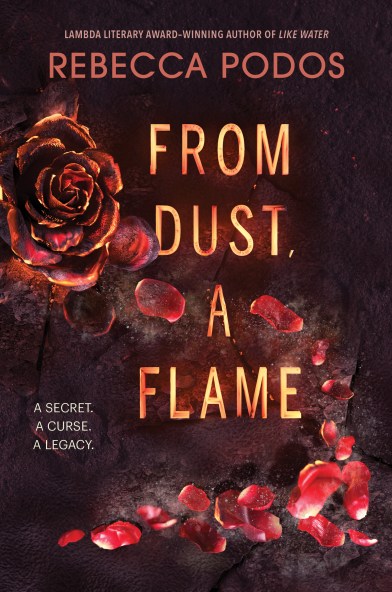

 Jena lives on her family’s struggling farm and in her beautiful friend Sisi’s shadow. She’s not interested in Sisi’s plans to uncover the Kingdom’s darkest secrets: the suppression of magic, and the crown prince’s systemic murder of those who practice it.
Danny Bryn is a queer, disabled, non-binary speculative fiction author of the liberal Jesus-freak variety. When not writing, they conduct infectious disease surveillance in their hometown of San Diego, where they enjoy basking in the Santa Ana winds, hiking the brush-heavy slopes, and eating too many tacos. Once Stolen is their second book in the These Treacherous Tides universe.
 Touraine is a soldier. Stolen as a child and raised to kill and die for the empire, her only loyalty is to her fellow conscripts. But now, her company has been sent back to her homeland to stop a rebellion, and the ties of blood may be stronger than she thought.


