Tag Archives: YA

New Releases: September 2018

All This I Will Give to You by Dolores Redondo (1st)

When novelist Manuel Ortigosa learns that his husband, Álvaro, has been killed in a car crash, it comes as a devastating shock. It won’t be the last. He’s now arrived in Galicia. It’s where Álvaro died. It’s where the case has already been quickly closed as a tragic accident. It’s also where Álvaro hid his secrets.

The man to whom Manuel was married for fifteen years was not the unassuming man he knew.

Álvaro’s trail leads Manuel deep into one of Spain’s most powerful and guarded families. Behind the walls of their forbidding estate, Manuel is nothing but an unwelcome and dangerous intruder. Then he finds two allies: a stubbornly suspicious police lieutenant and Álvaro’s old friend—and private confessor—from seminary school. Together they’re collecting the pieces of Álvaro’s past, his double life, and his mysterious death.

But in the shadows of nobility and privilege, Manuel is about to unravel a web of corruption and deception that could be as fatal a trap for him as it was for the man he loved.

Buy it: B&N * Amazon * IndieBound * Book Depository

Soft on Soft by Em Ali (10th)

Cover to be revealed on the site on September 5th!

June Bana might post nearly daily makeup looks that gain thousands of likes but Real Life June has built a wall behind which she exists with her two cats.

But with messy feelings getting in a way of an early hermit life, June begins to realize that she wants more. She wants model/actress, Sunshine Reincarnated Selena Clarke. It doesn’t hurt that Selena is amazing with cats and quiets down June’s anxiety to bearable levels.

June is given the choice of facing her anxieties about relationships to gain not only a girlfriend but also a better understanding of how far she’d go for love.

But would she take it? Would she leave her comfort zone for something softer?

Contemporary fluffy piece where one homebody and one extrovert make one hell of a love story.

Buy it: Amazon US * Amazon UK

Summer Bird Blue by Akemi Dawn Bowman (11th)

Rumi Seto spends a lot of time worrying she doesn’t have the answers to everything. What to eat, where to go, whom to love. But there is one thing she is absolutely sure of—she wants to spend the rest of her life writing music with her younger sister, Lea.

Then Lea dies in a car accident, and her mother sends her away to live with her aunt in Hawaii while she deals with her own grief. Now thousands of miles from home, Rumi struggles to navigate the loss of her sister, being abandoned by her mother, and the absence of music in her life. With the help of the “boys next door”—a teenage surfer named Kai, who smiles too much and doesn’t take anything seriously, and an eighty-year-old named George Watanabe, who succumbed to his own grief years ago—Rumi attempts to find her way back to her music, to write the song she and Lea never had the chance to finish.

Buy it: Amazon * Book DepositoryBarnes & NobleBooks-a-Million * IndieBound

She Called Me Woman: Nigeria’s Queer Women Speak ed. by Chitra Nagarajan, Azeenarh Mohammed and Rafeeat Aliyu

The book is a collection of 25 first-hand accounts by women telling their stories on their own terms. This is a much-needed collection as there is very little work published about lives of LGBTQi communities in Africa. The stories challenge the stereotypes of what we assume is lesbian, bisexual, gay and trans in Nigeria and offers a raw, first-hand look into the lives and realities of those who are queer. The narrators range from those who knew they were gay from an early age to those who discovered same-sex attraction later in life. These engaging and groundbreaking narratives include stories of first time love and curiosity, navigating same-sex feelings and spirituality, growing up gender non-conforming and overcoming family and society’s expectations. What does it mean to be a queer Nigerian? How does one embrace the label of ‘woman’? While some tell of self-acceptance, others talk of building a home in the midst of the anti-same sex marriage law.

The book is edited by three women in Nigeria.  Azeenarh Mohammed is a trained lawyer and a queer, feminist, holistic security trainer. She is active in the Nigerian queer women’s movement and has written on queerness and technology for publications such as This is Africa and Premium TimesNG. Chitra Nagarajan is an activist, researcher and writer. She has spent the last 15 years working on human rights and peace building and is involved in feminist, anti-racist, anti-fundamentalist and queer movements. She currently lives and works in Maiduguri. Rafeeat Aliyu has a BA in Marketing and works in communication and research. She is particularly interested in sex and sexuality in both modern and historical Nigeria.

Buy it: Amazon * B&N * Book Depository * IndieBound

Strange Grace by Tessa Gratton (18th)

Long ago, a village made a bargain with the devil: to ensure their prosperity, when the Slaughter Moon rises, the village must sacrifice a young man into the depths of the Devil’s Forest.

Only this year, the Slaughter Moon has risen early.

Bound by duty, secrets, and the love they share for one another, Mairwen, a spirited witch; Rhun, the expected saint; and Arthur, a restless outcast, will each have a role to play as the devil demands a body to fill the bargain. But the devil these friends find is not the one they expect, and the lies they uncover will turn their town—and their hearts—inside out.

Buy it: Amazon | Barnes & Noble | Indiebound

If I Loved You Less by Tamsen Parker (20th)

Matchmaking? Check. Surfing? Check. Falling in love? As if.

Sunny, striking, and satisfied with her life in paradise, Theodosia Sullivan sees no need for marriage. She does, however, relish serving as matchmaker for everyone who crosses her path. As the manager of her family’s surf shop in Hanalei Bay, that includes locals and tourists alike.

One person she won’t be playing Cupid for is the equally happy bachelorette down the street. Baker Kini ʻŌpūnui has been the owner of Queen’s Sweet Shop since her parents passed away and her younger brother married Theo’s older sister and moved to Oahu. Kini’s ready smile, haupia shortbread, and lilikoi malasadas are staples of Hanalei’s main street.

However, Theo’s matchmaking machinations and social scheming soon become less charming—even hazardous—to everyone involved. And when she fails to heed Kini’s warnings about her meddling, she may be more successful than she ever intended. Theo has to face the prospect of Kini ending up with someone else, just as she realizes she’s loved Kini all along.

A modern retelling of Jane Austen’s Emma.

Off Limits by Vanessa North (24th)

By day, Natalie Marshall is the Thorns Ladies’ Social Club’s perfect concierge: resourceful, observant, immaculate. But she turns her phone off when the night concierge arrives, and then she’s Nat: the raunchy lead singer of Vertical Smile—notorious for lewd lyrics and sexually-charged performances.

Rebecca Horvath isn’t used to asking twice—for anything. As the scion of one of Hollywood’s most powerful film dynasties, she’s waited on, pampered, fawned over—spoiled. So when she asks the cute front person of her favorite queer punk band to be her date to a charity auction, she isn’t expecting the whispered “no,” or for the singer to disappear without even thanking her for the martini.

For Natalie, two worlds colliding spells professional catastrophe–her on-stage antics definitely violate the club employees’ standards clause. For it to be Bex Horvath—a perennial gossip-pages feature—who discovers her secret is terrifying.

When the focus of a criminal investigation at work brings Nat’s double life to the attention of her employer, everything spins out of control. Bex is there to prove there’s more to this party girl than meets the eye. Nat might have to trust her with her secrets, but her heart? That’s off limits.

Buy it: Amazon * iBooks * Kobo * Barnes & Noble

Counterpoint by Anna Zabo (24th)

Twisted Wishes lead guitarist Dominic “Domino” Bradley is an animal onstage. But behind his tight leather pants and skull-crusher boots lies a different man entirely, one who needs his stage persona not only to perform, but to have the anonymity he craves. A self-imposed exile makes it impossible to get close to anyone outside the band, so he’s forced to get his sexual fix through a few hot nights with a stranger.

When computer programmer Adrian Doran meets Dominic, he’s drawn to the other man’s quiet voice and shy smile. But after a few dirty, demanding nights exploring Dominic’s need to be dominated, Adrian wants more than a casual distraction. He has no idea he’s fallen for Domino Grinder—the outlandish, larger-than-life rock god.

Dominic is reluctant to trust Adrian with his true identity. But when the truth is revealed prematurely, Dominic is forced to reevaluate both his need for Adrian and everything he believes about himself.

Buy it: Amazon / B&N / iBooks / Google Play

Black Wings Beating by Alex London (25th)

36949994The people of Uztar have long looked to the sky with hope and wonder. Nothing in their world is more revered than the birds of prey and no one more honored than the falconers who call them to their fists.

Brysen strives to be a great

falconer–while his twin sister, Kylee, rejects her ancient gifts for the sport and wishes to be free of falconry. She’s nearly made it out, too, but a war is rolling toward their home in the Six Villages, and no bird or falconer will be safe.

Together the twins must journey into the treacherous mountains to trap the Ghost Eagle, the greatest of the Uztari birds and a solitary killer. Brysen goes for the boy he loves and the glory he’s long craved, and Kylee to atone for her past and to protect her brother’s future. But both are hunted by those who seek one thing: power.

Buy it: B&N * Amazon

For a Muse of Fire by Heidi Heilig (25th)

36220335A young woman with a dangerous power she barely understands. A smuggler with secrets of his own. A country torn between a merciless colonial army, a terrifying tyrant, and a feared rebel leader. The first book in a new trilogy from the acclaimed Heidi Heilig blends traditional storytelling with ephemera for a lush, page-turning tale of escape and rebellion. For a Muse of Fire will captivate fans of Sabaa Tahir, Leigh Bardugo, and Renée Ahdieh.

Jetta’s family is famed as the most talented troupe of shadow players in the land. With Jetta behind the scrim, their puppets seem to move without string or stick—a trade secret, they say. In truth, Jetta can see the souls of the recently departed and bind them to the puppets with her blood. But the old ways are forbidden ever since the colonial army conquered their country, so Jetta must never show, never tell. Her skill and fame are her family’s way to earn a spot aboard the royal ship to Aquitan, where shadow plays are the latest rage, and where rumor has it the Mad King has a spring that cures his ills. Because seeing spirits is not the only thing that plagues Jetta. But as rebellion seethes and as Jetta meets a young smuggler, she will face truths and decisions that she never imagined—and safety will never seem so far away.

Buy it: B&N * Amazon

Guest Interview: Julian Winters Talks to Author Adib Khorram in Honor of the Release of Darius the Great is Not Okay!

What happens when you get two delightful authors of queer YA coming together to discuss one’s new release, that just happens to be so beloved by me that it’s this month’s new release spotlight? This amazing interview, conducted by the absolutely wonderful Julian Winters, author of Running With Lions. I’m thrilled to have Julian and Adib on the site today discussing mental health rep, relationship dynamics, and more! Come check it out!

***

Hi Adib! Thank you so much for taking the time to answer some questions about your amazing debut YA novel, Darius the Great Is Not Okay. I don’t know if you’ve heard but… I’m a huge fan. The last book that drew me in and stayed with me like this one was Aristotle and Dante Discover the Secrets of the Universe by Benjamin Alire Sáenz. The friendships, the look at parent/child relationships, the journey and growth of the characters—everything a reader needs, especially a young adult reader, is in this book. Can you tell us a little bit about your book journey and what inspired you to write this one?

Thank you for having me! Aristotle and Dante is amazing company to be in. It’s one of my favorites, so I definitely hoped to hit some of the same notes.

I started writing Darius while I was visiting my dad’s side of the family (the Iranian side) in Vancouver for Nowruz. I had just finished a first draft of a book I thought was unique and different and was sure to be the kind of book that would get me an agent. It seemed fresh and fantastic.

The next day I saw a deal announcement from Publishers’ Weekly that sounded like…pretty much what I had just finished. So I flipped some tables and moped for a day or two and then I decided to write something only I could write: about being Iranian-American, torn between two cultures, growing up with depression. Things I knew intimately, that I still struggled with, and that I felt I needed to reconcile.

I wrote it, and revised it, and revised it, and revised it, and revised it some more, and started querying. I did an R&R at one point that made some hugely beneficial changes. And I eventually landed an agent, Molly O’Neill, who loved Darius and wanted to represent it. So we revised it more and then she started sending it out to editors, and we got acquired by Dana Chidiac at Dial. And then we edited it even more! But I’m so happy with how it came out.

Darius is such a soft boy. He cries, struggles with his emotions and appearance. He loves hard. It’s so heartfelt but also very real. He also has clinical depression and I loved the way mental health is treated in this book. It’s openly discussed and Darius—nor his immediate family—never once tries to ignore that it’s there. Can you talk about how important it was to show Darius’ depression? Also, his relationship with his father in regards to depression?

I’ve been heartened to see the increased representation of depression and mental illness in YA literature, but a lot of it didn’t speak to my experience, which was and has been, for the most part, one of low-level, persistent melancholy rather than suicidal ideation or other crisis. I wanted to write about people whose depression is manageable, whose lives are informed by it without being defined by it.

I think, because there’s a genetic component depression, and because my own family has a long history with depression, it was important to acknowledge that it can be a generational disease, and I think generational diseases can lead to complicated feelings for both the parent and the child.

I’m glad you mentioned how soft he is. I think it’s so easy to characterize people with depression as aloof or detached. But I often experienced it as too much feeling. And I also think it’s important to show boys that it’s okay to be soft. Unpacking and dismantling toxic masculinity is something I hope to grapple with in all my work.

The father/son dynamic is honest and incredibly-well done. Darius’ issues with his father ache somewhere deep. They don’t necessarily see eye-to-eye on a lot of things, but they have one common groundStar Trek: The Next Generation. For me, that hit home because the only connection I have with my own father are through our shared love for sci-fi series or movies. What inspired this interesting look at father/son dynamics?

It came from a lot of places. Like I said, some of it came from my wanting to examine how generational disease can shape relationships. And part of that is that, as the child of diaspora, I and others like me often have a hard time dealing with parental expectations.

I also wanted to explore how we form our loves. I got some of mine from my parents, and some from my friends. I was introduced to Star Trek by my friend in second grade, but it was something that my grandma and I watched every Thursday (which is when new episodes aired on our local NBC affiliate). I think those special moments of shared experience can really come to define our relationships. And it sounds like you found that, too!

Darius has a lot of great relationships—his mom, grandparents, Sohrab—throughout the book. My favorite was the one with his younger sister, Lelah. It’s apparent how much he cares for her. But he’s also quietly frustrated with how easily she blends with his family in Yazd—something he’s struggling to do—because she speaks Farsi. And how their father welcomes her into the ST: TNG viewings when that’s the only thing Darius shares with him. Again, those moments were so easy to connect with. Was that an aspect of sibling relationships you set out to write? Was it something that developed as you wrote?

That’s something that developed in the edits. Originally Darius and Laleh’s relationship was maybe a little too saccharine; my genius editor pointed out that no matter how much Darius loves her, there would still be moments when he was sick of her. That’s just human nature. And I’m so glad she did point that out, because I think it makes their relationship read as so much more real.

Majority of the book takes place in Yazd, Iran. It’s rare but wonderful to see a YA contemporary novel take place in somewhere other than America. It was refreshing and insightful. Was it difficult to explore Darius’ journey while also taking readers on a journey through Yazd’s landscape, explaining cultural differences, food, Persian holidays, and Farsi?

Actually, I don’t think I could have told the story without having it take place in Yazd. To me, Darius’s internal journey was always mirrored by his external one. He couldn’t know who he was without knowing where he came from, and he couldn’t appreciate where he came from without understanding how that influenced who he was.

By the way, my life goal now is to have you introduce me to the wonders of faludeh!

I accept this challenge. It can be hard to find but it’s worth it.

There’s this beautifully understated romance in this book. But it’s not your paint-by-numbers romance. It’s not even a boy-meets-boy romance. It’s Darius falling in love with the city of Yazd. It’s the platonic romance of Darius and Sohrab. It’s Darius falling deeper in love with his grandparents and, by extension, himself. Were those your intentions—to show a main character experiencing a different type of love? Was there ever any push for you to have a romantic storyline in the novel?

All of my most important relationships in life have been non-romantic love, and that was even more true when I was a teenager. I think it’s important and true to show that the love between two friends, or the love between a son and his grandmother, can be as life-shattering as a romance.

There was never any push to add romance—indeed, one of the first things Molly said to me on “the call” is that she loved that Darius told “the love story of a friendship.”

Okay, we have to address the nerdiness of Darius. It’s perfect! His excitement/dedication to things like the Lord of the Rings and ST: TNG is as much hilarious as it is relatable. How much of that is you? And, for the record—besides Captain Picard, who is your favorite ST: TNG character?

I’m super nerdy, and I am beyond excited to see Captain Picard’s return! It’s like a dream come true! So I did borrow a lot of my own nerdiness to bring Darius to life, though I tried to channel the shape my nerdiness took when I was in high school rather than what it’s like today. I feel like I loved things in a really remarkable and passionate and consuming way when I was a teen, and I suspect I’m not alone in that.

Favorite character aside from Captain Picard? Hmm. Probably Guinan.

Can we talk about Sohrab for a second? I loved him. He’s an unexpected delight and a great best friend to Darius. He’s excited about anything that involves Darius and that was such a poignant part of Darius’ journey. To feel like someone understood him and loved everything about him. Someone who made Darius “belong.” SPOILER ALERT: When Sohrab gave Darius the Team Melli jersey? I experienced a major containment failure.

Sohrab isn’t without flaws. He makes mistakes. He also owns up to them. Did he represent anyone in your own life?

When I was Darius’s age, I already had a small but stable friend group of really close friends. Darius has never had that before, though, so I kind of borrowed bits of lots of my other friendships when trying to craft Sohrab.

I also tried to capture the feeling of meeting and instantly falling into friendship with someone, something I didn’t experience myself until I was much older and had a day job and found myself instantly friends with some of my colleagues.

Let’s talk writing methods: I read you don’t necessarily write to music playlists. Shocker! You did write Darius to Young the Giant—hello, I could write to Mind Over Matter for years, such a great album—but what helps you in your writing process? What inspires your writing moods?

Right? Home of the Strange came out while I was in revisions and it was even more perfect for Darius!

I can’t write without tea. I need the ritual to kind of get into my writing headspace. And I need to be in a place that’s “for work” and not for relaxation. If I’m writing at home, I’ll sit in a different place than I sit if I’m watching TV or playing a game. But I love writing at coffee shops even more.

The buzz leading into the release of this book has been phenomenal. Starred-reviews. Authors talking non-stop about it. Obviously, that’s exciting and always a positive, but has any of it been intimidating? Any advice for other debut authors about handling the pressures of a book release?

It has been super intimidating. I’ve always been the kind of person that’s waiting for the other shoe to drop. My good friend Lana Wood Johnson said during her agent search that she always took rejection as a sign she was working hard, and so hearing yes was a strange feeling, and I think she really hit the nail on the head. So some days, I still struggle with the feeling that everything will come crashing down around me. I try not to listen to that voice, though.

My advice is to have a good support network. Some need to be writers, and some need to not be writers, because you’re going to need to unburden different parts of the experience to different people.

I’m calling it—there’s going to be a lot of “book hangover” once people finish Darius. People are going to need something to tide them over until your next great novel arrives. What books are you enjoying, either in the same vein as Darius or beyond?

For other people wanting awesome Iranian characters, I’ve loved Arvin Ahmadi’s Down and Across and Sara Farizan’s Here to Stay. For people wanting stories about life-defining friendships, I’d point them to your debut, Running with Lions! I’m still reeling from my own book hangover from that.

For a self-deprecating narrator, this may be a surprising recommendation, but I’ve been obsessed with Martha Wells’s The Murderbot Diaries, a series of novellas about a rogue SecUnit (essentially a cyborg designed to provide security for humans) who can’t seem to stop caring about people, despite trying not to.

The book world is going to fall in love with you, which only means one thing: What’s next for you? Will we see further adventures of Darius and Sohrab?

Well, I’m working on another book, another stand-alone, but I can’t say too much about it right now. I will say that it’s another contemporary, it takes place mostly in a Kansas City high school, and the main character is a GSA President with some serious Leslie Knope-ish tendencies.

I really loved getting into Darius’s head, so I’d never say no to returning to him. I think I know what story I would want to tell. But ultimately that’ll be up to the book doing well enough to make a companion novel viable. Fingers crossed!

Thanks so much for agreeing to this interrogation Adib! And thank you Dahlia for this wonderful opportunity. Now, Adib, how many lights are there?

Thank you, Julian! And you, Dahlia! It’s been a blast.

And THERE! ARE! FOUR! LIGHTS!

***

Amazon bestselling author Julian Winters is a former management trainer who lives in the outskirts of Atlanta, Georgia and has been crafting fiction since he was a child, creating communities around his hand-drawn “paper people.” He began writing LGBTQ character-driven stories as a teen. When he isn’t writing or using his sense of humor to entertain his young nephews, Julian enjoys reading, experimental cooking in the kitchen, and watching the only sports he can keep up with: volleyball and soccer. Running with Lions is his debut novel.

New Release Spotlight: Darius the Great is Not Okay

You know those books that are just special? Like, you want to hug them and hug their main characters and check in on them? This debut is that book. The fact that it’s queer is more quiet subtext than anything else (though it’s not unclear); the main character is very much at the earliest stages of questioning, something he’s able to do in part because this book is really where he first learns how to forge different kinds of relationships. From being really beautifully set in Iran to containing a wonderful friendship between two boys to the great depression rep to body self-consciousness to nerdery, this book has so much, and I honestly think it should be in every school library, and definitely in your personal library, so keep an eye out when it releases on August 28!

Darius the Great is Not Okay by Adib Khorram (28th)

Darius Kellner speaks better Klingon than Farsi, and he knows more about Hobbit social cues than Persian ones. He’s about to take his first-ever trip to Iran, and it’s pretty overwhelming–especially when he’s also dealing with clinical depression, a disapproving dad, and a chronically anemic social life. In Iran, he gets to know his ailing but still formidable grandfather, his loving grandmother, and the rest of his mom’s family for the first time. And he meets Sohrab, the boy next door who changes everything.

Sohrab makes sure people speak English so Darius can understand what’s going on. He gets Darius an Iranian National Football Team jersey that makes him feel like a True Persian for the first time. And he understand that sometimes, best friends don’t have to talk. Darius has never had a true friend before, but now he’s spending his days with Sohrab playing soccer, eating rosewater ice cream, and sitting together for hours in their special place, a rooftop overlooking the Yazdi skyline.

Sohrab calls him Darioush–the original Persian version of his name–and Darius has never felt more like himself than he does now that he’s Darioush to Sohrab. When it’s time to go home to America, he’ll have to find a way to be Darioush on his own.

Buy it: B&N * Amazon * IndieBound * Rainy Day Books


Backlist Book of the Month: Highly Illogical Behavior by John Corey Whaley

One request I get with some frequency is for great queer books that also have great mental health rep, and to that, when appropriate, Highly Illogical Behavior by John Corey Whaley is one I always recommend. This isn’t a book where sexuality takes center stage, or even second stage, really, but the MC, Solomon, is gay all the same. However, it’s his agoraphobia that’s really defined his life of late, and this story is about making human connections, however flawed, until you find your place in the world that’s overwhelmed you. It’s a personal favorite, and if you haven’t picked it up yet, I hope you love it as much as I did!

Sixteen-year-old Solomon is agoraphobic. He hasn’t left the house in three years, which is fine by him.

Ambitious Lisa desperately wants to get into the second-best psychology program for college (she’s being realistic). But is ambition alone enough to get her in?

Enter Lisa.

Determined to “fix” Sol, Lisa steps into his world, along with her charming boyfriend, Clark, and soon the three form an unexpected bond. But, as Lisa learns more about Sol and he and Clark grow closer and closer, the walls they’ve built around themselves start to collapse and their friendships threaten to do the same.

Buy it: B&N * Amazon * IndieBound * Book Depository

New Releases: August 2018

The Dark Beneath the Ice by Amelinda Bérubé (7th)

Something is wrong with Marianne.

It’s not just that her parents have finally split up. Or that life hasn’t been the same since she quit dancing. Or even that her mother has checked herself into the hospital.

She’s losing time. Doing things she would never do. And objects around her seem to break whenever she comes close. Something is after her. And the only one who seems to believe her is the daughter of a local psychic.

But their first attempt at an exorcism calls down the full force of the thing’s rage. It demands Marianne give back what she stole. Whatever is haunting her, it wants everything she has—everything it’s convinced she stole. Marianne must uncover the truth that lies beneath it all before the nightmare can take what it thinks it’s owed, leaving Marianne trapped in the darkness of the other side.

Buy it: Amazon | Barnes & Noble | Indiebound | Book Depository  | Indigo 

Past Imperfect by Carrie Pack (9th)

This is the second book in the In the Present Tense series.

Now on the run from the corporation that turned him into a lab experiment, Miles finds himself in a fight for his life as he unravels the complicated relationships he shares with ex-boyfriend Adam, whom he still loves, and wife Ana, whose allegiance he cannot trust.

Meanwhile, nineteen-year-old Bethany Carter is on the run from her past and present. Having escaped the same institution that trapped Miles, she must find a way to safely manage the schizophrenia that triggers her time travel while navigating unpredictable bouts of paranoia.

As Miles’ and Bethany’s lives become more intertwined, Dr. Branagan, the man who made their lives a living hell at Longleaf Retreat, will stop at nothing to continue his research, even if it means destroying his subjects in the process.

Buy it: Interlude

Learning Curves by Ceilie Simkiss (16th)

Elena Mendez has always been career-first; with only two semesters of law school to go, her dream of working as a family lawyer for children is finally within reach. She can’t afford distractions. She doesn’t have time for love.

And she has no idea how much her life will change, the day she lends her notes to Cora McLaughlin.

A freelance writer and MBA student, Cora is just as career-driven as Elena. But over weeks in the library together, they discover that as strong as they are apart, they’re stronger together. Through snowstorms and stolen moments, through loneliness and companionship, the two learn they can weather anything as long as they have each other–even a surprise visit from Elena’s family.

From solitude to sweetness, there’s nothing like falling in love. College may be strict…but when it comes to love, Cora and Elena are ahead of the learning curve.

Buy it: Amazon

Darius the Great is Not Okay by Adib Khorram (28th)

Darius Kellner speaks better Klingon than Farsi, and he knows more about Hobbit social cues than Persian ones. He’s about to take his first-ever trip to Iran, and it’s pretty overwhelming–especially when he’s also dealing with clinical depression, a disapproving dad, and a chronically anemic social life. In Iran, he gets to know his ailing but still formidable grandfather, his loving grandmother, and the rest of his mom’s family for the first time. And he meets Sohrab, the boy next door who changes everything.

Sohrab makes sure people speak English so Darius can understand what’s going on. He gets Darius an Iranian National Football Team jersey that makes him feel like a True Persian for the first time. And he understand that sometimes, best friends don’t have to talk. Darius has never had a true friend before, but now he’s spending his days with Sohrab playing soccer, eating rosewater ice cream, and sitting together for hours in their special place, a rooftop overlooking the Yazdi skyline.

Sohrab calls him Darioush–the original Persian version of his name–and Darius has never felt more like himself than he does now that he’s Darioush to Sohrab. When it’s time to go home to America, he’ll have to find a way to be Darioush on his own.

Buy it: B&N * Amazon * IndieBound * Rainy Day Books

Ruin of Stars by Linsey Miller (28th)

This is the second book in the Mask of Shadows duology.

As Opal, Sal finally has the power, prestige, and most importantly the ability to hunt the lords who killed their family. But Sal has to figure out who the culprits are before putting them down. Which means trying to ignore the fact that Elise is being kept a virtual prisoner, and that the queen may have ulterior motives.

And the tales coming out of north are baffling. Talk of dark spirits, missing children, and magic abound. As Sal heads north toward their ruined homeland and the lords who destroyed everything, they learn secrets and truths that can’t be ignored.

Buy it: B&N * Amazon * IndieBound * Watermark (signed) * Book Depository

Spec Shelf: Nicole Brinkley Takes You Inside Inkmistress by Audrey Coulthurst!

Please welcome Nicole Brinkley and Spec Shelf!

***

Welcome to Spec Shelf, the little corner of LGBTQ Reads where I talk to authors about their queer science-fiction and fantasy books. Today, we’re peeking into Audrey Coulthurst’s Inkmistress, a companion novel to her debut Of Fire and Stars that includes a queer angry shapeshifting dragon girl. Yes, you read that right.

Of course, Inkmistress includes other things—a queer girl demi-god, who explores her own bisexuality throughout the narrative; a discussion of what it means to be angry, and what it means to pursue doing good; and, of course, some beautiful worldbuilding.

Take a peek at the beginning of chapter one—and a little snippet of chapter three!—below and keep reading to see Audrey and I chatting about Inkmistress, bisexual representation, and whether Audrey is secretly a Lannister.

When our story began, I thought I knew love.

Love was a mind that moved quickly from one thought to the next, eyes an inimitable blue that lay somewhere between morning glories and glaciers, and a hand that tugged me along as we raced laughing through the woods. Love was the way she buried her hands in my hair and I lost mine in the dark waves of hers, and how she kissed me until we fell in a hot tangle atop the blankets in the back of the cave I called home. Love was the warmth kindled by her touch, lingering in me long after the first snow fell and she had gone for the winter.

Love was what would bring her back to me in spring—and spring had finally begun to wake.

[And later, a peek into chapter three…]

We’d never really talked about boys. Before Ina had entered my life, I’d nursed a hopeless crush or two on handsome hunters who had come to me and Miriel for tinctures—but ever since Ina I’d had no desire for anyone else.

***

Nicole: We’re gonna do a deep dive on fantasy worldbuilding today. Are you ready to talk about dragons and gods and dragons and magic and dragons?

Audrey: Of course!

Nicole: Incredibly, I will be well-behaved and will not start the conversation with a ramble about how dragons are the best. I want to talk about the idea of demigods in your world without spoiling anything too majorly. Think we can manage?

Audrey: Yes. For a minute there I thought you were going to ask me to run a foot race. That would be very ill-behaved. And if we are being honest, dragons ARE the best.

Nicole: Where I am in New York, it is far too hot for foot races! For those who haven’t read the book yet, can you explain a little bit about how religion and gods work in your world?

Audrey: Sure. Inkmistress takes place approximately 200 years before Of Fire and Stars. In the world of Inkmistress, gods and demigods are much more a part of daily life than they are in the later book. Mortals in Zumorda worship the gods, but only demigods (the half-human offspring of a god and a mortal) and the monarch are able to use magic. The only magical ability most humans have is to take a manifest (an animal form) when they come of age, and they do this by pledging themselves to a certain god.

Nicole: And we learn what magic Asra can do very early on: writing in her blood can dictate the future. Which is both terrifying and badass.

Audrey: Yes, Asra is a demigod. The main problem is that Asra’s gift tends to have repercussions she can’t predict, and it also takes years off her life every time she uses it. So the costs are high and the benefits questionable, which makes her a bit afraid of her own power.

Nicole: But she risks using it for her girlfriend–you don’t use the word explicitly, if I remember, but I’m pretty confident in it–and it utterly backfires. Asra’s power, and her use of it for Ina, brought up feelings for me that I didn’t realize I had: how infrequently we see characters with ties to the gods identifying as queer.

Audrey: Interesting! You’re right–and I wonder if it has to do with the challenges some people have reconciling faith and sexuality. The prejudices and/or social structures we are faced with in the real world tend to bleed over into fiction, even unintentionally. I set out specifically to write a world in which queerness was a non-issue (both in Inkmistress and the Of Fire and Stars series), so that may have made for some unusual twists with regard to the interplay between faith, gods, and sexuality.

Nicole: That’s one of the things I love about your books. Queerness is normal and just comes with the same falling-in-love problems of any YA book regardless of sexual or romantic identity: it’s highly inconvenient and causes extreme angst, not because of the gender of the person you love, but because love is complicated and messy.

Audrey: Yeah, exactly. It’s a mirror of real-life experience as far as I’m concerned. Several bits and pieces of this story are sourced from people I knew and things that happened in my past (minus bloodthirsty dragons).

Nicole: Since you did not explicitly say that you don’t have the power to change the future by writing with your blood, I’m going to assume that’s based on your real-life experiences as well and fear you as the god-creature you are.

Audrey: Ha! Most of the people at my day job would be swift to confirm your fears. *smiles innocently*

Nicole: But one of the things that’s so realistic about the relationships between Ina and Asra, especially at the beginning of the book, is the fear that comes with keeping secrets. Ina from Asra, Asra from Ina–it creates a kind of tumbling, self-fulfilled prophecy situation. What do you think the appeal is, in fiction, of characters keeping secrets from each other–especially when it comes to romantic queer relationships? Do you think it allows us, as writers and readers, to explore the limits we’re willing to go… or is it just really good fodder for Emotional Feels™?

Audrey: Both, I think. And again, it’s true to life. Even when we love someone with our whole hearts, as Asra does Ina, there are pieces of ourselves that we have to keep close or choose to keep secret for various reasons. Sometimes it’s because we don’t understand those pieces completely (as Asra is unsure of the origins of her powers). Other times it is because we need to keep those secrets to get what we want (like Ina choosing not to tell Asra certain things until she feels like it might help her case).

Also, it might be worth noting that part of what inspired Inkmistress was a desire to write about a flawed relationship, one that is fundamentally lopsided, and how a character is able to come to terms with that and move on. It’s something I haven’t seen explored as often in fiction–that sometimes we love people without seeing them clearly, or without understanding that they will never return our feelings in equal measure.

Nicole: With the calls for more queer fiction prevalent in the push for diverse books, do you think that the push for Good and Happy relationships, especially in fantasy stories where anything is possible, can be detrimental to the portrayal of relationships that are more real for queer teens? I see a lot of frustration when representation isn’t Perfect, despite the fact that people–and characters–never are.

Audrey: Ooh, this is such a tricky question, and I might answer it differently as a writer than a reader. Especially when I was a teen reader, I was happy to read books where there were even secondary queer characters regardless of whether they had happy endings or not. Any representation at all was better than none. Now, as the amount of available queer literature grows, I think it’s important for readers of all ages to see that queer people can have happy, fulfilling lives and be the heroes of any story. At the same time, as a writer, writing about happy people is very, very boring. Sorry! Murder and angst is more fun.

As an aside, I do think that it’s also helpful to see toxic relationships in fiction, especially if they are adequately unpacked as such. It might help a reader recognize red flags in their own relationship and get out of a situation before their partner turns into a murderous dragon hell-bent on killing the king.

Nicole: Even though we all love murder dragons. With murder on the mind–as it always is–Inkmistress seems a much angrier story than Of Fire and Stars. I love angry girls in fiction. Is that a side-effect of the characters and time period of the world that you’re writing about? Did the real world influence that writing and worldbuilding?

Audrey: I think it was some of both. At the outset, I knew I wanted to tell a story about a character who was fundamentally kind and empathetic, and truly wanted the best for her people and her world. Asra starts out the story rather naive and once she gets out into her kingdom beyond the mountain where she grew up, the world starts kicking her in the face without mercy. To me, the story is about how she managed to take ownership of her powers and stay true to her own beliefs in kindness and goodness in spite of everything that is taken from her.

As far as the real world, I wrote Inkmistress when I had moved to Los Angeles after ten years in Austin, TX. It was a hard, lonely transition, as I’d left behind all my closest friends. So every time I was grumpy or sad, I just murdered more people in the book to cheer myself up.

Nicole: Murder solves all problems–well, fictional murder, at any rate. I think people–fictional or real–choosing to be kind and care in a world that doesn’t want them to is the bravest thing they can do. Is that an ideology you carry next to your own heart?

Audrey: Right now it’s an especially timely ideology to share and promote, I think. Some hard things are happening in the real world that are forcing people to take stock of who they are, who they support, and how they work to influence change. I thought about that a lot while writing the book, and how important it was to share the message that the cruelty of the world doesn’t have to defeat us, even when it seems like everything is impossible.

Nicole: Speaking of impossible things: there’s no way to please every reader. There have been a couple books that come under fire in the past year for portraying bisexual ladies ending up in relationships with dudes. Without spoiling too much of the book, Inkmistress is one of the titles. Bisexuality seems to be a difficult line to walk in fiction: ladies ending up with ladies is blanketed as lesbian, while ladies ending up with dudes is considered queer erasure. What do you think of the situation? How can we improve the discussion of bisexuality in fiction?

Audrey: I think you nailed it with “there’s no way to please every reader.” That’s so true on so many levels and for so many reasons. Even very beloved books have readers who didn’t enjoy them or weren’t able to connect with the characters. I am a passionate believer that we need to see a lot of different kinds of bisexual representation to start breaking down the negative stereotypes and/or erasure that are so common in both the queer community and more broadly.

At the same time, I recognize that there are a lot of readers out there who really want f/f content because they can find m/f content so much more easily. It’s a tough line to walk between accurate representation, because bisexuals do sometimes end up with male-identifying people and it doesn’t invalidate their sexuality, and helping expand the kinds of stories available to readers. It has meant a lot to me to hear from the bi readers who were so enthusiastic to read Inkmistress and who wrote to tell me that they finally felt seen and validated. To improve the discussion of bisexuality in fiction, I think we just need to see more and more stories. The conversation will keep growing and expanding as the diversity of bisexual representation increases. I’d love to live in a world where the gender of one’s partner isn’t taken as an indication of a person’s sexuality, so I strive to create that world in fiction and hope that open-mindedness slowly makes its way into reality.

Nicole: Before we go, I want to talk about manifests! We learn what they are really in the book: they’re animals that bond with humans in a way that allows the human to take their form. That’s why Ina is a murder dragon: her manifest was a dragon. We obviously know my manifest would be a kind, plant-loving dragon. It definitely exists. Somewhere. What do you think yours would be?

Audrey: Honestly, probably a cat. Much like my feline friends, I’m fundamentally lazy, aloof with strangers, and bitey-scratchy if touched without permission.

Nicole: Fundamentally lazy, says the writer of three incredible queer fantasies with more on the horizon. Maybe you’re a mountain lion: totally adorable, bitey-scratchy, able to take on way more than you think and destroy your enemies in the process.

Audrey: Ha, at my day job I have been known to use Cersei gifs to represent myself once in a while. And mountain lions are awesome. I’m down with that.

Nicole: If I’m a dragon and you’re a lion… what an unexpected Targaryen / Lannister alliance for this interview! Thank you so much for chatting with me, Audrey. Is there anything else you want people to know about Inkmistress and your work generally?

Audrey: Haha! I’m pretty sure if I lived in the world of Game of Thrones, I’d be the fantasy equivalent of a Red Shirt–doomed to an unceremonious death. As for my own books, readers might be comforted to know that while I’m always going to include queer female characters in my work, they will be free from my murderous tendencies. ‘Bury your gays’ and ‘the promiscuous bisexual’ are two tropes I’d like to see as infrequently as possible, so I do my best to avoid them in my work. Thank you so much for interviewing me today and for your wonderful questions!

Inkmistress is available now. Buy the book from Indiebound, Barnes & Noble, Amazon or Book Depository. To learn more about the book, visit Audrey’s website or follow her on Twitter or Instagram.

***

Nicole Brinkley has short hair and loves dragons. The rest changes without notice. She is an independent bookseller and blogger found most often at YA Interrobang and the Barnes & Noble Teen Blog. Like what she does? Follow her on Twitter or Instagram and support her on Patreon.

Better Know an Author: Kacen Callender

It’s one thing to debut with a great addition to queer kidlit canon, particularly one that fills a huge gap, and with something beautifully written, no less. It’s another to do it in both Middle Grade and Young Adult in the same damn year. But that’s exactly what this month’s featured author, Kacen Callender, is doing with their 2018, and trust me when I say you wanna be along for the ride.

You, Kacen Callender, have had A Year! I’m gonna be greedy and jump ahead to your next release, because lord knows I am dying for everyone else to read the incredibly cute glory of This Is Kind of an Epic Love Story. What can you share about it, and what’s your absolute favorite thing in it?

Thank you so much, that really means a lot! In Epic Love Story, Nathan Bird is afraid of letting himself fall in love–to him, happy endings only belong in rom-coms, not in real life–but his resolve against romance is tested when a long-lost childhood best friend, Oliver James, returns to town. Lots of cuteness ensues. 🙂
My absolute favorite thing in the novel? I’m pretty proud of the intersectionality, and seeing brown queer people in love and unapologetically happy. It makes my heart soar whenever I re-read the book, and is a love letter to myself and my QPOC sibs in a lot of ways: we absolutely deserve epic love stories, too.

Labels are conspicuously absent in Epic Love Story, which I imagine was a conscious choice. Is shifting away from labels something you’d like to see more of, or was it more of a “right for your characters” situation?

Glad you caught that! It was definitely a purposeful choice to shift away from labels in the book.

Labels are a source of pride for me, personally, and a way to connect with others who are also queer, trans, and/or nonbinary, for example. But when I’m around my community of QPOC friends and self-made family, we never really talk about labels. It’s understood, and generally unsaid, that one person can be into another regardless of gender identity. If we talk about labels, it’s usually for the sake of non-queer folk around us.

This is Kind of an Epic Love Story is set in a perfect world, where there’s no anti-queer climate for the characters to worry about (or racism, for that matter)—where labels aren’t necessary, because the idea of queer sexuality isn’t groundbreaking. This is what I hope is a perfect escape for QPOC readers, since we already deal with so much homophobia and racism in our every day lives.

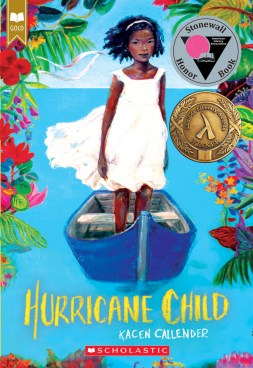
Of course, you also released a Middle Grade this year, the wonderful Hurricane Child, which is a standout for so many reasonsa queer girl of color, a Caribbean setting… What has response to the book been like, and who’s your dream reader for it?

The response to Hurricane Child has been amazing. I really never dreamed that it would receive the level of love and support its gotten, which I’m so incredibly grateful for.

My dream reader is ultimately anyone who feels alone and isolated, and reads and feels empowered by Caroline Murphy and her journey to be herself—that she deserves to exist, and deserves to be happy, no matter what. Whenever I need a reminder of that myself, I just take a look at the cover, and that powerful expression on Caroline’s face.

You also somehow managed to be an editor at Little, Brown among all this, which is just wild to me. What drew you to the queer titles you worked on as an editor, and what would you like to see more of?

Well, the main queer title I worked on during my time at LBYR was Ashley Herring Blake’s Ivy Aberdeen’s Letter to the World, which to this day remains one of the most beautiful middle grade novels in existence. Ashley is such a talented author, and I know she’ll blow everyone away with her second MG novel, The Mighty Heart of Sunny St. James, which is out in March 2019 (I know, I know, such a long wait…)

As for what I’d like to see more of, I did want to see more queer MG books, and I do think that there’s still such a large gap to fill, but I’ve also been so uplifted by the number of recent queer MG books (such as Jen Petro-Roy’s P.S. I Miss You, Barbara Dee’s Star CrossedOne True Way by Shannon Hitchcock, and more)…

Right now, my focus is on seeing more intersectionality. I’d love to see more queer people of color as main characters, in all sorts of novels—and especially more rom-coms where the only tension is if the main character and love interest are going to make out or not, and where you know there’s going to be a happy ending. Unfortunately, historically, queer folks, and especially queer people of color, haven’t been guaranteed happy endings; it feels revolutionary to me to see stories where we are guaranteed that happily ever after.

As someone who straddled both author and editor positions, and particularly within the same category, what were the biggest challenges and the biggest perks?

The biggest challenge in the end unfortunately did become juggling a little too much, and spreading myself too thin. I wanted to help diversify the industry, so I tried very hard to continue working in publishing, as one of the few black editors in children’s books (and I believe the only black trans editor)… but the work became a little too overwhelming, sadly, and I started to become curious about other potential opportunities (my position at LBYR was my first out of grad school, and I’ve never explored any other fields!), so I decided to leave my position in the end, though I hope to now help other people of color and queer people of color find positions in publishing.

The most difficult part of leaving has been parting with incredible authors I’ve been honored to work with, but I know I had nothing to do with their talent, and that they’ll continue to flourish!

The biggest perk was definitely humility. Seeing the incredible talent of authors I worked with was very grounding in my own work, and a reminder that there are so many wonderful authors with so much extraordinary talent, and that no one author is more important than another, or that no one story is more important than another. I’m determined to keep this mindset as I move forward, in all of the work that I do.

I ordinarily ask people who the characters are in media who’ve resonated with them, but you already had a fantastic Twitter thread back in May about Adam from Degrassi. What was it about that character that really stuck with you and made a difference in your own life?

Adam not only changed my life, but I’m pretty sure he’s saved my life, too. Adam had a problematic ending on the show, but watching his story and journey allowed me to see similarities in him that I’d thought and experienced, but had never been able to put a name to before. Suddenly, everything shifted into place, and a few years later, I’m the happiest I’ve ever been. I’m not sure I was living life before–going through the motions, maybe—but now, as people around me say, I’m “glowing.” 🙂

Adam’s absolutely inspired me, and I hope to have a YA with a trans main character named Felix coming out soon!

Lightning round, based on things from This is Kind of an Epic Love Story:

1) Third favorite movie? My favorite movies are all Pixar, and my third favorite happens to be Coco. 🙂
2) Favorite movie character? Chiron, for all that he symbolizes.
3) Favorite writing craft book? Definitely Story by Robert McKee. Technically a film/screenwriting craft book, but novelists can absolutely learn a lot from his plotting advice as well.
4) Favorite Pandora station? While writing Epic Love Story, it was Bon Iver! Now, it’s Sia.
 

And speaking of which, there are some great shoutouts in the book, including ones to authors Benjamin Alire Sáenz and Gabby Rivera. Who are your insta-read authors?

So many! Right now, definitely Sáenz, but also Nina LaCour and David Levithan.

Shifting back to editor life, we’ve spoken before about how you’d love to help more people of color, and specifically Black editors, get involved in publishing. What tips do you have for PoC trying to break into publishing on the business/editorial side?

My biggest piece of advice would be to follow groups like POC in Publishing and We Need Diverse Books on social media for regular tips and job opportunities, and to take advantage of programs like Representation Matters. Reach out to editors for informational interviews, ask questions, be curious and passionate!

What’s something on the topic of queer lit/publishing you wish was talked about more?

I wish intersectionality was discussed a little more. I want to see a lot more queer people of color as main characters, and I want more stories by and featuring queer authors with disabilities, queer authors with different religions, queer authors with different socio-economic statuses, and a mix of all of the above, and more. There’s still a lot of work to be done.

Kacen Callender is the author of Hurricane Child and This Is Kind of an Epic Love Story, and is committed to expanding diversity in children’s books. Kacen loves playing RPG video games and watching soul-sucking reality TV shows in their free time. They really wish they had a dog.

Fave Five: Sapphic Plus-Size Protagonists

Shhhh it’s really six. Tell no one.

The Summer of Jordi Perez by Amy Spalding

Leah on the Offbeat by Becky Albertalli

Bearly a Lady by Cassandra Khaw

The Seafarer’s Kiss by Julia Ember

Knit One, Girl Two by Shira Glassman

Final Draft by Riley Redgate

Rainbow heart

Exclusive Cover Reveal: The Meaning of Birds by Jaye Robin Brown!

Please excuse me while I go full fangirl, but if you’ve spent any time asking for recs on the LGBTQReads Tumblr, you know that Georgia Peaches and Other Forbidden Fruit falls out of my mouth about twelve times a day. So how psyched am I to be revealing the cover of Jaye Robin Brown‘s next f/f YA, The Meaning of Birds, which releases on April 16, 2019?? (Very. Is that not obvious? I’m sorry, I thought it was obvious.) Here’s the story behind the story:

Before:
Ever since her father’s death, Jessica has struggled with the anger building inside her. And being one of the only out teens in school hadn’t helped matters. But come sophomore year, all that changes when effervescent Vivi crashes into her life. As their relationship blossoms, Vivi not only helps Jess deal with her pain, she also encourages her to embrace her talent as an artist. Suddenly the future is a blank canvas, filled with possibilities.

After:
In the midst of senior year, Jess’s perfect world is erased in an instant when Vivi suddenly passes away. Reeling from another devastating loss, Jess falls back into her old ways. She gets into fights. She pushes away her family and friends. And she trashes her plans for art school. Because art is Vivi and Vivi is gone forever.
 
Desperate to escape her grief, Jess finds solace in her gritty work-study program, letting her dreams die. Until she makes an unexpected friend who shows her a new way to channel her anger, passion, and creativity. Jess may never draw again, but if she can find room in her heart to heal, she just might be able to forge a new path for herself.

And here’s the most excellent cover, designed by Jessie Gang with illustrations by Elliana Esquivel!

The Meaning of Birds releases from Harper on April 16, 2019!

Jaye Robin Brownor JRo to her friends, has been many things in her life–jeweler, mediator, high school art teacher–but is now living the full-time writer life. She currently lives in New England but is taking her partner, dog, and horses back south to a house in the woods where she hopes to live happily ever after. She is the author of NO PLACE TO FALL, GEORGIA PEACHES AND OTHER FORBIDDEN FRUIT, and the forthcoming, THE MEANING OF BIRDS which releases 4/16/19.