This is What it Feels Like by Rebecca Barrow
We Are Okay by Nina LaCour
It Goes Like This by Miel Moreland
Over You by Amy Reed
We Used to Be Friends by Amy Spalding
This is What it Feels Like by Rebecca Barrow
We Are Okay by Nina LaCour
It Goes Like This by Miel Moreland
Over You by Amy Reed
We Used to Be Friends by Amy Spalding
Eddy Boudel Tan is back on the site today, this time to share an excerpt from his new novel, The Rebellious Tide! Here’s the story:
 Sebastien has heard only stories about his father, a mysterious sailor who abandoned his pregnant mother thirty years ago. But when his mother dies after a lifetime of struggle, he becomes obsessed with finding an explanation—perhaps even revenge.
The father he’s never met is Kostas, the commanding officer of a luxury liner sailing the Mediterranean. Posing as a member of the ship’s crew, Sebastien stalks his unwitting father in search of answers to why he disappeared so many years ago.
After a public assault triggers outrage among the ship’s crew, Sebastien finds himself entangled in a revolt against the oppressive ruling class of officers. As the clash escalates between the powerful and the powerless, Sebastien uncovers something his father has hidden deep within the belly of the ship—a disturbing secret that will force him to confront everything he’s always wondered and feared about his own identity.
Buy it: Bookshop | Indiebound | Amazon | B&N | Chapters Indigo
And here’s the excerpt!
Sebastien was twenty-five when they met.
Jérôme St. Germain had just moved back to Petit Géant after several years in Montréal. The people in town remembered him being a bookish boy, peculiar and reserved. They were surprised to see him return as an attractive young man with easy charm and a confident style. The town was happy to welcome an eligible bachelor.
Sebastien was freelancing for the local newspaper at the time, mostly shooting fundraisers and hockey tournaments. Jérôme found him peering through the viewfinder of his camera while on assignment at the local college’s graduation ceremony. The diplomas had been handed out, the mortarboards had been thrown. The young graduates now clustered together in spheres of optimism.
“I hear you’re the town’s star photographer,” Jérôme said with a smile. He appeared tidy and down to earth. His hair was a dense sweep of chestnut. Behind the thin frames of his glasses were two penetrating grey eyes tinged with blue like pools of rainwater.
“That is definitely an overstatement,” Sebastien responded. “I’m just the only guy in town who knows what an aperture is.”
The handsome stranger laughed. He crossed his arms and scanned the gymnasium, which was filled with electric blue gowns and bright faces. “I went to this school almost a decade ago. It hasn’t changed a bit. They still haven’t fixed that.” His head nodded toward a domed lamp hanging from the ceiling that was dark, unlike the others.
“I used to go here too. I remember you.”
Jérôme turned to him, surprised. “Aren’t you a few years younger?”
“You hosted an art show in the café to raise money for the class trip to Europe. You painted sea monsters. There was one that looked like a man with octopus tentacles instead of legs. I loved it.”
“I’m glad someone appreciated it. The genteel denizens of Petit Géant seemed more disturbed than anything else. I suppose that’s what I get for showcasing art in a cultural black hole.” He looked at the floor with a nostalgic expression before his eyes shot up to Sebastien. “No offense!”
He laughed. “None taken. I have no attachment to this place. It’s just a cage to me.”
Jérôme adjusted his wool blazer and looked at Sebastien with his rainwater eyes. “I have an offer for you.”
That afternoon, they went together to the same café that hosted the art show so many years earlier. Jérôme laughed when he stepped through the door, amazed how little it had changed. Sebastien didn’t know what to make of this man as they settled into a corner table, but he soon understood they shared something.
Jérôme explained that it hadn’t been easy leaving Montréal. The bohemian bars filled with artists and students teemed with ideas aching to be explored and expanded. Jérôme had found a place that felt like home. When his father fell ill and his mother became distraught, he knew the occasional weekend visit to Petit Géant would no longer suffice. He told himself it would be temporary.
When it was clear his father’s condition was only going to worsen before it got better, he accepted that his stay in town would be longer than he had hoped. He was a headstrong man, not one to sit on his hands. This was an opportunity for him to leave a positive imprint on his much-maligned hometown.
He decided to open a shop. Part gallery, part portrait studio, part camera store, it would be different from anything the town had ever seen. He wanted Sebastien’s help.
Although he had no wealth to invest, Jérôme treated him like a business partner. From branding to merchandising, all decisions were made together. They decided to name the shop Camera Obscura.
By the time preparations for the grand opening were underway, they were spending nearly every morning, afternoon, and evening together. Their friendship was instantaneous. They shared a feeling of alienation—they were both outsiders in a town that enforced conformity—but Jérôme possessed an optimism that things could change.
It was late one night when they first kissed. It had been an exhausting day of painting the interior walls. Sheets of thick brown paper covered the front windows. Sebastien ran a paint roller down his friend’s back, smearing him from neck to rear with the same mint colour as the newly painted walls. Jérôme retaliated, and it wasn’t long before the two men were rolling across the newspaper-covered floor entangled in each other’s limbs. It was his first taste of a man’s lips, and he liked it. He let Jérôme do things with their bodies he had never done before.
“What got you into photography?” Jérôme asked as they lay on the floor beneath a blanket they had retrieved from the trunk of his car.
“My mother,” Sebastien said, wondering if the answer sounded childish. “We used to have a cheap thirty-five millimetre camera when I was a kid. We took pictures of everything over the years. There must be at least five big boxes full in her closet. Even now, she insists we print every shot to add to the collection.”
“Life passes by so quickly. Photos give us a way to remember it.”
Sebastien rolled onto his side and draped his arm across Jérôme’s stomach. “I love how cameras can freeze time. The shutter opens and the moment solidifies into something that will remain long after we’re gone.”
Jérôme leaned into him until their foreheads touched. “Where did you come from, Sebastien Goh?” he said with a smile.
The grand opening of the shop was a success: people actually showed up. Ruby arrived in her favourite red cheongsam. Jérôme’s mother pushed her husband’s wheelchair. They stayed for only twenty minutes, but he was happy to see them smile.
Half of the room was a gallery space displaying work from artists in the region, including several framed photographs of Sebastien’s. In the centre of one wall was Jérôme’s adolescent painting of the octopus man, which he had gifted to his new friend. Servers holding trays of delicate hors d’oeuvres circulated around the room while a quartet of jazz musicians performed in a corner.
“How fabulous,” Sophie said when she arrived with two friends. Sebastien kissed her on the cheek.
Sophie gushed about his new “project,” as she called it, but behind the smile was worry. Sebastien seemed different. There was something in the way he held himself that hinted at newfound contentment. It was unexpected. The weeks leading up to their latest breakup months earlier had been especially rocky. He was aimless and unfulfilled. She was sure he’d come back to her eventually.
Now, seeing the confident way he spoke to his guests and the smart clothes he wore, she felt the creep of uncertainty. Her eyes scanned the mint-coloured room and his new charismatic friend with suspicion.
Sophie found the photographs a month later. Sebastien had been careless. They were stored loosely in a desk drawer in the back room. He had asked her to watch the shop for thirty minutes while he and Jérôme picked up a set of new shelves. She wouldn’t have found them had she not been snooping, but she sensed something was being hidden from her.
The black-and-white photographs printed on glossy paper displayed the nude bodies of two beautiful men. Sebastien was alone in some of them, a suggestive look in his eyes and hair tousled even more wildly than usual. Both men appeared in most of the images. Foreheads touched. Fingers intertwined. Mouths met skin. They looked happy and in love.
Sophie’s hands shook as she reached for her phone. She didn’t know why she felt the need to capture these images and send them to her closest friend, Chloe. She would say she wasn’t thinking, that she just needed someone’s opinion, but she must have known what Chloe would do.
By the time Sebastien and Jérôme returned to the shop, the images of their secret affair were rushing through town like the torrents of a flood.
***
Eddy Boudel Tan is the author of two novels, After Elias (fall 2020) and The Rebellious Tide (summer 2021). His work depicts a world much like our own—the heroes are flawed, truth is distorted, and there is as much hope as there is heartbreak. As a queer Asian Canadian, Eddy celebrates diverse voices through his writing, some of which can be found in publications such as Gertrude, yolk literary, and the GL&R. When he isn’t plotting his next story or adventure abroad, he serves home-cooked meals to those living on the streets as cofounder of the Sidewalk Supper Project. He lives with his husband in Vancouver. Follow Eddy on Twitter (@eddyautomatic) or online (eddyboudeltan.com).
Okay, my copy of this one hasn’t arrived yet, so I haven’t actually read it, but some things just look too cute and joyful and wonderful not to give all the spotlight action possible. Cheer Up! Love and Pompoms is one of those books, a graphic novel with a cis f/trans f romance between two cheerleaders whose friendship is reignited and transformed when they join the same squad. I mean, it kind of can’t be bad? And that’s good enough for me!
 Annie is a smart, antisocial lesbian starting her senior year of high school who’s under pressure to join the cheerleader squad to make friends and round out her college applications. Her former friend BeeBee is a people-pleaser—a trans girl who must keep her parents happy with her grades and social life to keep their support of her transition. Through the rigors of squad training and amped up social pressures (not to mention micro aggressions and other queer youth problems), the two girls rekindle a friendship they thought they’d lost and discover there may be other, sweeter feelings springing up between them.
Buy it: Bookshop | Amazon | IndieBound
Baker Thief by Claudie Arseneault (SFF)
Homesick by Nino Cipri (Speculative short story)
Why We Fight by TJ Klune (Contemporary m/nb romance)
Somebody Told Me by Mia Siegert (Contemporary YA)
The Mermaid, the Witch, and the Sea by Maggie Tokuda-Hall (YA Fantasy)

 Tiny McAllister never thought she’d get married. Not because she didn’t want to, but because she didn’t think girls from Connecticut married other girls. Yet here she is with Caroline, the love of her life, at their destination wedding on the Bermuda coast. In attendance―their respective families and a few choice friends. The conflict-phobic Tiny hopes for a beautiful weekend with her bride-to-be. But as the weekend unfolds, it starts to feel like there’s a skeleton in every closet of the resort.
From Tiny’s family members, who find the world is changing at an uncomfortable speed, to Caroline’s parents, who are engaged in conspiratorial whispers, to their friends, who packed secrets of their own―nobody seems entirely forthcoming. Not to mention the conspicuous no-show and a tempting visit from the past. What the celebration really needs now is a monsoon to help stir up all the long-held secrets, simmering discontent, and hidden agendas.
All Tiny wanted was to get married, but if she can make it through this squall of a wedding, she might just leave with more than a wife.
Buy it: Bookshop | Amazon | IndieBound
 After Alex’s mother dies of an accidental overdose, Alex takes leave from her job as a writer for a lifestyle magazine to return home to Maryland and join her brother Owen, a study in failure to launch, in sorting out their mother’s whimsical, often self-destructive, life. While home, Alex plans to profile Juliette Sprigg, an Eastern Shore restaurant owner and celebrity chef in the making who Alex secretly dated in high school. And when Alex enlists the help of Carolyn, the editor of the local newspaper, in finding a photographer for the article’s photo shoot, Alex struggles with the deepening, tender relationship that blossoms between them as well. To complicate matters, Alex and Owen’s “Aunt” Johanna, who has transitioned to a woman, offers to come from Seattle to help with arrangements, and all hell breaks loose when she announces she is actually Alex and Owen’s long-estranged father. Can Alex accept her mother and father for who they are, rather than who she hoped they would be? And can Alex apply the same philosophy to herself?
Buy it: NineStar Press
 Clementine is a seventy-two year-old reformed con artist with a penchant for impeccably tailored suits. Her life of crime has led her from the uber-wealthy perfume junkies of belle epoque Manhattan, to the scented butterflies of Costa Rica, to the spice markets of Marrakech, and finally the bordellos of Paris, where she settles down in 1930 and opens a shop bottling her favorite extracts for the ladies of the cabarets.
Now it’s 1941 and Clem’s favorite haunt, Madame Boulette’s, is crawling with Nazis, while Clem’s people–the outsiders, the artists, and the hustlers who used to call it home–are disappearing. Clem’s first instinct is to go to ground–it’s a frigid Paris winter and she’s too old to put up a fight. But when the cabaret’s prize songbird, Zoe St. Angel, recruits Clem to steal the recipe book of a now-missing famous Parisian perfumer, she can’t say no. Her mark is Oskar Voss, a Francophile Nazi bureaucrat, who wants the book and Clem’s expertise to himself. Hoping to buy the time and trust she needs to pull off her scheme, Clem decides to tell Voss the real story of the life and loves she came to Paris to escape. But Clem doesn’t have much practice telling the truth and it turns out to be more dangerous than she could have imagined.
Buy it: Bookshop | Amazon | B&N | Indiebound
 Working as a political activist in the early days of the Obama presidency, Seema still struggles with her father’s long-ago decision to exile her from the family after she came out as lesbian, forcing her to construct a new life in the West. Now, nine months pregnant and estranged from the father of her unborn son, Seema seeks reconciliation with the family that once renounced her: her ailing mother, Nafeesa, traveling alone to California from Chennai, and her devoutly religious sister, Tahera, an OB-GYN living in Texas with her husband and children.
Pushed apart and drawn together in equal measure by their often conflicting beliefs, Seema, Tahera, and Nafeesa must confront the complex yearnings in their relationships with one another—and within their innermost selves—as the events that transpire over the course of one fateful week unearth an accumulated lifetime of love, betrayal, and misunderstandings.
Told from the point of view of Seema’s child at the moment of his birth and infused with the poetry of Wordsworth, Keats, and the Quran, Radiant Fugitives is an operatic debut from a bold new voice, exploring the tensions between ideology and practicality, hope and tradition, forgiveness and retribution for one family navigating a shifting political landscape.
Buy it: Bookshop | Amazon | IndieBound
 Courtney Gould’s thrilling debut The Dead and the Dark is about the things that lurk in dark corners, the parts of you that can’t remain hidden, and about finding home in places―and people―you didn’t expect.
The Dark has been waiting for far too long, and it won’t stay hidden any longer.
Something is wrong in Snakebite, Oregon. Teenagers are disappearing, some turning up dead, the weather isn’t normal, and all fingers seem to point to TV’s most popular ghost hunters who have just returned to town. Logan Ortiz-Woodley, daughter of TV’s ParaSpectors, has never been to Snakebite before, but the moment she and her dads arrive, she starts to get the feeling that there’s more secrets buried here than they originally let on.
Ashley Barton’s boyfriend was the first teen to go missing, and she’s felt his presence ever since. But now that the Ortiz-Woodleys are in town, his ghost is following her and the only person Ashley can trust is the mysterious Logan. When Ashley and Logan team up to figure out who—or what—is haunting Snakebite, their investigation reveals truths about the town, their families, and themselves that neither of them are ready for. As the danger intensifies, they realize that their growing feelings for each other could be a light in the darkness.
Buy it: : Bookshop | Amazon | B&N | IndieBound
 Noa Birnbaum has just gotten a job as a makeup assistant on a movie, thanks to her roommate. She’s thrilled when she learns that Lilah Silver will be the star—she’s had a crush on the leading lady for a while. But when she meets Lilah at the studio, Noa is unimpressed – Lilah is distant and shallow, and Noa isn’t in any hurry to get to know her.
Lilah Silver is tired of being in B-rate movies and has finally landed a leading role—in a sci-fi creature feature. Worried that no one will take her seriously, she’s hidden herself behind her pageant queen persona. Lilah is awed by Noa’s self-confidence and style, but how can she convince Noa she’s not a snobby scream queen when she can’t find the right words without a script in her hands?
Buy it: Amazon | B&N | IndieBound | Book Depository
 After getting kicked off the basketball team for a fight that was absolutely totally not her fault (okay maybe a little her fault), Mara is dying to find a new sport to play to prove to her coach that she can be a team player. A lifelong football fan, Mara decides to hit the gridiron with her brother, Noah, and best friend, Quinn-and she turns out to be a natural. But joining the team sets off a chain of events in her small Oregon town-and within her family-that she never could have predicted.
Inspired by what they see as Mara’s political statement, four other girls join the team. Now Mara’s lumped in as one of the girls-one of the girls who can’t throw, can’t kick, and doesn’t know a fullback from a linebacker. Complicating matters is the fact that Valentina, Mara’s crush, is one of the new players, as is Carly, Mara’s nemesis-the girl Mara fought with when she was kicked off the basketball team. What results is a coming-of-age story that is at once tear-jerking and funny, thought-provoking and real, as Mara’s preconceived notions about gender, sports, sexuality, and friendship are turned upside down.
Buy it: Bookshop | Amazon | B&N | IndieBound
 Seamlessly transitioning between the absurd and the tenderhearted, balancing acerbic humor with sharp emotional depth, Afterparties offers an expansive portrait of the lives of Cambodian-Americans. As the children of refugees carve out radical new paths for themselves in California, they shoulder the inherited weight of the Khmer Rouge genocide and grapple with the complexities of race, sexuality, friendship, and family.
A high school badminton coach and failing grocery store owner tries to relive his glory days by beating a rising star teenage player. Two drunken brothers attend a wedding afterparty and hatch a plan to expose their shady uncle’s snubbing of the bride and groom. A queer love affair sparks between an older tech entrepreneur trying to launch a “safe space” app and a disillusioned young teacher obsessed with Moby-Dick. And in the sweeping final story, a nine-year-old child learns that his mother survived a racist school shooter.
The stories in Afterparties, “powered by So’s skill with the telling detail, are like beams of wry, affectionate light, falling from different directions on a complicated, struggling, beloved American community” (George Saunders).
Buy it: Bookshop | Amazon | IndieBound
 Felicity Morrow is back at Dalloway School.
Perched in the Catskill mountains, the centuries-old, ivy-covered campus was home until the tragic death of her girlfriend. Now, after a year away, she’s returned to graduate. She even has her old room in Godwin House, the exclusive dormitory rumored to be haunted by the spirits of five Dalloway students—girls some say were witches. The Dalloway Five all died mysteriously, one after another, right on Godwin grounds.
Witchcraft is woven into Dalloway’s history. The school doesn’t talk about it, but the students do. In secret rooms and shadowy corners, girls convene. And before her girlfriend died, Felicity was drawn to the dark. She’s determined to leave that behind her now; all Felicity wants is to focus on her senior thesis and graduate. But it’s hard when Dalloway’s occult history is everywhere. And when the new girl won’t let her forget.
It’s Ellis Haley’s first year at Dalloway, and she’s already amassed a loyal following. A prodigy novelist at seventeen, Ellis is a so-called “method writer.” She’s eccentric and brilliant, and Felicity can’t shake the pull she feels to her. So when Ellis asks Felicity for help researching the Dalloway Five for her second book, Felicity can’t say no. Given her history with the arcane, Felicity is the perfect resource.
And when history begins to repeat itself, Felicity will have to face the darkness in Dalloway–and in herself.
Buy it: Bookshop | Amazon | B&N | IndieBound
 A hilarious and vulnerable coming-of-age story about the thrilling new experiences––and missteps––of a girl’s freshman year of college
Some students enter their freshman year of college knowing exactly what they want to do with their lives. Elliot McHugh is not one of those people. But picking a major is the last thing on Elliot’s mind when she’s too busy experiencing all that college has to offer—from dancing all night at off-campus parties, to testing her RA Rose’s patience, to making new friends, to having the best sex one can have on a twin-sized dorm room bed. But she may not be ready for the fallout when reality hits. When the sex she’s having isn’t that great. When finals creep up and smack her right in the face. Or when her roommate’s boyfriend turns out to be the biggest a-hole. Elliot may make epic mistakes, but if she’s honest with herself (and with you, dear reader), she may just find the person she wants to be. And maybe even fall in love in the process . . . Well, maybe.
Buy it: Bookshop | Amazon | IndieBound
 Kylie and Regan have been best friends since kindergarten, supporting each other through thick and thin.
While everyone thinks they would be perfect for each other, they insist there’s no chemistry between them—and Regan should know since she’s a chemistry teacher.
To prove it, they agree to a little chemistry experiment: they’ll go on three dates with each other.
So what if their gazes start to linger and accidental touches no longer feel platonic? They chalk it up to the romantic atmosphere—until a friendly good night kiss turns passionate.
Can their friendship go back to the way it was before? Do they even want it to? Or will they risk losing what they have for a chance at love?
![Fake It by [Lily Seabrooke]](https://m.media-amazon.com/images/I/41-OQ-I4wJS.jpg) Avery Lindt finally opened her dream restaurant—and there’s no customers. She’s staying optimistic, though: she’s confident she can fake it till she makes it, roll with the punches, and find a way to save her luxury restaurant, Paramour.
Avery Lindt finally opened her dream restaurant—and there’s no customers. She’s staying optimistic, though: she’s confident she can fake it till she makes it, roll with the punches, and find a way to save her luxury restaurant, Paramour.
But it gets harder when she gets restaurant mogul and star chef Mike Wallace angry, and finds herself on the other end of a campaign to shut down Paramour.
Celebrity chef Holly Mason’s show is in trouble: people are bored with her routine of helping struggling restaurants. Worse, her ex-boyfriend Mike Wallace is making backdoor deals trying to steal the starring role.
Luckily, Holly’s agent Tay has a solution: ditch her show plans for the season, throw their lot in with luxury restaurant Paramour against Mike Wallace’s racketeering operation of a restaurant partnership. The cherry on top? A fake relationship between Holly and Avery to stir up drama.
It would already be a mess if Holly and Avery weren’t already struggling to hold back their attraction for one another. Despite their promise not to date, the lines between acting and reality get awfully blurry sometimes.
Buy it: Amazon
 Meet Ben Dane: brilliant, devastating, devoted, honest to a fault (truly, a fault). His Broadway theater baron father is dead–but by purpose or accident? The question rips him apart.
Unable to face alone his mother’s ghastly remarriage to his uncle, Ben turns to his dearest friend, Horatio Patel, whom he hasn’t seen since their relationship changed forever from platonic to something…other. Loyal to a fault (truly, a fault), Horatio is on the first flight to NYC when he finds himself next to a sly tailor who portends inevitable disaster. And who seems ominously like an architect of mayhem himself.
Meanwhile, Ben’s ex-fiancé Lia, sundered her from her loved ones thanks to her addiction recovery and torn from her art, has been drawn into the fold of three florists from New Orleans–seemingly ageless sisters who teach her the language of flowers, and whose magical bouquets hold both curses and cures. For a price.
On one explosive night these kinetic forces will collide, and the only possible outcome is death. But in the masterful hands of Lyndsay Faye, the story we all know has abundant surprises in store. Impish, captivating, and achingly romantic, this is Hamlet as you’ve never seen it before.
Buy it: Bookshop | Amazon | B&N | IndieBound
Annie is a smart, antisocial lesbian starting her senior year of high school who’s under pressure to join the cheerleader squad to make friends and round out her college applications. Her former friend BeeBee is a people-pleaser—a trans girl who must keep her parents happy with her grades and social life to keep their support of her transition. Through the rigors of squad training and amped up social pressures (not to mention micro aggressions and other queer youth problems), the two girls rekindle a friendship they thought they’d lost and discover there may be other, sweeter feelings springing up between them.
Buy it: Bookshop | Amazon | IndieBound
 The reality of Alden…
Arrogant. Aloof. Argumentative. Antagonistic. Angry. Alden Kaufman is many things, and none of them are nice. Trauma has left him deeply scarred and incapable of easy friendships. He doesn’t know how to let anyone past his walls, and he doesn’t think it’s worth the trouble.
The reality of Kit…
Everybody’s best friend, nobody’s boyfriend. In spite of a lifestyle that doesn’t invite attachments, Kit Taylor gets along with everyone he meets—except Alden. He can’t entice his prickly co-worker out of his shell, and has given up on trying.
The Reality of Us…
Two men at odds with themselves and each other embark on what should be a simple team-building exercise, but nothing goes as planned. Unexpected intimacy and a freak accident leave Kit and Alden dependent on each other long after they leave the mountain behind. Now they have a choice—to continue as they’ve been, or trust a shaky new reality together.
Buy it: Bookshop | Amazon | B&N | IndieBound
 The eclectic stories in this collection are bound by the threads of desire in its many forms, above all, the desire for love and a place of safety in a world where being Black and gay can thwart the fulfillment of that longing. The characters are complex, driven, difficult, and even, at times, unsympathetic, but always compelling. In other words: fully rounded human beings living complicated lives.
A proud Black woman who escaped her rural, impoverished town returns after the collapse of her marriage and faces the scorn of those she left behind. A middle-aged gay man finds his loneliness temporarily relieved by the arrival of a stray cat. An unhappily married woman becomes enmeshed in her bisexual husband’s attempt to create a ménage à trois with a much younger man. A 16-year-old boy discovers the power of his sexuality when he embarks upon a dangerous seduction. Two Black men, one mature and rich, the other young and struggling, are drawn into a contentious affair by their shared love of opera. The legendary blues singer Glady Bentley crashes up against the barriers of race and gender when she gets caught up in a police raid.
Kiss the Scars on the Back of My Neck is a masterful collection of stories by a gifted writer who has fully hit his stride.
Buy it: Bookshop | Amazon | IndieBound
 Sixteen-year-old shy, socially awkward trans teen Bass reluctantly skips school and goes on a boat trip with his adventure-seeking girlfriend, Rosie. When a sudden storm smashes their boat on a rocky shore off a deserted island, Bass and Rosie struggle to make it to safety. Bruised and battling hypothermia, the pair have to seek shelter and work together to survive until they can be rescued. After a horrible night, Rosie, an experienced climber, decides to scale a steep cliff to find help. She falls and injures herself badly. Now Bass has to find the strength and courage to swim around a dangerous headland and make his way back to civilization before it’s too late.
Buy it: Bookshop | Amazon | B&N | IndieBound
 Simply the Best… Giselle Otero needs a win in her life, and being personal assistant to Helene Jolie, the socialite founder of SimplytheBest.com, is finally it. The hours are long, and keeping Helene happy is more than a full-time job. That Helene seems to find Giselle’s company pleasing in ways beyond work is dizzying.
Simply the Worst… An unfortunate lapse in judgment has bumped New York reporter Alice Cabot from Science to Style. Even worse, she’s exiled to New Mexico to complete a series of in-depth and upbeat features on Helene Jolie and her company’s meteoric success. She knows she’s going to hate every last thing about this assignment, starting with the assistant who’ll be her corporate babysitter.
Simply Irresistible… Tasked with keeping the inquisitive reporter in check, Giselle is eager to prove her worth to the demanding, charismatic Helene. Even if that means spending every day arguing with a big mouth, big city know-it-all whose probing questions lead to sleepless nights―and awakened desires.
Buy it: Bookshop | Amazon | B&N | IndieBound
 Dragons were fire and terror to the Western world, but in the East they brought life-giving rain…
Now, no longer hailed as gods and struggling in the overheated pollution of Beijing, only the Eastern dragons survive. As drought plagues the aquatic creatures, a mysterious disease—shaolong, or “burnt lung”—afflicts the city’s human inhabitants.
Jaded college student Xiang Kaifei scours Beijing streets for abandoned dragons, distracting himself from his diagnosis. Elijah Ahmed, a biracial American medical researcher, is drawn to Beijing by the memory of his grandmother and her death by shaolong. Interest in Beijing’s dragons leads Kai and Eli into an unlikely partnership. With the resources of Kai’s dragon rescue and Eli’s immunology research, can the pair find a cure for shaolong and safety for the dragons? Eli and Kai must confront old ghosts and hard truths if there is any hope for themselves or the dragons they love.
Buy it: Bookshop | Amazon | IndieBound
 Seventeen-year-old Joshua Gaines is the orphaned foster son of a failed doctor on the run from his father’s debt. In 1849, he travels to Independence, Missouri and falls in with the mysterious, four-fingered Renard, and his companion, formerly-enslaved Free Ray. Joshua offers his medical expertise to their party, and together they embark on the fifteen-hundred mile overland journey to Gold Rush California.
Following the hardship, disease, and death on the trail, the company abandons panning the river in favor of robbery and murder. Engulfed by violence, the young doctor-turned-marauder must reckon with his own morality, his growing desire for the men around him, and the brutality that has haunted him all his life.
Buy it: Bookshop | Amazon | IndieBound
 There’s only one thing standing between Finch Kelly and a full-blown case of high school senioritis: the National Speech & Debate Tournament. Taking home the gold would not only be the pinnacle of Finch’s debating career, but the perfect way to launch himself into his next chapter: college in Washington, DC, and a history-making career as the first trans congressman. What could possibly go wrong?
Well, for starters, Finch could develop a teeny tiny crush on his very attractive, very taken, and very gay debate partner, Jonah. Never mind that Finch has never considered whether he’s interested in more than just girls.
And that dream of college in DC? Finch hasn’t exactly been accepted anywhere yet, let alone received the full-ride scholarship he’ll need to make this dream a reality.
Worst of all, though, is this year’s topic for Nationals: transgender rights. If he wants to cinch the gold, and get into college, Finch might have to argue against his own humanity.
People say there are two sides to every argument. But, as Finch is about to discover, some things—like who you are and who you love—are not up for debate.
Buy it: Bookshop | Amazon | IndieBound
This is the second book in the First Sister trilogy
 Astrid has reclaimed her name and her voice, and now seeks to bring down the Sisterhood from within. Throwing herself into the lioness’ den, Astrid must confront and challenge the Aunts who run the Gean religious institution, but she quickly discovers that the business of politics is far deadlier than she ever expected.
Meanwhile, on an outlaw colony station deep in space, Hiro val Akira seeks to bring a dangerous ally into the rebellion. Whispers of a digital woman fuel Hiro’s search, but they are not the only person looking for this link to the mysterious race of Synthetics.
Lito sol Lucious continues to grow into his role as a lead revolutionary and is tasked with rescuing an Aster operative from deep within an Icarii prison. With danger around every corner, Lito, his partner Ofiera, and the newly freed operative must flee in order to keep dangerous secrets out of enemy hands.
Back on Venus, Lito’s sister Lucinia must carry on after her brother’s disappearance and accusation of treason by Icarii authorities. Despite being under the thumb of Souji val Akira, Lucinia manages to keep her nose clean…that is until an Aster revolutionary shows up with news about her brother’s fate, and an opportunity to join the fight.
Buy it: Bookshop | Amazon | IndieBound
 It’s been one year since Edie’s mother died. But her ghost has never left.
According to her GG, it’s tradition that the dead of the Mitchell family linger with the living. It’s just as much a part of a Mitchell’s life as brewing cordials or talking to plants. But Edie, whose pain over losing her mother is still fresh, has no interest in her family’s legacy as local “witches.”
When her mother’s teenage journal tumbles into her life, her family’s mystical inheritance becomes once and for all too hard to ignore. It takes Edie on a scavenger hunt to find objects that once belonged to her mother, each one imbued with a different memory. Every time she touches one of these talismans, it whisks her to another entry inside the journal—where she watches her teenage mom mourn, love, and hope just as Edie herself is now doing. Maybe, just maybe, Edie hopes, if she finds every one of these objects, she can finally make peace with her loss and put the past to rest for good. But this journey to stake her independence from her family may actually show Edie who she truly is…and the beautiful gifts that come with being just a little different.
Buy it: Bookshop | Amazon | IndieBound
 When tragedy strikes, Cassidy, a cam girl living in Southern California, must return to the small West Virginia town she left behind. Cassidy likes her job getting naked for men on camera, though she prefers sex with women. She never came out to her family or friends back in her home state―not about her sexuality and certainly not about her sex work. Now, she must figure out how to hold on to the life she’s built for herself while picking up the pieces of her fractured family.
As Cassidy’s story unfolds, we glimpse into the lives of the strong, complicated women who came before her: Jane, the sheltered daughter of farmers, escapes West Virginia for Washington, DC to work as a Government Girl for the FBI during World War II, until a fateful mistake threatens her future. Paloma, a Fulbright Scholar, journeys to newly Westernized Prague―only to fall for an idealistic but safe man from West Virginia.
Though worlds and generations apart, all three search for meaning as they face impending motherhood and the pull to return home to rural Appalachia.
Buy it: Bookshop | Amazon | IndieBound
![Sips of Her (Coffee Shops of Love Book 2) by [Karmen Lee]](https://m.media-amazon.com/images/I/41UHqK9EtpS.jpg) Julie Kim’s life was supposed to be simple. Falling for the gorgeous barista with the enigmatic smile was not part of the plan.
Julie Kim’s life was supposed to be simple. Falling for the gorgeous barista with the enigmatic smile was not part of the plan.
Cameran Davis loves love and her coffee shop, Love & Lattes, reflects that. But, she’s starting to wonder if maybe happily ever after isn’t in the cards.
A surprise run-in culminates in a ruse leading to acknowledging feelings and steamy nights. When things get real, will they fight for a chance at happiness or go their separate ways?
Buy it: Amazon
 The city of Ora is watching.
Anima is an extrasensory human tasked with surveilling and protecting Ora’s citizens via a complex living network called the Gleaming. Although ær world is restricted to what æ can see and experience through the Gleaming, Anima takes pride and comfort in keeping Ora safe from harm.
When a mysterious outsider enters the city carrying a cabinet of curiosities from around with the world with a story attached to each item, Anima’s world expands beyond the borders of Ora to places—and possibilities—æ never before imagined to exist. But such knowledge leaves Anima with a question that throws into doubt ær entire purpose: What good is a city if it can’t protect its people?
Buy it: Bookshop | Amazon | IndieBound
 April French doesn’t do relationships and she never asks for more.
A long-standing regular at kink club Frankie’s, she’s kind of seen it all. As a trans woman, she’s used to being the scenic rest stop for others on their way to a happily-ever-after. She knows how desire works, and she keeps hers carefully boxed up to take out on weekends only.
After all, you can’t be let down if you never ask.
Then Dennis Martin walks into Frankie’s, fresh from Seattle and looking a little lost. April just meant to be friendly, but one flirtatious drink turns into one hot night.
When Dennis asks for her number, she gives it to him.
When he asks for her trust, well…that’s a little harder.
And when the desire she thought she had such a firm grip on comes alive with Dennis, April finds herself wanting passion, purpose and commitment.
But when their relationship moves from complicated to impossible, April will have to decide how much she’s willing to want.
Buy it: Amazon | IndieBound
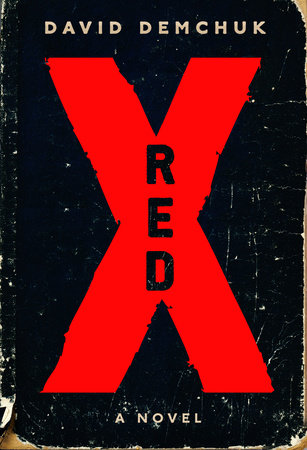
Woven into their stories is David Demchuk’s own personal history, a life lived in fear and in thrall to horror, a passion that boils over into obsession. As he tries to make sense of the relationship between queerness and horror, what it means for gay men to disappear, and how the isolation of the LGBTQ+ community has left them profoundly exposed to monsters that move easily among them, fact and fiction collide and reality begins to unravel.
Buy it: Bookshop | Amazon | Indigo
 On what should be the biggest night of her life, everything suddenly goes horribly wrong. First, her king denies her the promotion she rightfully earned, as well as the knighthood that goes along with it. And then, when Scratch is wallowing somewhere near the fetid rock bottom, she and her best friend, the flamboyant and carefree Sergeant James Ursus, are arrested for orchestrating the abduction of Princess Frances and sentenced to death. On the whole, things could be better.
Luckily, help comes in the form of the mysterious Shae siblings―Vel and Umbrella―who inform the doomed pair that the issue of the missing Princess is far more complicated than it appears. After a daring escape, the four embark on an ill-advised rescue mission through a forest filled with beasts, bandits, and mysterious fair folk, bringing nothing with them but a kitchen knife and the vague outline of a plan. Their destination is the Between, a sacred and shadowy fae-guarded place that promises to deliver Scratch and James to the princess―if they manage to survive.
But Scratch didn’t rise above her humble childhood in the Royal City slums by accepting things at face value. It’s clear that the enigmatic Shaes are hiding something, but what do they know? Who are they working with? And why, in the name of all the divine constellations in the scrambled sky, can’t Scratch stop staring at Brella?
Buy it: Bookshop | Amazon | IndieBound
Author of I THINK I LOVE YOU ‘s debut THE SISTER SPLIT, pitched as a reverse Parent Trap, in which a young girl teams up with her future step sister to create a plan full of hijinks that will stop their parents from getting married, so she doesn’t have to move away from the city and leave her best friend – a girl – she’s starting to develop feelings for behind, to Kelsey Horton at Delacorte, in an exclusive submission, for publication in spring 2023, by Penny Moore at Aevitas Creative Management (world).
Alex Kahler writing as K.R. Alexander’s GALLOWGATE, set in a school for banishing wayward ghosts, where a haunted boy finds forbidden magic, otherworldly foes, fierce friends, and queer romance, to David Levithan at Scholastic, for publication in spring 2023, by Brent Taylor at TriadaUS Literary Agency (world).
Hayden Stone’s AN UNEXPECTED KIND OF LOVE, pitched as Notting Hill but queer, in which an uptight bookseller stumbles headlong into a relationship with the actor whose movie is filming in his family’s struggling shop, to Heather Howland at Entangled Embrace, in a two-book deal, for publication in fall 2021 (world).
Booker winner for SHUGGIE BAIN Douglas Stuart’s YOUNG MUNGO, a portrayal of working-class life and a suspenseful story of the dangerous first love of two young men born under different stars—a Protestant and a Catholic—who should be sworn enemies if they’re to be seen as men at all, again to Peter Blackstock at Grove/Atlantic, for publication on April 5, 2022, by Anna Stein at ICM (NA).
Author of SEVEN SUSPECTS and A KIND OF JUSTICE Renee James’s BEATNIKKI’S CAFE, in which a middle-aged transgender business woman tries to keep a low profile, but when a goon assaults her business partner, she reduces him to a bloody mess—and suddenly, she and everyone close to her are targets of a revenge-minded thug who is ruthless, clever, and unbound by any moral code, to Michael Nava at Amble, in a nice deal, for publication in March 2022, by Tina Schwartz at The Purcell Agency (world English).
Bronwyn Fischer’s THE RED FERN POEM, pitched as a queer CONVERSATIONS WITH FRIENDS or a modern THE PRICE OF SALT, following a first-year university student and an older woman whose unexpected interest in her sparks an all-consuming and insidious love affair, exploring youthful self-consciousness, self-delusion, and self-definition, to Abby Muller at Algonquin, for publication in spring 2023, by Sam Hiyate at The Rights Factory (world, excl. Canada and UK).
Lambda Literary Award Finalist, GLAAD Media Award winner, and author of REAL QUEER AMERICA Samantha Allen’s PATRICIA WANTS TO CUDDLE, a contemporary horror comedy novel pitched as queer Grendel for the Instagram era, following a group of contestants on a reality television dating competition as they compete for love, and their lives, while on a remote island that’s home to an elusive and woefully misunderstood creature, to Sareena Kamath at Zando, at auction, by Leila Campoli at Stonesong (world English).
Author of HOW TO LIVE IN DETROIT WITHOUT BEING A JACKASS Aaron Foley’s BOYS COME FIRST, about the lives of 30-something Black gay men navigating love, life, and career in Detroit as they confront their evolving friendship and individual hiccups, including workplace micro-aggressions, bad Tinder dates, situationships and frenemies, while attempting to maintain their Blackness in America’s comeback city and the ever-changing expectations of homosexuality in structures largely architected by white gay men, to Anne Trubek at Belt, in a nice deal, for publication in May 2022 (US).
AJ Mason’s KLOUD 9, a queer space opera graphic novel about a lonely orphan trying to keep himself afloat with odd jobs, and an extraterrestrial star soldier who, after falling in love, are forced to go on the run and flee the solar system, joined by a motley crew, illustrated by Dominic Bustamante, to Erika Turner at IDW Publishing, in a three-book deal, for publication in 2023, by Britt Siess at Britt Siess Creative Management (world).
Author of THE CAMINO CLUB Kevin Craig’s BOOK OF DREAMS, in which a young man is given a book by a mysterious bookseller and falls into its pages, and must find an escape before he becomes a chapter in its horrific narrative; and WHERE IS ETHAN SINCLAIR, in which two young men try to solve the puzzling disappearance of a friend by studying his blog, only to unravel a mystery that sets them on a path to fight for justice for their missing friend—and hopefully bring him home safe, to Annie Harper at Duet, in a nice deal, in an exclusive submission, in a two-book deal, for publication in summer 2022 (world). Rights: MJ Courchesne at Gryphon Publishing Consulting
Rose Szabo’s WE ALL FALL DOWN, the first book in the River City duology, about a city where magic used to thrive and four queer young people are cast as archetypal figures—the maiden, the hero, the monster, and the witch—in an age-old ritual that will revive the flow of magic, even though none of them quite fit the roles thrust upon them and in the end discover that they can only stay true to themselves, to Trisha de Guzman at Farrar, Straus Children’s, in a very nice deal, in an exclusive submission, in a two-book deal, for publication in spring 2022, by Jennifer Azantian at Azantian Literary Agency (world English).
Author of ENTER TITLE HERE (as Rahul Kanakia) and WE ARE TOTALLY NORMAL Naomi Kanakia’s JUST HAPPY TO BE HERE, about an Indian American trans girl who transfers from her prestigious all-boys’ school to the sister school that she’s always idealized, and has to decide whether she’s content to be treated like a second-class citizen or whether to risk her place by demanding that her school live up to its own principles, to Stephanie Guerdan at Harper Teen, for publication in spring 2023, by Christopher Schelling at Selectric Artists (world).
Amanda DeWitt’s ACES WILD, in which a character pitched as a modern asexual Kaz Brekker assembles a crew of ace teens he met through fandom forums and leads them on a Las Vegas heist to prove his incarcerated mother was set up by a rival casino owner, to Ashley Hearn at Peachtree Teen, in a nice deal, for publication in fall 2022, by Cate Hart at Harvey Klinger (world).
Lambda Literary Award finalist and author of RUNNING WILD Lucy Jane Bledsoe’s NO STOPPING US NOW, pitched as Mrs. America meets A League of Their Own, where a 17-year-old girl whose chance encounter with Gloria Steinem inspires her to fight for her public school to actually follow the new Title IX law, facing a menacing coach and navigating her feelings for a fellow teammate in the process; a story about the joy of sports and the power of sisterhood based on the author’s own activism as a champion athlete in 1970s Portland, Oregon, to Kat Georges at Three Rooms Press, for publication in spring 2022 to coincide with the 50th anniversary of Title IX’s passage, by Reiko Davis at DeFiore and Company (world).
Editor of KINDRED Michael Earp, ed.’s fully illustrated untitled YA queer fairy tales anthology, which interprets original fairy tales with a queered ideology, questioning the heteronormative culture from which these traditional stories come and how that is perpetuated when left unexamined; contributors include Amie Kaufman, Mackenzi Lee, Dean Atta, Will Kostakis, Lily Wilkinson, Sophie Gonzales, Alison Evans, Alexandra Villasante, Abdi Nazemian, Gary Lonesborough, and James Brandon, to Meg Whelan at Affirm Press, by Ben Fowler at Abner Stein, on behalf of Taryn Fagerness Agency and Linda Epstein at Emerald City Literary Agency (world).
Journalist, critic, and host of Crooked Media’s podcast Keep It Ira Madison III’s PURE INNOCENT FUN, a collection of essays that explores popular culture of the 1990s and earlier through the author’s perspective and lived experience as a Black, gay TV writer and cultural critic, to Jamia Wilson at Random House, at auction, by Erin Malone at William Morris Endeavor (NA).
National Endowment for the Arts, MacDowell, Yaddo, and Michener Center for Writers fellow ‘s LEG: THE STORY OF A LIMB AND THE BOY WHO GREW FROM IT, a memoir that grapples with family, disability, illness, and coming of age in two closets–as a gay man and as a man living with cerebral palsy–while exploring with trenchant humor what it means to “transform” when there are parts of yourself you cannot change, pitched in the vein of Ryan O’Connell meets David Sedaris, to Zachary Knoll at Simon & Schuster, in a pre-empt, by Hannah Brattesani at Friedrich Agency (NA).
Slate journalist June Thomas’s WHERE ARE ALL THE LESBIANS?, a cultural history, celebration, and critical look at queer women’s communities in the second half of the 20th century, to Seal Press, at auction.
Today on the site, we’ve got the cover for Maria Romasco-Moore’s upcoming bi contemporary YA fantasy I am the Ghost in Your House, which releases April 19, 2022 from Underlined/Random House! Here’s the story:
Pie is the ghost in your house.
She is not dead, she is invisible.
The way she looks changes depending on what is behind her. A girl of glass. A girl who is a window. If she stands in front of floral wallpaper she is full of roses.
For Pie’s entire life it’s been Pie and her mother. Just the two of them, traveling across America. They have slept in trains, in mattress stores, and on the bare ground. They have probably slept in your house.
But Pie is lonely. And now, at seventeen, her mother’s given her a gift. The choice of the next city they will go to. And Pie knows exactly where she wants to go. Pittsburgh—where she fell in love with a girl who she plans to find once again. And this time she will reveal herself.
Only how can anyone love an invisible girl?
A magnificent story of love, and friendship, and learning to see yourself in a world based on appearances, I Am the Ghost in Your House is a brilliant reflection on the importance of how much more there is to our world than what meets the eye.
And here’s the marvelously unsettling cover, with art by Alex Garant!

Preorder: Amazon | IndieBound
Maria Romasco Moore is the author of Some Kind of Animal, a novel, and Ghostographs, an interconnected collection of flash fiction inspired by vintage photographs. She teaches writing at Columbus College of Art and Design.
Today on the site we welcome Becca Spence Dobias, author of On Home (releasing August 24th), to talk about writing queer lit against the backdrop of a hometown you fear won’t accept it and weighing the claim of #ownvoices against the potential resulting hostility. First, here’s a little more about On Home:
 When tragedy strikes, Cassidy, a cam girl living in Southern California, must return to the small West Virginia town she left behind. Cassidy likes her job getting naked for men on camera, though she prefers sex with women. She never came out to her family or friends back in her home state―not about her sexuality and certainly not about her sex work. Now, she must figure out how to hold on to the life she’s built for herself while picking up the pieces of her fractured family.
As Cassidy’s story unfolds, we glimpse into the lives of the strong, complicated women who came before her: Jane, the sheltered daughter of farmers, escapes West Virginia for Washington, DC to work as a Government Girl for the FBI during World War II, until a fateful mistake threatens her future. Paloma, a Fulbright Scholar, journeys to newly Westernized Prague―only to fall for an idealistic but safe man from West Virginia.
Though worlds and generations apart, all three search for meaning as they face impending motherhood and the pull to return home to rural Appalachia.
Preorder: Bookshop | Amazon | IndieBound
And here’s the post!
In the first draft of my novel, On Home, my character’s sexuality was ambiguous. I left her relationship open-ended, telling myself it could be read as a very close friendship, though early readers all told me they read it as romantic. I didn’t mention this aspect of the book at all when I crowdfunded it through Inkshares, as I didn’t want to turn off potential supporters. Now I’m preparing to launch a full-on #ownvoices queer book and am reflecting on the journey.
I grew up in a small town in rural West Virginia where very few queer people were out. In my high school, there was a token lesbian and a token gay guy, but everyone else was closeted—and with good reason—the two out teens were harassed constantly. Even without being out, anyone “weird” was called “faggot”—beaten up, made fun of, attacked in the hallways. It made sense, that as someone who was unsure of her sexuality, it was safer to follow what felt like the dominant part of it and pursue guys. A girlfriend and I flirted, talking about our fantasies, but it never felt like something we would actually pursue. It really didn’t even feel within the realm of possibility in the place and time where we grew up.
When I moved to North Carolina for college, my eyes began to open as I met more queer folks. I was so naive that when I found out a friend was a lesbian, I stared at her stunned for a moment and asked, “Like a full lesbian?”
“A full lesbian,” she confirmed, laughing at me. I was both impressed and intimidated.
Though I still only dated men, I experimented with women. My first time with a woman, I reflected that it was like “cake frosting”—almost too sweet and good. I hadn’t experienced sex purely for the physical pleasure of it before; I’d always been too wrapped up in my own head about what the sex meant.
I couldn’t shake my internalized homophobia though. I was fine with other people being queer, but it still felt embarrassing when I was thinking or talking about myself. It didn’t help that my first experiment with coming out went poorly.
I’d graduated college and signed on as an AmeriCorps VISTA. At our end of the year celebration, I was enjoying dinner and drinks with other VISTA volunteers from across California, where I’d moved. We were in California, we were all progressive. I felt comfortable and tipsy enough to share that I “wasn’t exactly straight.” The supervisor, a man in his fifties, was also tipsy. “Yeah!” He exclaimed, and gave me a high five. It felt gross and objectifying. He liked the idea of hot lesbians. I didn’t want anyone else to think of me as a sexual person, so I didn’t talk about it for a long time, especially not with people from home, who I wanted to see me as a successful hometown girl—accomplished, smart, definitely not sexual.
Still, at the suggestion of my editors, I made the next drafts’ relationship explicitly romantic. It felt truer this way—less wishy washy. Literature is often a kind of wish fullfilment. If we don’t have things in real life, it can be nice to read about them and in a way, live them vicariously. Writing is like this sometimes, too. I don’t wish for my life to be different. I am happy I ended up with the partner I have and in the place where I am. I have a happy marriage, friends, a wonderful community, and a beautiful loving home. But by writing On Home, and fully embracing West Virginia and a sapphic relationship, I’m able to have those too, in a different way—a way that will forever be precious to me. Once I embraced my book’s queerness, it became more than a book; it was a different way my life could have gone, wrapped into a neat package that I can keep with me, like a stone in my pocket.
Still, I was determined it not be marketed or labeled a “queer book.” I told myself this was about keeping my audience broad, but looking back, it was about my own insecurities about my sexuality. I would keep my distance from it—I’d be an ally, but certainly not someone who had sexual desires or preferences myself. As an adult—a bi woman in a heterosexual marriage—it was easy to continue to pass as straight. I still had work to do—external and internal.
Soon after, writers began to come under scrutiny for writing queer literature without being visibly queer, and I wondered again if I should come out. I fretted about what calling it an #ownvoices book would mean for my hometown in West Virginia, who had rallied around me to crowdfund the book without knowing it was queer at all. The decision felt like a pull between authenticity in the book community or scandalizing the people I grew up with. I hemmed. I hawed. I chose authenticity.
Finally, I came out in a book launch video for Pride month. No one seemed shocked or surprised. I was nervous it might alienate some of my audience, and perhaps it still will, when the book comes out, but I’m no longer hindered by this fear.
Now my book’s queerness is one of its main marketing points. My hometown has been supportive, or at least quiet about this move. Though I’ve received homophobic comments on Facebook ads, they’ve been from strangers.
Though the #OwnVoices movement is (rightly) under scrutiny for this exact reason—it’s intrusive, sometimes harmfully so, in my case, and my novel’s, it was a gift. The book’s story is the one it was meant to be, and I’m more my authentic self too. We will both find our people.
***
Becca Spence Dobias grew up in West Virginia and now lives in Southern California with her husband and two children. On Home is her first novel.
ICYMI, Shakespeare reimaginings are my jam, so I’m thrilled to be revealing the cover for Lauren Emily Whalen’s Take Her Down, a queer YA Julius Caesar retelling set at a cutthroat magnet school that releases on the Ides of March! (That’s March 15, 2022, although if you preorder from Bold Strokes Books, you can get it in your hands two weeks early!)
In this queer YA retelling of Shakespeare’s Julius Caesar, stakes at Augustus Magnet School are cutthroat, scheming is creative, and loyalty is ever-changing.
Overnight, Bronwyn St. James goes from junior class queen to daughter of an imprisoned felon, and she lands in the care of her aunt and younger cousin Cass, a competitive cheerleader who Bronwyn barely knows. Life gets worse when her ex-best friend, the always-cool Jude Cuthbert, ostracizes Bronwyn from the queer social elite for dating a boy, Porter Kendrick.
Bronwyn and Jude are both running for student body president, and that means war. But after Bronwyn, Porter, and Cass share a video of Jude in a compromising position, Jude suddenly goes missing. No one has seen her for weeks and it might be all Bronwyn’s fault.
Will Jude ever be found? Or will Bronwyn finally have to reckon with what she’s won―and what she’s lost?
Content Advisory: Depictions of sexual assault.
And here’s the on-point cover, done by Inkspiral Design!

Preorder: Amazon | Bold Strokes Books
Lauren Emily Whalen is the author of three books for young adults, including TWO WINTERS, a queer YA reimagining of Shakespeare’s The Winter’s Tale, available everywhere September 14. Lauren is a freelance writer, professional performer, and very amateur aerialist who is an unabashed devotee of the Bard. She lives in Chicago with her cat, Versace, and an apartment full of books. Say hello at laurenemilywrites.com.
Today on the site I’m thrilled to introduce two brilliant authors in conversation: Ada Hoffmann, author of The Outside and The Fallen (the latter of which just released last month from Angry Robot), and RB Lemberg, author of the Birdverse series. They’re here to chat about their work and the worldbuiliding, representation, and themes within it, so pull up a chair and listen in!

RB: I love how in the world of your novels The Outside and The Fallen, issues of faith and ethics take central place. One of the things that made me root for Yasira is seeing her grapple with ethical issues at every step. She constantly makes calculations related to fairness and right and wrong as she perceives them; I found this very relatable, and I think this is relatable to other autistic people as well. I would love to hear how you went about creating this aspect of Yasira’s character, and how this may connect to your larger worldbuilding around issues of divinity, godhood, and justice.
 Ada: Thank you, RB! Ruminating and calculating about what’s right or wrong is relatable to me, too. It’s something I can paralyze myself with if I’m not careful. I wouldn’t say that autistic people are any more moral than others, overall, but I do think that this specific kind of rumination is something I see a lot.
I created Yasira some time after creating my main villains, so from the get-go I knew she needed to be someone who’d be caught between them in their machinations and would eventually need to decide for herself what side she was on. (And whenever there’s a plot dilemma like that, I almost always root for the character to come up with their own, third option!) It takes a lot of thinking things over in order to be able to make a decision like that. It was almost a plot requirement more than a character requirement, but I think it fits Yasira’s other traits well and formed a substantial part of who she is.
The worldbuilding of the Outside series is very much one that presents two bad options. I had some fun with the idea of religion being presented mechanistically, as a set of rules to follow that will have a set of well-defined spiritual outcomes–this is highlighted by the Gods of Yasira’s galaxy literally being machines. Someone like Yasira has a desire to be good and follow rules–when she accuses Tiv of doing things just to be good, and not because she really means them, it’s almost a bit of projection. It takes her time and some bad experiences before she really understands that the rules she’s been raised to follow are not just and that she cannot continue to follow them. But on the other side of the equation, the polar opposite of a mechanistic religion is Outside, which is just this wild, utterly unknowable mystical force with no regard for human lives or suffering whatsoever, and that doesn’t seem to be a good option either.
I talk about Yasira finding a third option, but in the end I suppose it’s not fully a third option–she doesn’t go off on her own and create a completely different, third religion. Instead she really does come to revere Outside in some ways, but she has to reconcile that with her own very human belief in justice and human dignity and that it’s worth saving as many human lives as she possibly can. A lot of Yasira’s heroism lies in the ability to do that reconciliation, at great cost to herself. Meanwhile Dr. Talirr is a villain because she discards that belief – her own very human tendency is to sacrifice other people, mostly people she doesn’t know, to advance her own aims.
Or at least that’s my own moral take on what’s going on in this series –I do find it rewarding when readers come up with their own nuanced interpretations that are a bit different from mine. That tells me that I’ve given them enough to chew on, philosophically, that they’re really thinking about it and concluding things on their own, and I like when that happens.
Buy The Outside
RB, you write a lot about divinity and mysticism as well in your Birdverse series, which I love. In The Four Profound Weaves, I was really struck by the depth of meaning in the four weaves of the title, with characters who can weave carpets out of substances as abstract as songs, bones, sand, and wind. They are a counter-intuitive set of things to build carpets out of at first glance, but each one has a very particular emotional meaning, and the end of the novella combines these meanings and shows them as being intertwined, in a kind of cycle or a weave consisting of all four threads. What led you to choose these four particular substances, these four particular meanings? Did you consider many possible ones, or did you always know deep down it would be these four?
RB: Thank you so much for those thoughtful answers, Ada, lots to chew on! I want to talk more about Dr. Talirr, if that’s OK–I loved seeing two autistic women in a mentoring relationship. I rarely see women mentors and mentees, and I rarely see an autistic mentor/autistic mentee relationship, even though I feel this happens frequently in life, so the complicated relationship between Dr. Talirr and Yasira felt exciting to me. I love how central this relationship is to the world of the Outside, and how deep their conflict is. I think that from a normative human perspective, the value of human lives outweighs most other concerns, but that, too, can be broken – if the fundamental relationship to reality itself is altered, ethics are altered as well, and with them the value of human lives; that is, perhaps, what makes Dr. Talirr a heretic rather than straightforwardly a villain. I guess that’s those other interpretations you mentioned 🙂
As for the four weaves, I was always deeply interested in the relationship between hope and death. Years before I was a published writer, I envisioned hope and death as sibling birds, circling around each other as they descend towards a person on the ground. The imagery of hope and death as birds appears in print for the first time in one of my early poems, “Twin-Born,” in Goblin Fruit.
 Hope and death are intertwined in paradoxical yet intuitively familiar ways. I see both hope and death as properties of humanity as a whole, its defining characteristics, if you will. As for change and wanderlust, I envisioned those as properties of individuals, and both are very important to me. In The Four Profound Weaves and elsewhere, I interpreted change as it relates to transness, to coming out; change is both frightening and necessary in order to embrace one’s fullest self. As for wanderlust, it is also a property of an individual, and specifically my own need as an autistic person–to roam both physically and intellectually, to explore and wander. I often think about the absence of wanderlust as stagnation, being stuck in one place that neither hope nor death can reach. Change and wanderlust are weaves that represent the protagonists nen-sasaïr and Uiziya, both of whom are trans, both of whom have been feeling stuck in their lives for a very long time. Embracing both change and wanderlust leads them to the two other, more collective, weaves of hope and death. Readers sometimes ask me which is my favorite weave. Right now I will have say wanderlust; the best ending for me always leads to new adventures. The thing I desire most in my own life right now is to be free to wander, as a person who exists in a physical world, as a writer, as a scholar. I think that in 2021, many people would agree with me. As for how I chose these particular weaves: my process is always organic and almost dreamlike. I endlessly ruminate on imagery, turn things this way and that in my mind, and write poems until the structure solidifies.
Speaking about divinity and worldbuilding process, would you mind talking about how you came up with the individual AI gods in the world of The Outside? Is there any god or gods that you wanted to explore more, but did not have a chance yet?
ADA: I did love writing the complicated relationship between Yasira and Dr. Talirr, so I’m glad that comes off compellingly. They share a neurotype and a kind of mystical experience that almost no one else does, but they’re so different in the ways they’ve been brought up and rewarded or punished for their neurotype, and in the attitudes they take. It leads to a kind of intense ambivalence that was really rewarding to explore. We definitely haven’t seen the last of Dr. Talirr.
For the AI Gods, I knew immediately that I wanted each of them to represent a human tendency, something that’s present in everyone, but drives some people more than others. And from very early on I knew a few of the Gods that I wanted to include–Nemesis, of course, and a God of creativity (who eventually became Techne), and Gods of the pursuit of knowledge (Aletheia) and of love (Philophrosyne), as well as a fallen, demonized figure to play the role of the Keres. But the full list of Gods wasn’t finalized right away. Eventually, an early collaborator suggested that I should name the Gods after ancient Greek personifications of concepts, because my initial attempts at naming Them did not sound God-like enough. So I actually found a list of these and went through them one name at a time, jotting down the ones that seemed compelling to me and sufficiently different from the others to play a role in this cosmology. Not all of the concepts are very flattering – there is a God of conformity, for instance, and a God of laziness! But these are human tendencies that play an important role. Without something that could be labeled as laziness, for instance, we would never know when we need to take a break and rest. I wasn’t dead set on having a specific number of Gods, but the number that I eventually settled on (eleven “proper” gods, with the Keres making a ghostly and implicit twelfth) felt good.
We definitely don’t get a lot of time on the page, in these books, exploring other Gods besides Nemesis, but I would love to do that exploration some day, maybe in side stories. Nemesis is pretty unambiguously terrible, but there are Gods who play much more joyful, gentler roles and I have headcanons about several of Them. I think Philophrosyne’s priests do beautiful wedding ceremonies as well as having ways of honoring other, non-romantic forms of love. I think Gelos, the God of pleasure, has angels who are elusive but who suddenly pop up on a planet every once in a while with some fascinating God-built art installation or theme park-like attraction that’s like nothing the local mortals have ever seen.
The Fallen does contain hints of the complex relationship between Nemesis and Arete, the God of heroism. The two of Them often find themselves working together for the same goals but with very different methods, which leads to Nemesis’ harsh methods being softened a bit, but also Arete’s helpful intentions getting very morally compromised.
Let’s talk more about those trans themes in The Four Profound Weaves. It’s not the first time you’ve written trans characters, but I was struck by the complexity of nen-sasaïr’s arc, with regards to gender. We so often think of physical transition as an endpoint, an end goal, especially in a medical system that often reserves affirming medical care for people who can prove they have already socially transitioned. But nen-sasaïr’s story is almost the opposite of that. He has fully transitioned and is living his life as a man, but he is not in his home culture, and he experiences intense ambivalence as to whether he can ever return to that culture, whether the men of his culture would ever accept him as one of them, whether or not that’s even what he wants. Can you say more about this kind of ambivalence?
RB: I come to my stories from an international perspective, as a migrant and a person who has lived in different parts of the world, so the social norms around transitioning in the US are not where my worldbuilding originates. I always assume that trans and queer identities differ between various cultures and time periods. We can find a variety of attitudes even within a single culture – this is true for our world, and for Birdverse. As a migrant, I am always interested in exploring how trans and queer people navigate intersections of cultures, with all the different cultural norms and expectations. Throughout his life, nen-sasaïr experienced his society as trans-rejecting even as it embraces queerness. There are a lot of what we would call TERFy attitudes among his loved ones and in his home culture. In his twenties, nen-sasaïr accompanies his lover Bashri-nai-Leylit on a trading venture to the great Burri desert. Their journey is motivated by desperation – they are trying to acquire the greatest treasure ever woven, to buy back the life of their third lover, Bashri-nai-Divrah.
In the desert, among the snake-Surun’ people, nen-sasaïr witnesses a very different reality–trans people are affirmed, transition is a communal event; everyone who loves a trans person are invited to assist their transition through the act of weaving. This is shocking to nen-sasaïr. Among the snake-Surun’ he meets Benesret, a famous weaver who is ready to assist him with his physical transition. But he feels that transitioning will take him away from his home culture, and from his lover Bashri-nai-Leylit, who is not accepting of his transness; that would also mean giving up on rescuing Bashri-nai-Divrah. He cannot go through with his transition then, but he always wants to come back, and it takes him forty years to do so. His story cannot end with finally transitioning in his sixties; in fact, it barely begins there. Once he physically transitions, he is still left with those same old traumas and dilemmas – Bashri-nai-Leylit died without affirming him, his culture is still rejecting, the story of Bashri-nai-Divrah is unfinished, and he feels that while he is a man, he has no place among Khana men. His eventual journey does not end on a single triumphant note – he cannot completely change his society, and he is also not willing to leave his friends behind to join the world of the Khana men. But he is able to become more deeply and truly himself without erasing any part of his journey.
This is a story of older people, and older, complex lives in which transness is a huge part of the story, but not the totality of the story. My hope for him is that in his travels, he will find a different pocket of the Khana culture which is more affirming. The Khana people are diasporic, and there are other groups scattered around the landmass. Most are quite similar culturally to nen-sasaïr’s home in Iyar, but a few are a bit different. A certain bird whispered in my ear that he might just be headed that way.
Buy The Four Profound Weaves: Tachyon | Amazon
So let’s talk about transness a bit, and villains, although I am honestly reluctant to use this word with many of the Outside villains. I am fascinated by Akavi, who is a shape-shifter and a (eventually, fallen) angel of Nemesis in the world of The Outside. He is a shape-changer who enjoys taking a female form from time to time, and he also assumes female pronouns when he does so – I would love to hear more about how this character came about, whether or not you view him as trans (he seems to identify as a man?), and I would also love to hear you talk about the relationship between shapechange and transness in your work and in general. While we are talking about Akavi, I would also love to hear more about the relationship between Akavi and Elu. Elu is obviously in love with Akavi and he comes across as a gentle, caring person – how come he is an angel of Nemesis? Without spoilers, what does the future hold for these two?
ADA: Oh my goodness, transness and shapeshifting and villains, yes! The first thing I want to say about Akavi and gender is that he’s a character I started wanting to write about long before I realized that I might be genderfluid myself. When I look at him from a queer perspective I see a lot about my early self kind of hesitantly poking my toe into questions and fantasies about gender, about what gender means and what form it can take, but without quite admitting to myself that I was doing it, or that it had anything to do with being trans. There’s an additional layer here in that the person who first came up with Akavi, as a D&D character, is not me – I write the science fiction version of Akavi with that person’s enthusiastic consent, and he is also not completely binary gendered himself. So when I look at Akavi he’s not necessarily the kind of character I would create if I were starting from scratch, trying to write a story about gender today, but he’s still a character who is very important to me.
I think that Akavi does identify as male, but with some caveats. I think that the Vaurian idea of gender is a bit more fluid and flexible than we are used to (and as you point out, I am being a bit North America-centric here). I think it would be relatively uncommon, though certainly not unknown, for a Vaurian to be so attached to a single gender that they won’t want to present as another one sometimes when it fits the situation. Vaurians are not exactly a culture – they are an engineered human variant that has spread through several mortal cultures – but what they have in the way of culture places a high value on blending in and committing to a role. And that includes using pronouns that fit the presentation they are using at the time. So Akavi thinks of himself as a man, but he has a very expansive idea of what it means to be a man, which includes presenting as or referring to himself as though he’s a woman at times. My friend who created the character referred to it as magical cross-dressing, which I think is still accurate.
Shapeshifting is an extremely common trans fantasy but I’ve also seen a lot of non-binary readers complaining that they are tired of shapeshifting characters, especially when that is so often the only trans or non-binary representation that a work will offer. In The Outside the only characters that really invite a trans or non-binary reading are Akavi and his supervisor Irimiru, who is also a Vaurian, and who uses a mix of pronouns including they/them. Needless to say it’s not ideal for the only non-binary characters in a work to be manipulative, untrustworthy shapeshifters! When I wrote The Outside I wasn’t really thinking very hard about this, but by the time I came to The Fallen I was more aware of it. I’m still attached to the Vaurians and I don’t think there is anything wrong with having written them, but there was room in the plot for several new characters, so I have added various characters who are also somewhere on the trans spectrum, and who are not shapeshifters, or manipulative or untrustworthy at all. I hope that goes some ways towards balancing it out.
And then, Elu. Elu! Elu is a character very dear to my heart, and I would also call him a problematic character – not in the sense of being offensive or bad, but in the sense of calling attention to problems and inviting difficult questions. Elu talks about his backstory a little bit in The Outside, and this is expanded on a little more in The Fallen. Nemesis presents Herself as someone who uses ruthless methods in order to protect humanity, to save them from even worse things. Elu had an intense experience as a child where Nemesis’ forces saved his planet from a violent attack by the Keres. He is idealistic, and he grew up wanting to help save other people in that same way. But when he became an angel in order to do this, he discovered that it was not really what he thought, and it was also too late to take it back. Elu’s attachment to Akavi – to an individual in the system who is important to him, rather than necessarily the system itself – is one of his ways of coping with this reality, I think.
I have to say I have a lot of feelings about Akavi and Elu’s relationship. I’m someone who is very attracted to villains, which is not at all uncommon – you can look into any given fandom and see it happening. I have also had, shall we say, not the easiest romantic history ever, and when a person behaves abusively it is very easy to turn it back on myself and imagine I must have invited that behavior somehow; maybe if I am drawn to bad people, even if I don’t fully realize they are bad, then whatever happens next is my own fault for being drawn to them. That feeling is bullshit and victim-blaming but it can feel very emotionally true, and frankly I feel complicit in a lot of the worst things that have happened to me in relationships. So, I often catch myself projecting those feelings onto Elu, too. He is kind and gentle, but he is still a cog in a very harmful machine and he became that way because of his own choices. He is not free from responsibility, and deep down he knows that, and while he is on the run from the Gods with Akavi he continues to be complicit in what Akavi is doing.
It’s very easy to construct an arc for Elu that is all about punishing him for the choices he’s made, either out of naive, misplaced idealism or in a bid to survive. But I hope that the arc I have actually constructed for him in The Fallen manages to avoid this. It’s not an easy arc for him, because he is, after all, on the run with Akavi, and Akavi is not a person who is very interested or capable of maintaining a healthy relationship. But I also found that in the process of writing the book, as I wrote how Elu adapts and survives in a situation that’s increasingly unpleasant for him, I was able to find a lot more compassion for him than when I started.
RB, I find myself thinking of what you said about wanderlust as I look at the impressive variety of things you’ve done in your creative life. You have the Birdverse fantasy setting, which is sprawling and complex enough to include many kinds of stories in many cultures, but you also have other settings, and you write poetry, and you have been a poetry editor putting many projects together; you have written essays and are writing a scholarly volume about Ursula K. LeGuin, and now your memoir, Everything Thaws, is coming out in 2022! I want to know, what challenges have you encountered in a creative life that includes so many diverse things? Do you find that writing in a certain genre helps enrich the writing you do in another?
RB: Thanks for this question! My biggest challenges involve juggling my overwhelming day job in academia, my family obligations, and the fact that I am on the spectrum, and overwhelm and burnout are never far from me. I have diverse interests, and my creativity takes different forms – I write fiction, poetry, creative nonfiction, and I do scholarship of different kinds; I do art, and I love editing. This diversity can be viewed as a strength, but it can also easily be spun as a weakness. I often think that under capitalism, we tend to view anything which is not “one brand, one push” as a detriment, and it’s certainly much less easy to monetize a creative career which takes so many forms, but that’s me, and I do not want to undo myself. I keep reminding myself that Ursula K. Le Guin, who is in many ways my lodestar, also worked across many genres. She wrote poetry and prose, she edited, she translated, she wrote endless incredible pieces of creative nonfiction, she published with a variety of presses big and small – and can I just say, her doodles are phenomenal! There is more than one way to be a creator in this world. All of my pieces work together – my scholarship enriches my fiction and vice versa, and the art I do comes from my worlds as well; everything is interconnected.
Speaking of which, you too have produced work in different genres and areas! I love your poetry, and I would love to hear more about your recent poetry book Million-Year Elegies. Do you see these poems connected – thematically, philosophically – to the ideas and inspirations of the Outside books? I would also love to talk to you about The Autistic Book Party, your long-running review column highlighting works with autistic characters and/or works by autistic
creators. How does your reviewing inspire or support your fiction?
ADA: I hadn’t thought about connections between Million-Year Elegies and the Outside series until you asked! They’re two very different things, but now that I think of it, they do have several big themes in common – trauma, subjectivity, and upheaval. Both works contain characters dealing with the effects of both personal and collective trauma. Million-Year Elegies really ruminates on the topic of trauma – it writes from the perspective of ancient creatures who have survived (or failed to survive) mass extinctions, as well as creatures dealing with predators and injuries and other shattering events on a more personal level. It talks about loss and grief and how cycles of abuse replicate themselves, and it also talks about growth and flourishing and rebirth and how life springs up again in a new form after devastation.
The Outside series has a lot of individually traumatized characters, and The Fallen in particular does a lot to show how they are coping with trauma and what the longer-term effects are. Maybe it does too much with that; my writing is a little too introspective for some readers’ tastes, even when there are things blowing up, cosmic horrors stalking the earth, and cool cyborg angels swooping around in big spaceships. But that’s just me and how I think. And it deals with massive changes to a particular planet that fundamentally and traumatically alter what life is like there, and how the whole society of that world has adjusted in a bid to survive.
We are, of course, in the middle of a mass extinction right now, as well as a pandemic, a resurgence of fascism, and various other global emergencies, and I think that’s beginning to bubble up through everyone’s creative work in more and more obvious ways. And I’ve never really been interested in writing calls to action about these things – I sort of think that everyone in my reach who can act, already knows they should act, and is probably beating themselves up for not doing more! But I suppose what does interest me as a writer is understanding what these crises do to people’s minds and to the ways they connect or fail to connect with one another. So that shows up in a big way in both works.
The other theme I mentioned is subjectivity. Dr. Talirr likes to say that reality is a lie – that there’s something about our perception that inherently fails to grasp some of the deepest truths. Million-Year Elegies plays with that idea in its own way; there are a lot of poems about humans finding dinosaur bones and inherently interpreting them in a human, culturally specific way, failing to grasp something about them. Filling in the gaps in what’s known with their own human concerns, I suppose, as one would with frog DNA. And my own take on what dinosaurs mean to me or what I imagine them saying and experiencing, in the poems, is just as human and just as subjective. A human point of view is something you can’t ever really escape from, and I’m not even sure the effects would be desirable if we did, but I think about it a lot.
Autistic Book Party is something I started over a decade ago, when I was much less established as a writer than I am now, and the publishing landscape for autistic people was also a bit different. It’s definitely been a project I’ve learned a lot from as a writer – I had to teach myself wider knowledge about autistic community and self-advocacy as I went, and I started noticing all sorts of patterns I hadn’t noticed before. I’ve learned a lot about autism representation, what’s out there, what the common problems are, where the gaps are, and also about the good work that many autistic authors are already doing. It’s enriched how I write about autism but it’s also been something that I feel a need to step away from at times. When you think so intensely about representing a particular thing it gets easy to overthink it, and to stop writing projects before they begin because you’re so worried about getting it wrong. When you see the viciousness on social media towards authors who do get it wrong – which doesn’t just mean writing something bigoted by accident, or phrasing something carelessly but also just writing representation in a way that isn’t what some portion of the audience was hoping for – it’s easy for this worry to be magnified. Sometimes I have to step out of my critical reviewer’s mind and just shamelessly follow some other creative impulse and see what happens, because otherwise I just won’t write anything at all. And sometimes that conflict makes me angst about whether this kind of reviewing is even a good idea. But the reviews series is so important to so many autistic readers, I always end up resolving to keep it going in some form.
Tell me more about Everything Thaws, your upcoming poetry memoir. In this memoir you’ve promised to cover a wide range of topics – Soviet Jews, climate change, queerness, multigenerational trauma. It sounds like heavy and fascinating work. What can Birdverse readers expect from you when they come to this book?
RB: Awesome! I felt there was a connection to be made between Million-Year Elegies and The Outside, and I love how you articulated it. As for being “too introspective”, that’s what I especially love about your writing. I think introspection is necessary with the themes you are dealing with – examining the very nature of reality demands a fair amount of introspection, I think! Of course, this reflects my own preferences – I am always on the lookout for stories that deal with the impact of action – all too often fast-paced books do not stop to consider the impact of these fast-paced, often traumatic experiences on the protagonists, and I find this difficult to relate to. The attention to trauma and neurodiversity is something I really appreciate about your fiction, in-between the cool cosmic horror!
Everything Thaws is about multigenerational trauma and memory, it is a very migrant, diasporic text. It’s my first fully-fledged foray into non-speculative writing, and it’s something I felt compelled to write and worked on for three years after my father passed away. I am glad this book found a good home, and I’m looking forward to what people think about it – people beyond the speculative realm, actually. I have no idea what Birdverse readers might get from this – beyond that it is something I wrote and it deals with my usual themes – identity, migration, queerness, history, art, materiality – in a realistic setting that includes an ice dragon. The dragon existed.
Reading The Outside, I couldn’t stop thinking about the punitive “corrective” treatments Dr. Talirr underwent as a child. The treatments were designed to wean her off the Outside heresy, but given that Dr. Talirr is also autistic, I felt that this evoked a discussion of ABA and similar terrible treatments so often inflicted upon autistic children. This treatment has a traumatizing impact upon Dr. Talirr as a child, and her parents decide to pull her out of treatment despite the wishes of the agents of Nemesis. I would love to hear your thoughts about the “cure” narratives we encounter so often in stories with neurodiverse and/or disabled protagonists – as a field, we have been pushing against these narratives for quite some time, but I feel that we still have quite a ways to go, both as a society and in publishing. Do you intend to continue exploring these themes in the future?
ADA: Thank you for this question! I think we see this less often nowadays in speculative fiction than we did even ten years ago, the idea that a happy ending for an autistic character is to cure their autism and make them neurotypical. People are becoming more aware that this isn’t what an autistic person would consider a happy ending, that it involves essentially destroying the person the character was until that point, and remaking them into a new shape, and autistic people generally do not want to go through that process. Even from the people providing ABA-like therapies, I see slightly more awareness these days. Ivor Lovaas, who invented this therapy, famously said that the autistic child was not a person and that the person needed to be built through conditioning. Nowadays we do not see providers using this language – they talk more about building skills and getting the child to be ready to face the world.
Yet, the therapies are still abusive. The Judge Rotenberg Center is still using electric shocks as an aversive! Even the softest, most outwardly positive, punishment-free versions of ABA are coercive in nature. The child’s expressions of distress or attempts to withdraw consent are ignored. And the aim of the therapy, the skills being built, are skills of conformity and acting as a neurotypical adult expects, even if it compounds the autistic person’s distress. There is an assumption that if the autistic person is outwardly remade and begins to look neurotypical, from the outside, then this will make it easier for them to live a fulfilling life in neurotypical society. When, actually, the opposite is true – the skill of masking, looking neurotypical, has significant negative effects on mental health and even on life skills. This is borne out by the data, when people bother to collect the data on autistic adults. It’s a constant, exhausting, dehumanizing effort. And the impulse to teach autistic people this skill, I think, comes from the same place as the impulse to cure them. The underlying aim is not to make the autistic person happy, but to free neurotypical people from having to think about autism.
I should note that when I talk about this, I am not speaking from lived experience – I am not an ABA survivor myself. ABA is generally done to young children and I was not diagnosed until my teens. But I am speaking based on what I have consistently heard from many different ABA survivors in the autistic community. And I think that even for autistic people who did not go through therapy, we are taught through more informal means that we need to mask in order to survive or be worthy of existing among other people. And at some point in our lives we have to actively unlearn that, often in the wake of burnout when it becomes impossible to do anymore.
As for returning to these themes, it’s really hard to say. My writing process is that I start with a character or scene idea that seems very shiny and exciting to me, and I construct the scaffolding of a plot around that; many of the deeper themes of the work don’t become apparent until later, when I’ve worked on it more and seen the shape it takes on the page. I didn’t know that Dr. Talirr was going to have something ABA-like in her backstory until I was midway through the draft. So, I have no specific plans, but that doesn’t mean I won’t return to it at some point!
Definitely the theme of masking, if not of therapy or cures exactly, is one that I have been thinking about almost obsessively for the past couple of years. Not just in terms of autism, but also in terms of how queer people mask some part of themselves in order to pass or stay closeted, how all sorts of marginalized people have to mask as a part of respectability politics – even if their marginalization as such, in terms of what label applies to them, is not kept secret. It is a survival strategy; I do not want to call it morally wrong. But it takes such a toll on us as humans and on our relationships with each other as humans. I feel like I am actively searching for ways to unmask more, and I am also wrestling with how to balance that need with the need for privacy and safety. So I would be shocked if that search isn’t reflected in my future fiction at some point, but I don’t know yet exactly where it will be, or what it will look like. It will find a place to situate itself, I am sure.
You mentioned that you see Ursula K. Le Guin as your lodestar. You edited a poetry collection, Climbing Lightly Through Forests, in honor of Le Guin, which included your own literary overview of Le Guin’s poetry. (Spoiler alert: a poem of mine appears in Climbing Lightly Through Forests as well.) I heard you have now received a grant to produce an academic book about this topic. Can you tell me more about this project? What draws you to Le Guin’s poetry in particular? What have you learned so far by looking at it, and what are you hoping to learn in the archives?
RB: I’m very excited about any future work you might do that explores masking, both as a survival strategy and something that can be toxic and erasing – it’s something I struggle with in my own life, and I am sure anything you write about it will be meaningful.
 As for Climbing Lightly Through Forests, I co-edited this collection with Lisa M.Bradley, whose work in both prose and poetry should definitely be more widely known! When I originally pitched the book to Aqueduct, I promised to write a Le Guin poetry retrospective to round out the volume of poetic tributes. I knew Ursula’s poetry well and read many of her collections, but I did not realize just how much poetry she’s written, and how deeply she cared about her poetry throughout her life – the first thing she’s written, at age five, was a poem, and she worked on her poetry until the very last. The vast majority of her poetry is not speculative, but it reflects her inner rich life, her recurrent and evolving perspectives on dying, and on the nature of the Pacific Northwest. Early in 2020, I was named the 2020 Le Guin Feminist Fellow by the University of Oregon Libraries, but the library closed to outside researchers during the pandemic, and I could not do my archival research. I am finally getting my chance to go this August. I am hoping to find correspondence, any journal entries, and other archival material that could shed light on her process as a poet. I’m also hoping to find unpublished poems! I am tentatively calling my academic manuscript in process My Old Tongue Breaks in Two: The Poetry of Ursula K. Le Guin. I hope to report more on my findings later this summer, mostly on Patreon – this is where I’m mostly at, these days.
Buy Climbing Lightly Through Forests
What’s next for you as an author? What are you working on right now?
ADA: Right now I am working on Book Three in the Outside series (which has yet to be named, although in my notes I am calling it simply, Nemesis.) I am really struggling with this one and I’m not quite sure yet what form it will take by the time it has been finished and revised and sent to readers, but it is going to happen! My hope for it is that it goes even further – in one direction or another! to be determined! – than the books before it.
And to wrap up, I will ask the same question back to you – what are you working on now? What future project, or projects, are you most excited about?
RB: I am finishing the big revision on my new Birdverse novel The Unbalancing, which is a book about a group of queer and nonbinary magic keepers who are trying to prevent an environmental and magical disaster. The book started out as a novella, but it has been expanded into a short(ish) novel now, and I am looking forward to share these people, and these themes, with my readers. After that, I’ll go back to work on my big Birdverse novel Bridgers, which I keep talking about. It’s about revolution and linguistics and deeply explored Jewish themes, and I need to get this right.
Thank you for a chance to ask and answer these questions! I am very excited for the launch of The Fallen – looking forward to finishing the book, it’s great so far!! I hope more and more people will find your work.
ADA: You’re very welcome, RB, and thank you too for these wonderful questions and answers! It’s been a pleasure and I hope your future projects go very well.
***
Ada Hoffmann is the author of the space opera novel THE OUTSIDE, its sequel THE FALLEN, the collection MONSTERS IN MY MIND, and dozens of speculative short stories and poems. Ada’s work has been a finalist for the Philip K. Dick Award (2020, THE OUTSIDE), the Compton Crook Award (2020, THE OUTSIDE), and the WSFA Small Press Award (2020, “Fairest of All”).
Ada was diagnosed with Asperger syndrome at the age of 13, and is passionate about autistic self-advocacy. Her Autistic Book Party review series is devoted to in-depth discussions of autism representation in speculative fiction. Much of her own work also features autistic characters.
Ada is an adjunct professor of computer science at a major Canadian university, and she did her PhD thesis (in 2018) on teaching computers to write poetry. She is a former semi-professional soprano, tabletop gaming enthusiast, and LARPer. She lives in eastern Ontario.
R.B. Lemberg is a queer, bigender immigrant from Eastern Europe to the US. R.B.’s novella The Four Profound Weaves (Tachyon, 2020) is a finalist for the Nebula, Ignyte, and Locus awards. R.B.’s novel The Unbalancing is forthcoming from Tachyon in 2022, and their poetry memoir Everything Thaws will be published by Ben Yehuda Press, also in 2022. You can find R.B. on Twitter at @rb_lemberg, on Patreon at http://patreon.com/
rblemberg, and at their website rblemberg.net


