
Last week, we had an excerpt of Singled Out, and I promised its author, Andrew Maraniss, would return. Now he’s back, and he’s joined by Phil Bildner, author of the Lambda finalist Middle Grade novel, A High Five for Glenn Burke! Since they’ve written an intro in addition to their conversation, I’m just gonna let them take it away!

Authors Phil Bildner and Andrew Maraniss have both written books for young readers involving Glenn Burke, the first openly gay Major League Baseball player and the inventor of the high five. Burke played for the Los Angeles Dodgers and Oakland A’s in the late 1970s but was driven from the game due to the homophobia of officials with both organizations. Bildner’s middle grade novel, A HIGH FIVE FOR GLENN BURKE, tells the story of a gay sixth grade boy who prepares a school presentation on Burke. Maraniss has written a biography of Burke for teens and adults, SINGLED OUT. Bildner and Maraniss spoke with each other for LGBTQ Reads about their shared interests in baseball, books, and Burke.
Andrew Maraniss: You’re a Mets fan. Why the Mets over the Yankees, and how do Mets fans perceive themselves and their team in contrast to the Yankees and their fans?
Phil Bildner: Well, my dad grew up in Flatbush and was a Brooklyn Dodgers fan. He used to tell me stories about Pee Wee Reese, Duke Snider, and Jackie Robinson and how he would go to Elsie Day Games at old Ebbets Field. So there was no way I was going to be a Yankees fan. The team from the Bronx was the evil empire. I grew up on Long Island and could drive to Shea Stadium or take the Long Island Railroad to Woodside and change to the 7 Train to Flushing. I still remember my very first Mets game, Saturday afternoon April 20, 1974. We sat in the mezzanine, and the Mets won 5-2. Jerry Koosman tossed a complete game five-hitter.
PB: So you’re a Brewers fan from way, way back in the day. I’m old enough to remember the Harvey’s Wallbangers teams from the early 80s. I used to love Cecil Cooper because having 1980 Cecil Cooper on your Strat-O-Matic baseball team was like having a cheat code in your line-up. Who were your favorite players from those teams?
AM: I was born in Madison, Wisconsin, but we moved to the East Coast when I was four. My grandparents were still in Madison and Milwaukee, however, and they made sure I grew up a Brewers fan. We lived in Washington, D.C. when I was in first grade through ninth grade, and every time the Brewers came to Baltimore to play the Orioles, my Dad and I would go see the Brew Crew. I think it shaped my character being a fan of the road team, going against the grain and being happy when everyone else was sad, sad when 30,000 people were cheering. In 1981, we took the train up to New York to see the Brewers play the Yankees in the playoffs. I was 11 and it was my first trip to New York. Yankee fans were burning Brewers caps in the row behind us. It was an eye-opening experience. My favorite players back then were Paul Molitor and Robin Yount, but I loved all those guys — Cooper, Gorman Thomas, Ben Oglivie, Pete Vuckovich. My Twitter handle @trublu24 is a nod to the True Blue Brew Crew and Oglivie, who wore #24.
AM: When did you first learn of Glenn Burke’s story?
PB: Baseball cards! I started collecting Topps baseball cards in kindergarten, and of course, I had to have the complete sets. Each season, I knew every player on every team and even memorized many of their year-to-year statistics. That’s when I first learned about Glenn Burke. But I didn’t know about Glenn Burke. That didn’t happen until I was a teenager — when Inside Sports, a magazine I subscribed to published, The Double Life Of a Gay Dodger.
 My origin story for A High Five for Glenn Burke is pretty cool. The first seeds were planted back in 2014 when I watched “High Five,” a short film that was part of ESPN’s “30 for 30” documentary series. I remember watching and thinking there’s a picture book in here somewhere, but I was working on a middle grade series at the time and didn’t have the bandwidth for a deep dive.
A few years later I did and wrote that picture book biography, but my editor, Wes Adams didn’t see it as a picture book. That’s exactly what he told me, “I don’t see it.” He didn’t think it was the right way to explore Glenn’s story. Wes was the one who suggested we try to weave Glenn Burke’s story into a contemporary realistic fiction middle grade novel. As soon as he said it, I was all in!
PB: And you? When did you first learn about Glenn Burke? What prompted you to write a biography for teens about him?
AM: Very similar stories involving conversations and baseball cards. My first book, Strong Inside, is a biography of Perry Wallace, the first Black basketball player in the SEC. My second, Games of Deception, is the story of the first U.S. men’s Olympic basketball team at the 1936 Olympics in Nazi Germany. As soon as I submitted Games of Deception to my editor, I started thinking about another narrative nonfiction story combining sports and social justice. I was speaking with my agent, Alec Shane, about various ideas and he mentioned that there had never been a biography of Glenn Burke. As soon as he said that, my mind flashed to Glenn’s 1978 Topps baseball card, where he’s swinging a bat in the Dodger road gray uniform. I’m grateful to Alec for suggesting Glenn as the subject of a biography. It was a no-brainer — a chance to write about my favorite sport, a tremendously interesting person and the gay rights movement of the 70s.
PB: What’s your connection to sports? Did you play ball as a kid? Were you a fan of teams other than the Brew Crew? Did you read sports books?
AM: Baseball was my favorite sport growing up. I played through high school in Austin, Texas, and if I hadn’t received a full-tuition sportswriting scholarship to Vanderbilt, I would have gone to school and played ball at Macalester College in Minnesota. They didn’t offer any scholarships but they did play once a year at the Metrodome, which was a ridiculous reason to be interested in a college. But what can I say?! As far as other teams, I’ve always been a big Green Bay Packers fan. My favorite college basketball team as a kid was Georgetown. We had season tickets in the Patrick Ewing era. I loved collecting baseball cards, and those same grandparents who brainwashed me into being a Brewers fan subscribed me to newsletters such as What’s Brewing and Packer Report. I ended up working in sports after college, first as the Sports Information Director for the Vanderbilt men’s basketball team and then as media relations manager for the Tampa Bay Devil Rays during their inaugural season of 1998. I was with a public relations firm in Nashville for nearly 20 years after that. Writing sports-related books has been a bit of a return to what I loved as a younger person. I also now manage the Sports & Society Initiative at Vanderbilt.
AM: How about you?
PB: As a kid, I played baseball, basketball, soccer, and tennis. I started playing little league baseball in second grade, basketball in third, and soccer in fourth.
I was a huge sports fan, too. Of course, I loved the Mets. I was also a Knicks fan — had season tickets in Section 324 of Madison Square Garden and went to all the Reggie Miller and Michael Jordan games and was even there for the OJ game against the Rockets during the NBA Finals in 1994. And I was an Islanders fan – they used to practice at a rink that was biking distance from my house. But I didn’t read many sports books. I read the newspaper, the sports section. That’s how I was able to keep track of my teams.
AM: When it comes to openly gay athletes in sports, we’ve seen many more high-profile women than men here in the U.S. Glenn Burke said on his deathbed that he hoped his experience would make it easier for gay ballplayers in the future. Obviously, there are many reasons why anyone, athlete or not, may or may not choose to come out at any particular time, but are you surprised there aren’t more out gay men in American sports? What would it mean to gay kids to see a pro baseball, basketball or football star in the prime of their career come out today?
PB: It would literally and figuratively be a game changer and have immeasurable value to queer kids.
But am I surprised there aren’t more out gay men in American sports? Unfortunately, no. While we’ve made tremendous strides towards acceptance in recent years, we now live in an era where a disturbingly large segment of our society proudly flaunts their hate and inhumanity. It’s become their brand like the alligator on their shirt or the Swoosh on their sneakers. So it’s understandable, sadly, why a gay male athlete in the prime of his career wouldn’t want to add fighting off fascists to his plate.
PB: What about you? Are you surprised there aren’t any openly gay professional baseball, basketball, or football players?
 AM: When I interviewed Billy Bean, the gay vice president at Major League Baseball, he talked about how short the typical pro sports career is, how brief a window to make a life-changing amount of money. A closeted athlete has to make a calculation of whether it’s worth it to risk all that by coming out, not knowing what the reaction will be from teammates, coaches, team management and ownership, fans and the media. As you said, this is one of so many areas of American life where we see polarization between truth and lies. One thing I tried to do in Singled Out is to show the absurdity of the standard arguments against the viability of an out player. They’ll say it would be a “distraction,” as if teams don’t welcome distractions all the time. When Glenn Burke was with the Dodgers, manager Tommy Lasorda was literally inviting actors, comedians, and singers into the team’s clubhouse minutes before games. When Burke was with the A’s, the owner, Charlie Finley, was calling his manager in the middle of games to suggest changes in strategy and had a teenaged MC Hammer serving as his vice president. People say a gay player would be unpopular with teammates. Glenn Burke was the most popular player on the Dodgers. His teammates cried when was traded to the A’s. It was the straight player with the All-American image, Steve Garvey, who was disliked by many of his teammates. I think that while an out male player would be unpopular with many fans, he’d be wildly popular with others, and probably would have the best-selling jersey in the game pretty quickly.
PB: One of the things I loved most about Singled Out was that it was so much more than a biography. It captured a moment in time. As an example, I love how you wove Disco Demolition Night into the narrative. Can you explain what that was and why you decided to include it in the book?
AM: That was a fun chapter to write! On July 12, 1979, the Chicago White Sox encouraged fans to bring disco records to the stadium so they could be placed in a big pile on the field and blown up between games of a doubleheader against the Tigers. Fifty thousand people showed up, twice as many as the team expected, and the night turned chaotic, with fans throwing records on the field like frisbees during the first game, running onto the field and ripping up handfuls of grass. Glenn Burke had nothing to do with this game in a literal sense, but I felt like this event, which has been characterized as representing the symbolic end of the disco era, illustrated a cultural backlash to some of the gains made by gay, Black and Latino people in the 1970s — all of whom had played such a big part in the rise of disco. So, when thousands of mostly white fans showed up chanting “disco sucks,” it was all part of the same backlash that fueled the anti-gay rights rhetoric of Anita Bryant and inspired the fans who taunted Glenn Burke. When the 1979 season began, Glenn was a starting center fielder in the major leagues. By June, he was driven from the game. In July ‘79, the top six albums on the pop charts were all disco. By late September, there were none in the top 10.
PB: Another thing I loved about your book was how you created context for the AIDS epidemic of the 1980s. Obviously, when you first sat down to write Singled Out, you didn’t know it would be published while we were living through another global pandemic Do you think the fact that we are helps young readers to better understand what it was like during that time?
AM: In some ways, yes, I think the experience of having lived through COVID will help young people better understand what it might have felt like in the early days of the AIDS epidemic, particularly the initial uncertainty and confusion about what causes the virus and how to prevent its spread. There is also the parallel of a Republican administration not taking the virus seriously — even mocking it — and treating the lost lives as unimportant because of who was most at risk — gay men with AIDS and Black and brown Americans with COVID.
PB: My book came out last winter at the start of the pandemic, and there’s a cruel irony in publishing a book celebrating the high five at the very moment in which we were being urged to physically distance ourselves from one another.
AM: What have been some of the most meaningful reactions to the book from middle schoolers, teachers and librarians?
PB: There have been so many, but by far the most meaningful ones have been from elementary and middle school readers who’ve taken the time to let me know they saw themselves or their experiences in Silas, the main character in the book. In a lot of ways, I wrote A High Five for Glenn Burke for middle school me. It’s the book I wish I had when I was twelve. Unlike Silas, I didn’t have the internet. I didn’t have his access to information, language, words, and ideas. All I knew is that as much as I loved playing ball, kids like me didn’t. I didn’t know queer kids played sports. I didn’t know queer kids could play sports. A book like this would’ve given middle school me hope. Visibility matters. Representation matters. Our truths matter.
For more information on Phil Bildner and his books, visit philbildner.com and follow him on Twitter @philbildner.
For more information on Andrew Maraniss and his books, visit andrewmaraniss.com and follow him on Twitter @trublu24.
 Phil Bildner is the New York Times–bestselling author of numerous books for kids. His latest is the 2021 Charlotte Huck Award Honor-winning A High Five for Glenn Burke. His many picture books include the Margaret Wise Brown Prize winning Marvelous Cornelius, the Texas Bluebonnet Award winning Shoeless Joe & Black Betsy, Martina & Chrissie, Twenty-One Elephants, and The Soccer Fence. He is also the author of A Whole New Ballgame, Rookie of the Year, Tournament of Champions, and Most Valuable Players in the critically acclaimed middle grade Rip & Red series. In 2017, Phil established The Author Village, a children’s book author booking business.
Andrew Maraniss is a New York Times-bestselling author of narrative nonfiction. His latest book, SINGLED OUT, is a biography of Glenn Burke, the first openly gay Major League Baseball player.
His first book, STRONG INSIDE, was the recipient of the 2015 Lillian Smith Book Award and the lone Special Recognition honor at the 2015 RFK Book Awards. The Young Reader edition was named one of the Top 10 Biographies and Top 10 Sports Books of 2017 by the American Library Association and was selected as a Notable Social Studies Book for 2019 by the National Council for the Social Studies.
His second book, GAMES OF DECEPTION, is the story of the first U.S. Olympic basketball team, which competed at the 1936 Summer Games in Nazi Germany. It received the 2020 Sydney Taylor Honor Award and was named one of Amazon’s Best Books of 2019. Both the National Council for the Social Studies and the American Library Association honored it as a Notable Book of 2019.
Andrew is a Visiting Author at Vanderbilt University Athletics and a contributor to ESPN’s TheUndefeated.com.
Andrew was born in Madison, Wis., grew up in Washington, D.C. and Austin, Texas and now lives in Brentwood, Tenn., with his wife Alison, and their two young children. Follow Andrew on Twitter @trublu24 and visit his website at andrewmaraniss.com.


 dave ring is a queer editor and writer of speculative fiction living in Washington, DC. He is the publisher and managing editor of
 Welcome to England, where the Protectorate enforces the Public Good. Here, there are rules for everything – what to eat, what to wear, what to do, what to say, what to read, what to think, who to obey, who to hate, who to love. Your safety is assured, so long as you follow the rules.
 “It’s not every day you get to put the fear of Medusa into a god.”
 Sky Baker may be openly gay, but in his small, insular town, making sure he was invisible has always been easier than being himself. Determined not to let anything ruin his senior year, Sky decides to make a splash at his high school’s annual beach bum party by asking his crush, Ali, to prom—and he has thirty days to do it.
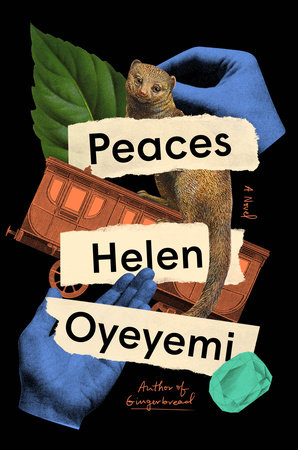 When Otto and Xavier Shin declare their love, an aunt gifts them a trip on a sleeper train to mark their new commitment—and to get them out of her house. Setting off with their pet mongoose, Otto and Xavier arrive at their sleepy local train station, but quickly deduce that The Lucky Day is no ordinary locomotive. Their trip on this former tea-smuggling train has been curated beyond their wildest imaginations, complete with mysterious and welcoming touches, like ingredients for their favorite breakfast. They seem to be the only people onboard, until Otto discovers a secretive woman who issues a surprising message. As further clues and questions pile up, and the trip upends everything they thought they knew, Otto and Xavier begin to see connections to their own pasts, connections that now bind them together.
 JD Scott conjures up unruly personae that are propelled by queer fantasies, youthful regrets, incantations, and apocryphal parables. Mask for Mask is a kaleidoscopic poetry collection, one that is both formally innovative and an imaginative descent into LGBTQ+ undergrounds and underworlds.
 Seventeen-year-old Pakistani immigrant Zara Hossain has been leading a fairly typical life in Corpus Christi, Texas, since her family moved there for her father to work as a pediatrician. While dealing with the Islamophobia that she faces at school, Zara has to lay low, trying not to stir up any trouble and jeopardize their family’s dependent visa status while they await their green card approval, which has been in process for almost nine years.
 Over the past ten years, we have witnessed the rise of queer and trans communities that have defied and challenged those who have historically opposed them. Through bold, symbolic imagery and surrealist, overlapping landscapes, queer illustrator and curator Syan Rose shines a light on the faces and voices of these diverse, amorphous, messy, real and imagined queer and trans communities.
 Thirteen-year-old Eli likes baggy clothes, baseball caps, and one girl in particular. Her seventeen-year-old sister Anna is more traditionally feminine; she loves boys and staying out late. They are sisters, and they are also the only family each can count on. Their dad has long been out of the picture, and their mom lives at the mercy of her next drink. When their mom lands herself in enforced rehab, Anna and Eli are left to fend for themselves. With no legal guardian to keep them out of foster care, they take matters into their own hands: Anna masquerades as Aunt Lisa, and together she and Eli hoard whatever money they can find. But their plans begin to unravel as quickly as they were made, and they are always way too close to getting caught.
 “History” sounds really official. Like it’s all fact. Like it’s definitely what happened.
 Naomi Grant has built her life around going against the grain. After the sex-positive start-up she cofounded becomes an international sensation, she wants to extend her educational platform to live lecturing. Unfortunately, despite her long list of qualifications, higher ed won’t hire her.
 Tina never worries about being “ordinary”
 New York, 1949
 When twin heirs are born in Tourin, their fates are decided at a young age. While Izaveta remained at court to learn the skills she’d need as the future queen, Asya was taken away to train with her aunt, the mysterious Firebird, who ensured magic remained balanced in the realm.
 Derek is LitenVärld’s most loyal employee. He lives and breathes the job, from the moment he wakes up in a converted shipping container at the edge of the parking lot to the second he clocks out of work 18 hours later. But after taking his first ever sick day, his manager calls that loyalty into question. An excellent employee like Derek, an employee made to work at LitenVärld, shouldn’t need time off.
 Piper Kitts is spending the summer living with her grandmother, training at the barn of a former Olympic horseback rider, and trying to get over her ex-girlfriend. Much to Piper’s dismay, her grandmother is making her face her fear of driving head-on by taking lessons from a girl in town.
 It’s the summer before middle school and eleven-year-old Bug’s best friend Moira has decided the two of them need to use the next few months to prepare. For Moira, this means figuring out the right clothes to wear, learning how to put on makeup, and deciding which boys are cuter in their yearbook photos than in real life. But none of this is all that appealing to Bug, who doesn’t particularly want to spend more time trying to understand how to be a girl. Besides, there’s something more important to worry about: A ghost is haunting Bug’s eerie old house in rural Vermont…and maybe haunting Bug in particular. As Bug begins to untangle the mystery of who this ghost is and what they’re trying to say, an altogether different truth comes to light—Bug is transgender.
 Prince Tal has long awaited his coming-of-age tour. After spending most of his life cloistered behind palace walls as he learns to keep his forbidden magic secret, he can finally see his family’s kingdom for the first time. His first taste of adventure comes just two days into the journey, when their crew discovers a mysterious prisoner on a burning derelict vessel.
 With no water, no air, and no native life, the planet Gora is unremarkable. The only thing it has going for it is a chance proximity to more popular worlds, making it a decent stopover for ships traveling between the wormholes that keep the Galactic Commons connected. If deep space is a highway, Gora is just your average truck stop.
 After an embarrassing loss to her ex-girlfriend in their first basketball game of the season, seventeen-year-old Scottie Zajac gets into a fender bender with the worst possible person: her nemesis, Irene Abraham, head cheerleader for the Fighting Reindeer.
 People come to me because I fix things.
 Jetta is in the center of a war. With her magical power, she could save everyone, save her country… or she could destroy it all.
 Oscar is a grouch.
 Dean Foster knows he’s a trans guy. He’s watched enough YouTube videos and done enough questioning to be sure. But everyone at his high school thinks he’s a lesbian—including his girlfriend Zoe, and his theater director, who just cast him as a “nontraditional” Romeo. He wonders if maybe it would be easier to wait until college to come out. But as he plays Romeo every day in rehearsals, Dean realizes he wants everyone to see him as he really is now––not just on the stage, but everywhere in his life. Dean knows what he needs to do. Can playing a role help Dean be his true self?
 Los Angeles, 1986.
 At age nineteen, the queer narrator of Green Glass Ghosts steps off a bus in downtown Vancouver, a city where the faceless condo towers of the wealthy loom over the streets to the east where folks are just trying to get by, against the deceptively beautiful backdrop of snow-capped mountains and sparkling ocean. It’s the year 2000, and the world is still mostly analogue–pagers are the best way to get ahold of someone and resumes are printed out on paper and dropped off in person, and what’s this new fad called webmail?
 The sequel to Anna K, set over the course of the next summer, as the characters come to terms with Vronsky’s tragic death
 As one of the only remaining autistics in the universe, Xandri Corelel has faced a lot of hardship, and she’s earned her place as the head of Xeno-Liaisons aboard the first contact ship Carpathia. But her skill at negotiating with alien species is about to be put to the ultimate test.

 Sonia Hartl is the author of Not Your #Lovestory and Have a Little Faith in Me (Page Street), which received a starred review in BookPage and earned nominations for the Georgia Peach Book Award, YALSA’s Quick Picks for Reluctant Readers, and ALA’s Rise: A Feminist Book Project List. She’s a member of SCBWI and the Managing Director for Pitch Wars 2020. When she’s not writing or reading, she’s enjoying pub trivia, marathoning Disney movies, or taking walks outside in the fall. She lives in Grand Rapids, MI, with her husband and two daughters. Follow her on Twitter @SoniaHartl1.

 For fans of George and Ivy Aberdeen’s Letter to the World, a heartfelt coming of age story about a nonbinary character navigating a binary world.
 In this #OwnVoices LGBTQ young adult debut, Alex comes to realize his true identity as a young woman named Sasha Masha.
 Three years ago, Ash’s mom, Kristin, left home and never came back.
  Carey Parker dreams of being a diva, and bringing the house down with song. They can hit every note of all the top pop and Broadway hits. But despite their talent, emotional scars from an incident with a homophobic classmate and their grandmother’s spiraling dementia make it harder and harder for Carey to find their voice.
 Noah Ramirez thinks he’s an expert on romance. He has to be for his popular blog, the Meet Cute Diary, a collection of trans happily ever afters. There’s just one problem—all the stories are fake. What started as the fantasies of a trans boy afraid to step out of the closet has grown into a beacon of hope for trans readers across the globe.
 Two boys are starting at a new school.
 Jeremy Harkiss, cheer captain and student body president, won’t let coming out as a transgender boy ruin his senior year. Instead of bowing to the bigots and outdate school administration, Jeremy decides to make some noise—and how better than by challenging his all-star ex-boyfriend, Lukas for the title of Homecoming King?
 The year is 20__, and Penfield R. Henderson is in a rut. When he’s not walking dogs for cash or responding to booty calls from his B-list celebrity hookup, he’s holed up in his dingy Bushwick apartment obsessing over holograms of Aiden Chase, a fellow trans man and influencer documenting his much smoother transition into picture-perfect masculinity on the Gram. After an IRL encounter with Aiden leaves Pen feeling especially resentful, Pen enlists his roommates, the Witch and the Stoner-Hacker, to put their respective talents to use in hexing Aiden. Together, they gain access to Aiden’s social media account and post a picture of Pen’s aloe plant, Alice, tied to a curse:
 When Liam Cooper’s older brother Ethan is killed in a hit-and-run, Liam has to not only learn to face the world without one of the people he loved the most, but also face the fading relationship with his two best friends.
 Wyatt would give anything to forget where he came from—but a kingdom demands its king.
 Fifteen-year-old Spencer Harris is a proud nerd, an awesome big brother, and a David Beckham in training. He’s also transgender. After transitioning at his old school leads to a year of isolation and bullying, Spencer gets a fresh start at Oakley, the most liberal private school in Ohio.
 Vaseline on the teeth makes a smile shine. It’s a cheap stunt, but Mark Adams knows it’s optics that can win or ruin an election.
 Ash is no stranger to feeling like an outcast. For someone who cycles through genders, it’s a daily struggle to feel in control of how people perceive you. Some days Ash is undoubtedly girl, but other times, 100 percent guy. Daniel lacks control too—of his emotions. He’s been told he’s overly sensitive more times than he can count. He can’t help the way he is, and he sure wishes someone would accept him for it.
 Dani’s best friend, Sarah, is a ghost. But maybe that’s normal when you’ve spent your childhood running from an abusive parent.
 Krys Malcolm Belc’s visual memoir-in-essays explores how the experience of gestational parenthood—conceiving, birthing, and breastfeeding his son Samson—eventually clarified his gender identity.
 Second chances take many forms…
 Annie is a smart, antisocial lesbian starting her senior year of high school who’s under pressure to join the cheerleader squad to make friends and round out her college applications. Her former friend BeeBee is a people-pleaser—a trans girl who must keep her parents happy with her grades and social life to keep their support of her transition. Through the rigors of squad training and amped up social pressures (not to mention micro aggressions and other queer youth problems), the two girls rekindle a friendship they thought they’d lost and discover there may be other, sweeter feelings springing up between them.
 There are just two things keeping Finch Kelly from a full-blown case of high-school senioritis: a) the agony of waiting to learn whether he’s gotten off the deferral list to Georgetown, the school of his nerdy political dreams; and b) the prospect of taking home the gold at Nationals, the culmination of his four-year unbroken debate team winning streak. With his own unmatched expertise, and with the charming, silver-tongued Jonah Cabrera as his partner and #1 fan, Finch is nearly invincible — until a devastating second-place finish at the State Championship sends him reeling into self-doubt.
  April French doesn’t do relationships and she never asks for more.
 Aspiring actor August Greene just landed a coveted spot at the prestigious School of Performing Arts in New York. There’s only one problem: His conservative parents won’t accept that he’s transgender. And to stay with his aunt in the city, August must promise them he won’t transition.
 Obie knew his transition would have ripple effects. He has to leave his swim coach, his pool, and his best friends. But it’s time for Obie to find where he truly belongs.
 Shizuka Satomi made a deal with the devil: to escape damnation, she must entice seven other violin prodigies to trade their souls for success. She has already delivered six.
 Syd (no pronouns, please) has always dealt with big, hard-to-talk-about things by baking. Being dumped is no different, except now Syd is baking at the Proud Muffin, a queer bakery and community space in Austin. And everyone who eats Syd’s breakup brownies . . . breaks up. Even Vin and Alec, who own the Proud Muffin. And their breakup might take the bakery down with it. Being dumped is one thing; causing ripples of queer heartbreak through the community is another. But the cute bike delivery person, Harley (he or they, check the pronoun pin, it’s probably on the messenger bag), believes Syd about the magic baking. And Harley believes Syd’s magical baking can fix things, too—one recipe at a time.

 Bywater Books is a respected lesbian press founded in 2004 that boasts among its award-winning roster of writers Cheryl Head, Ann McMan, Paula Martinac, Penny Micklebury and many more. In 2018, the Bywater’s leadership, publisher Salem West and director of operations, Marianne K. Martin, decided they wanted to start a new imprint that would expand their reach behind the lesbian community to other queer writers, and especially writers of color. They named the imprint Amble Press and their first acquisition was Alan E. Rose’s novel
  I was tapped as Amble’s managing editor last spring because of my interest in giving back to the queer literary community the same boost I had received when I was a young, emerging writer. Part of the agreement was that Amble would publish the next Henry Rios novel, Lies With Man, which appears in April. My first acquisitions will be published in the summer of 2021; Matthew Clark Davison’s debut novel Doubting Thomas in June, 2021 and Joe Okonkwo’s collection of short stories, Kiss the Scar on the Back of My Neck in August.