
One of the most popular requests on the LGBTQReads Tumblr is for recommendations for m/m trans Romance, and I’m so thrilled to have an author of the world’s newest here to talk about it, and specifically about sexuality in it. Freedom by E. Davies releases today, so let’s take a look at the book and then get right into the author’s guest post!
 Life doesn’t come with an instruction manual. But Henry’s junk does.
Agoraphobe Jaden shouldn’t have let his big brother put a ticket in a blind date raffle for him. He wasn’t expecting to win. And certainly not an overnight trip to the Grand Canyon with a gorgeous stranger—and his total opposite, a hunky wilderness guide.
Henry’s excited to meet a guy he clicks with, having finally finished bottom surgery. He’s been living stealth as the man he is for years, but he’s growing tired of hiding his past. Jaden not only accepts him, he captivates Henry, who resolves to be courageous and vulnerable in the rest of his life.
Back home in Denver, Henry starts to take pride in reconnecting with the trans community, while Jaden pushes himself out of his comfort zone. But freedom always comes at a price. Can they take the plunge into their wide open future together?
Buy it: Amazon
And here’s the post!
Transition is most visibly about embodiment—but it goes so much further than this simplified explanation. In seeking a better way of physically being, we’re also embarking on a journey of hope. Transition has forced me to believe in who I can be, and to strive to embrace that potential joy, even when those around me didn’t understand; that process has been the most powerful, life-affirming experience of my life.
I’ve been on this journey for over eight years now. A lot has changed, to say the least. And yet, despite massive increases in visibility and public awareness, and the associated risks and opportunities, the progress is uneven. Visibility rarely means education, and it’s hard to find facts on many aspects of transition and trans life. One of those areas is bottom surgery options for trans men, and another is trans men’s sexuality. Where those areas intersect, it’s often impossible to find facts without seeking out one-on-one conversations—which is not always possible or practical.
This is obviously aggravated by the current campaigns to stigmatize trans men’s surgeries. The abuse associated with trans bodies leads to many of us talking only behind closed doors—which is what transphobic factions want, so that they can control the conversation… and in doing so, our very hopes and dreams. Even when you do encounter information, it tends to be dry surgical factsheets that don’t really relate to everyday life. What will it feel like to actually interact with this different body in sex, while getting dressed, or in the bath? These questions tend to get overlooked in favor of the important decisions on surgeons, optimal healing, and so on. When you’re caught up in the required treadmill of waiting, chasing referrals, fighting for your rights, preparing for outcomes, and more, it’s hard to imagine the minutia of the “after”.
That’s where fiction can come in.
For cis authors, trans lives are often most interesting at their most raw: coming out, starting hormones, getting top surgery. But the focus on trans men in earlier stages of their journeys, the comparatively more easily-available information, and persistent myths and stigmas around gay trans men’s sexuality, means that romance featuring trans men tends to place them before or without bottom surgery.
When I started writing trans characters in MM romance, the questions I strove to answer in my fiction were much like those in the rest of my life: What does trans life actually look like after the moments that tend to be in the spotlight?
In answer, I’ve worked to create stories with a variety of trans men: James in Grind is struggling with debt from top surgery and has no interest in the further surgeries currently available, but packs and enjoys frot; Nic in Flaunt has had meta and is both ready to reembrace his femininity, and exploring his options for phallo now; Jake in Forever is boldly toppy, and would like a hysterectomy but wants to bear a child first. Each character tends to subvert some readers’ expectations, and each reflects an equally valid trans life.
In Freedom, I finally wrote a trans character who is post-phallo (all stages), having dated men before and during transition, but who hasn’t hooked up since then. He also has a complicated relationship with transness, having lived stealth for some years and found it liberating at first, only to feel like it began to encroach upon his freedom instead.
The conversations I wrote in Freedom came from a place of wanting to explore this different possible relationship to transness—post-dysphoria, if you like. Post-transition as a concept seems wobblier than it did when I started writing the book, and when I set out on this surgical journey myself. Nowadays, I think my relationship to myself, my past, and my community will keep on evolving for many years to come.
Throughout all my stories, I hope to show that transition is an ongoing process and series of choices, and there is no one-size-fits-all narrative. Above all, I want trans readers to see that romance can find you at any point in this journey; that they—and we—are loveable and loved no matter what. We can be as open and out or as stealth and private as we wish. Trans men are not an obscure fetish, nor are we desired only post-transition, or only desired by certain sexualities or genders, or any of the other myths. I tend to write pairings of cis gay men and trans gay men, simply because they’ve been the most common in my life experience. Even this fact often surprises people! Plenty of cis gay men do date, fuck, love, befriend, and desire trans men. If that simple fact can’t make it to any broader cultural awareness, there’s certainly an uphill battle about the complicated choices we make regarding our bodies.
When I was preparing for lower surgery, the vast majority of people in my life had no idea what was involved, what the options were, or even that it was possible to have a real, satisfying sex life—either before or after surgery! In particular, cis gay culture at the moment seems to have very little idea how to address our existence, and gay fiction often reflects that confusion and uncertainty. Yet trans men have been dating cis gay men (as well as people of all genders and sexualities) for as long as people have been around! Within broader society, there’s very few portrayals of our bodies, whether we opt for bottom surgery or not.
There seems to be an odd dichotomy of thought: either we must desperately desire surgery (leaving no space for those who are happy without it), or we must reject it, as “natural bottoms” (a deeply transphobic concept that is startlingly pervasive). If we do choose surgery, either it’s “the surgery” that grants us, overnight, a cis penis—a misunderstanding that can create painfully dysphoric interactions with friends and lovers. Or, on the other hand, we’re doomed to life with no satisfactory options.
Where’s the room for reality: that our options are broad, our outcomes not always certain but certainly not hopeless, and our lives not necessarily centered on this one narrow aspect of our selves? That the results can be more than satisfactory, and huge strides in techniques have been made, yet outdated myths tend to circulate more widely than fact? That despite this, there are huge strides in advocacy, information, and aftercare that must be made to protect and uplift us?
Better still, where’s the room for fantasy: that we can set aside all our reality for an afternoon and just enjoy a story? That we can have a perfectly wonderful sex life where the differences between our junk and the expectations placed on cis guy’s are minimal, or even celebrated? This is what was so deeply enjoyable about writing Freedom—having Jaden simply accept Henry’s body, embrace the advantages, and focus on learning what makes Henry, specifically, feel good. It’s not a fantasy that’s so far away from real life. In my experience, that’s how relationships tend to work, yet we often aren’t granted this fantasy on the page. Sensual moments are often used for predictable narrative tension, as if we can’t simply exist, fuck, and love it.
Not that there isn’t a place for those stories—trans lives are messy, real, and diverse. Even within Freedom, with my optimistic outlook and aims, there are moments where Henry struggles to remember that his learned habits about his body are outdated now.
Romance books are a tremendous place to explore how our many lives and loves can look. The diversity in trans bodies and lack of education regarding them can throw off readers sometimes. But that very lack of expectation is also an opportunity! Because no person should be expected to enjoy or desire sex, to fit naturally into any role, or to be interested in any particular sex act, gender, or person. Yet too many norms of society are structured around these rigid, artificial ideals.
In rewriting the rules of expectation, trans people can show a path to sexual liberation for all. At the end of the day, sex—between fictional characters or in real life—ought to be about finding what each person involved desires, and looking for the points of intersection where both (or more) can find what they want and need.
One thing’s for certain: sex, sexuality, and transness isn’t neat and tidy, but it is full of hope and possibility. And that’s something that will never grow old.
***
Since 2013, E. Davies has crafted feel-good stories of men in love–stories that are brimming with hope, found families, and realistic guys next door getting their modern fairytale endings. As for hobbies: rescuing bees, dancing badly, traipsing through meadows, and studying photos of cute guys for research totally count, right?
 I didn’t start reading romance with any kind of intention until I was an adult, but I have loved love stories my entire life, especially Black love stories. There was something about seeing movies with Ossie Davis and Ruby Dee and realizing that they had spent decades sharing their passion for art and activism with one another, that made my heart swell. It still does. I’ve also always loved queer love stories for as long as I can remember, even when I didn’t understand that I loved queer love stories for the same reasons I loved Black love stories: I was searching for depictions of love that reflected pieces of myself. I was searching for something that felt like a little slice of me on the big and small screens.
 While I don’t particularly agree with recommending fiction in a moment where people need to confront the depths of their anti-blackness and begin to consider the realities of global white supremacy, watching romance readers who imagined themselves as supportive of diversity, erase (queer) Black people (authors and characters) dug deep in my chest. It sent the message that people like me and the characters I write don’t actually matter, even while people were putting the hashtag in their bios. It was an erasure that struck a painful chord because it reminded me that the people and stories I love – who are the center of my life – are so easily forgotten and ignored.
 Unfortunately, even when I’m depressed, I have a near obsessive desire to catalog books, so I took to twitter to begin a thread of queer romance written by Black authors. I began with books I love by authors I respect and appreciate and asked for recommendations. What I found in this process was instructive in many ways. I made a few caveats for recommendations that might have seemed random at the time but were not. I asked that the author identify as Black, since I’d seen so many outlets recommending non-Black authors. It mattered to me that if the response to Black murder was to uplift Black authors, that those authors better be Black and stand firm in their blackness. I wanted to focus specifically on adult romance because the YA book community had rallied their recommendations firmly behind Black authors (trans, cis, queer and het). It was exciting to watch and frustrating to compare to the adult romance community.
 But the other, far better, thing I discovered was the wealth of queer romance written by Black authors. There was Black Romance and IR, polyamorous, m/m, and even the apparently elusive f/f romance. There were so many bisexual and pansexual characters! I found contemporary and historical and paranormal and urban. Certainly, there is room to grow in many areas, for instance so far there is only one trans Black romance recommendation (noted below) and ace spectrum representation is similarly lacking. In this moment, I choose to celebrate that the few books we have exist, but I hope for more.
 Katrina is a college professor by day who writes romances by weekend when her cats allow. She writes high heat, diverse and mostly queer erotic romances and erotica. She also likes sleep, salt-and-pepper beards, and sunshine.
 Jordan Collins doesn’t need a man.


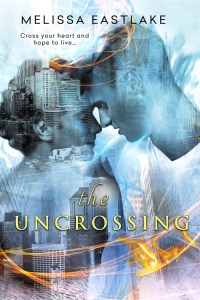 Luke can uncross almost any curse—they unravel themselves for him like no one else. So working for the Kovrovs, one of the families controlling all the magic in New York, is exciting and dangerous, especially when he encounters the first curse he can’t break. And it involves Jeremy, the beloved, sheltered prince of the Kovrov family—the one boy he absolutely shouldn’t be falling for.
 For nearly a century, the Nomeolvides women have tended the grounds of La Pradera, the lush estate gardens that enchant guests from around the world. They’ve also hidden a tragic legacy: if they fall in love too deeply, their lovers vanish. But then, after generations of vanishings, a strange boy appears in the gardens.
 Ryan McCullough and Gabby Hart are the unlikeliest of friends. Introverted, anxious Gabby would rather do literally anything than go to a party. Ryan is a star hockey player who can get any girl he wants—and does, frequently. But against all odds, they became not only friends, but each other’s favorite person. Now, as they face high school graduation, they can’t help but take a moment to reminisce and, in their signature tradition, make a top ten list—counting down the top ten moments of their friendship:
 Rumor Mora fears two things: hellhounds too strong for him to kill, and failure. Jude Welton has two dreams: for humans to stop killing monsters, and for his strange abilities to vanish.
 Even gods can be slain
 Being the middle child has its ups and downs.
 Bells Broussard thought he had it made when his superpowers manifested early. Being a shapeshifter is awesome. He can change his hair whenever he wants, and if putting on a binder for the day is too much, he’s got it covered. But that was before he became the country’s most-wanted villain.
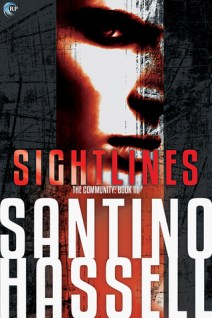 Chase Payne is a walking contradiction. He’s the most powerful psychic in the Community, but the least respected. He’s the son of the Community’s founder, but with his tattoo sleeves and abrasive attitude, he’s nothing like his charismatic family. No one knows what to make of him, which is how he wound up locked in a cell on the Farm yet again. But this time, the only man he’s ever loved is there too.
 NFL football player Isaiah Blackwell lost his husband three years ago and is raising their teen son alone. He lives his life as quietly as his job allows, playing ball to support his family but trying not to draw unwanted attention. His quiet life is shaken up when a mutual friend introduces him to Victor, a visiting principal ballet dancer who is everything Isaiah is not.
 THE RULES ARE SIMPLE: You must be gifted. You must be younger than twenty-five. You must be willing to accept the dangers that you will face if you win.
 In Savannah Espinoza’s small New Mexico hometown, kids either flee after graduation or they’re trapped there forever. Vanni never planned to get stuck—but that was before her father was diagnosed with Huntington’s disease, leaving her and her mother to care for him. Now, she doesn’t have much of a plan at all: living at home, working as a performing mermaid at a second-rate water park, distracting herself with one boy after another.
 Ryan, Harley and Miles are very different people–the swimmer, the rebel and the nerd. All they’ve ever had in common is Isaac, their shared best friend.
 The whole city is searching for Hasryan—some for revenge and justice, others to save their friends. Yet no one knows where to find him except Lord Arathiel Brasten, who vanished 130 years ago only to magically return.
 Tony Quinn has a knack for figuring people out. He likes labels, likes to be able to put everyone and everything in tidy boxes. As a theater director, it allows him to run a production without too much drama. But when he meets Gentry—“call me Gee”—in a bar one night, he discovers that some people aren’t so easily defined.
 Adda and Iridian are newly-minted engineers, but in a solar system wracked by economic collapse after an interplanetary war, an engineering degree isn’t worth the paper it’s printed on. Desperate for gainful employment, they hijack a colony ship, planning to join a pirate crew at Barbary Station, an abandoned shipbreaking station in deep space.
 It’s been decades since blackmail forced Troy Callahan to retire from playing professional hockey, and he’s built a successful career behind the bench. When he’s offered the opportunity to coach the Asheville Ravens—the most hated team in the ECHL—he’s convinced that his no-nonsense attitude is just what the team needs to put their focus back on hockey. But Troy is disheartened when he finds that the Ravens have signed Shane North, a player known for his aggression—especially when Shane’s rough good looks give Troy inappropriate thoughts about a player, even if Shane’s set to retire at the end of the season.