
Today on the site I’m pleased to welcome Jude Sierra, author of A Tiny Piece of Something Greater, to talk about a common but harmful trope in literature: love as a cure for mental illness. Before we get to the post, here’s the info on the book:
 Reid Watsford has a lot of secrets and a past he can’t quite escape. While staying at his grandmother’s condo in Key Largo, he signs up for introductory dive classes, where he meets Joaquim Oliveira, a Brazilian dive instructor with wanderlust. Driven by an instant, magnetic pull, what could have been just a hookup quickly deepens. As their relationship evolves, they must learn to navigate the challenges of Reid’s mental illness on their own and with each other.
And here’s the post!
***
There’s a popular trope I see in media. Movies, books, and television shows often depict falling in love or starting a relationship as a catalyst for fixing or curing someone with mental illness. The burdens or struggles of a character’s illness cease in the light of love. This is a dangerously misleading and painful narrative to perpetuate for many reasons, including the implication that there’s “fixing” to be done. It implies that someone with mental illness cannot be loved as they are, setting up false and damaging expectations. It requires an alteration to an aspect of who we are to be worthy of love. As someone with mental illness who sought out stories with mentally ill characters for years, this trope really drove home several key ideas. Love never “fixed” or “cured” me. Even in love and loved, nothing went away. I constantly searched for myself in stories and walked away feeling more hopeless and broken. Love hadn’t changed what couldn’t be changed.
I was nineteen when I met my husband. It was my sophomore year of college and while I knew I was struggling, there was nothing about that struggle that felt unusual. I’d been low before. There were days when I couldn’t get out of bed. In my entire, perfectionist, over-achieving life, I actually came close to failing classes. I called in “sick” to work so often I almost lost my job.
But I’d been worse. I wasn’t self-harming. I wasn’t in an abusive relationship anymore.
On our one year anniversary, I remember turning to him and saying, “This has been the best year of my life.” It had; perhaps because feeling bad felt so normal that my bar for “bad” was set at a different level than that of others. What I remembered most that year was the way I was loved, the kindness and care, the sweetness we shared. Being loved like that was a completely new experience for me.
But when I said that, he cried. He tried to explain, but it was something I never really understood until years later, once I’d begun to understand the scope of my mental illness, and once I began working on recovery. That year was a test for him in a way I wasn’t able to appreciate; watching my depression, watching me navigate a strained relationship with my parents, watching me struggle with absolutely no self-esteem and very little self-worth.
We’ve been together for almost 17 years now, and in that time, we’ve seen and been through a lot. We were together for years before I confessed that I self-harmed, before I ever confessed to having suicidal ideations, and before I ever articulated what my highs and lows felt like. He loved me unconditionally through years when I suffered in silence; I never doubted that love, and it never altered basic truths about who I am. There was no way that any amount of love between us or from him that could have prevented the eventual mental breakdown I had in the wake of a serious postpartum depression.
In many ways, Reid’s story in A Tiny Piece of Something Greater is my own. While I was in long term psychiatric care I worked with a team of professionals in order to find a diagnosis, cyclothemia, a rare mental illness that can be very hard to articulate and see. I learned skills and how to fight, actively, for my own wellness. After I came home my husband and I had to learn to reorient and rework every aspect of our relationship.
There were many lessons and takeaways I can mine from these experiences, one which is very, very important to me. Love is not a cure.
When I first imagined Reid’s story I committed to writing a book about what it is like to live with mental illness, to work recovery, to relearn living, and also, to fall in love, I knew that writing about falling in love would be the fun part. But personally, one of the biggest draws to this story was the idea of exploring what it means to stay in love in these circumstances. In my own experience, navigating a mood disorder such a cyclothemia involves being attuned to subtle cues that my moods are going to swing or are unstable. As someone who works their wellness and recovery the way that I do (constant practice, willingness and strength) it can be chafing or irritating when others try to tell me what they’re seeing or perceiving. It feel like they don’t trust me to know what’s best. But the truth is that sometimes I cannot see the forest for the trees, and the tension these situations cause are very real.
These are moments I wanted to highlight for Reid and Joaquim. The reality of being in love in these situations is that there will be tensions and struggle, and that finding the right person—even the perfect person—for you won’t make those things go away. On the flip side, writing characters who cared for each other so much, for whom falling in love was so beautiful, that writing them learning and struggling to communicate was its own joy. A Tiny Piece of Something Greater was a balancing act: I tried my hardest to represent as accurately as possible the experience of everyday mental illness, but also, the realistic power of love.
A Tiny Piece of Something Greater is a love story, true, but it’s also a story about a boy learning to thrive and manage a new life and recovery. Falling in love with Joaquim enriches Reid’s life just as much as falling for Reid enriches Joaquim’s life. Their love story is just beginning. What A Tiny Piece of Something Greater tries to achieve is a depiction of the first steps of many that people in a loving relationship must take.
Seventeen years into my own relationship, I can look back at this life my husband and I have made made and understand that what we have is a love story and a relationship I am proud of. When I look back at my own life, what I see is a story about surviving my mental illness and right now, absolutely thriving. And that thriving? Our love is a part of that narrative, but isn’t responsible for it. It is not what my wellness hinges on. The most important factor in my wellness is me. In this book, it’s Reid. I can’t say enough about how wonderful it was to write Reid and Joaquim’s love story; but separately, how much it means to me to have written this story that reflects an honest truth. Love doesn’t cure or fix; it supports. It supplements. It enriches.
***
Jude Sierra is a Latinx poet, author, academic and mother working toward her PhD in Writing and Rhetoric, looking at the intersections of Queer, Feminist and Pop Culture Studies. She also works as an LGBTQAI+ book reviewer for From Top to Bottom Reviews. Her novels include Hush, What it Takes, and Idlewild, a contemporary LGBT romance set in Detroit’s renaissance, which was named a Best Book of 2016 by Kirkus Reviews. Her most recent novel, A Tiny Piece of Something Greater was released in May of 2018.

 Seventeen-year-old Rukhsana Ali tries her hardest to live up to her conservative Muslim parents’ expectations, but lately she’s finding that harder and harder to do. She rolls her eyes instead of screaming when they blatantly favor her brother and she dresses conservatively at home, saving her crop tops and makeup for parties her parents don’t know about. Luckily, only a few more months stand between her carefully monitored life in Seattle and her new life at Caltech, where she can pursue her dream of becoming an engineer.
 At the Medio School for Girls, distinguished young women are trained for one of two roles in their polarized society. Depending on her specialization, a graduate will one day run a husband’s household or raise his children, but both are promised a life of comfort and luxury, far from the frequent political uprisings of the lower class. Daniela Vargas is the school’s top student, but her bright future depends upon no one discovering her darkest secret—that her pedigree is a lie. Her parents sacrificed everything to obtain forged identification papers so Dani could rise above her station. Now that her marriage to an important politico’s son is fast approaching, she must keep the truth hidden or be sent back to the fringes of society, where famine and poverty rule supreme.
 Clover Martinez has always been a survivor, which is the only reason she isn’t among the dead when aliens invade and destroy Earth as she knows it.
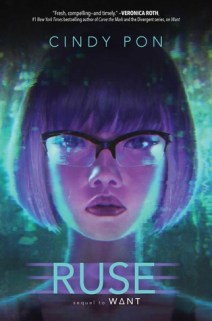 Jason Zhou, his friends, and Daiyu are still recovering from the aftermath of bombing Jin Corp headquarters. But Jin, the ruthless billionaire and Daiyu’s father, is out for blood. When Lingyi goes to Shanghai to help Jany Tsai, a childhood acquaintance in trouble, she doesn’t expect Jin to be involved. And when Jin has Jany murdered and steals the tech she had refused to sell him, Lingyi is the only one who has access to the encrypted info, putting her own life in jeopardy.
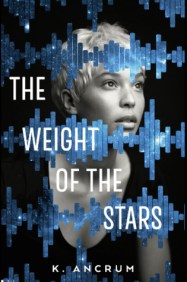 Ryann Bird dreams of traveling across the stars. But a career in space isn’t an option for a girl who lives in a trailer park on the wrong side of town. So Ryann becomes her circumstances and settles for acting out and skipping school to hang out with her delinquent friends.
 Aristotle and Dante Discover the Secrets of the Universe meets Code Name Verity in this heartbreaking and poignant historical thriller.
 When 16 year old Serendipity Rodriguez attends a house party to celebrate the end of sophomore year, she has no intention of getting drunk and hooking up with a guy she’s just met, let alone getting pregnant. To make matters worse, she has no way of contacting the father and she and her mother are about to move to a new town and in with her grandmother.
 It’s 1989 in New York City, and for three teens, the world is changing.
 Sana Khan is a cheerleader and a straight A student. She’s the classic (somewhat obnoxious) overachiever determined to win.

 In the hours after a bridge collapse rocks their city, a group of Boston teenagers meet in the waiting room of Massachusetts General Hospital:
 We’ve lost everything…and found ourselves.
 Rufus Holt is having the worst night of his life. It begins with the reappearance of his ex-boyfriend, Sebastian—the guy who stomped his heart out like a spent cigarette. Just as Rufus is getting ready to move on, Sebastian turns up out of the blue, saying they need to “talk.” Things couldn’t get much worse, right?
 Carter’s fiancé is in love with someone else. Link has just been left at the altar. After bonding over mutual heartbreak at the would-be reception’s open bar, Link and Carter pass out in the honeymoon suite—and are mistaken for the happy newlywed couple the next morning. Reluctant to deal with the fallout from their breakups, they embark on an exciting two weeks of fake honeymooning, during which Carter starts to have real feelings for Link. Against the eclectic and electric backdrop of New Orleans, Carter and Link have to decide if a second chance at love is in the cards, or if they’re only meant to be sidelined in someone else’s story.
 Lilah Suzanne is the author of Amazon bestseller Broken Records, part of the Spotlight series along with Burning Tracks and Blended Notes. Lilah also authored Spice, the novellas Pivot & Slip and After the Sunset, and the short story “Halfway Home,” which was featured in the holiday anthology If the Fates Allow. A writer from a young age, Lilah resides in North Carolina and mostly enjoys staying indoors, though sometimes ventures out for concerts, museum visits, and quiet walks in the woods.
 Each year, eight beautiful girls are chosen as Paper Girls to serve the king. It’s the highest honor they could hope for…and the most cruel.
 Alma Rosales is on the hunt for stolen opium. Trained in espionage by the Pinkerton’s Detective Agency—but dismissed for bad behavior and a penchant for going undercover as a man—Alma now works for Delphine Beaumond, her former lover and the seductive mastermind of a West Coast smuggling ring.
 It doesn’t matter what the prize for the Sun City Originals contest is this year.
 Each year, eight beautiful girls are chosen as Paper Girls to serve the king. It’s the highest honor they could hope for…and the most cruel.
 Dear Thomas,
 All Marian wants is for society to accept that she’s just not interested in… whatever society thinks she ought to be interested in. A princess with a reputation for insults and snide remarks, she’s afraid to show anyone who she would be if people would let her. In a fit of temper at her refusal to marry, her father creates her worst nightmare: she is to be wed to the first beggar who arrives at the gates.
 Carter’s fiancé is in love with someone else. Link has just been left at the altar. After bonding over mutual heartbreak at the would-be reception’s open bar, Link and Carter pass out in the honeymoon suite—and are mistaken for the happy newlywed couple the next morning. Reluctant to deal with the fallout from their breakups, they embark on an exciting week of fake honeymooning, during which Carter starts to have real feelings for Link. A genderqueer artist who lives life by their own rules, Link inspires Carter to build a new future. Against the eclectic and electric backdrop of New Orleans, Carter and Link have to decide if a second chance at love is in the cards, or if they’re only meant to be sidelined in someone else’s story.
 In 1955, eighteen-year-old Janet Jones keeps the love she shares with her best friend Marie a secret. It’s not easy being gay in Washington, DC, in the age of McCarthyism, but when she discovers a series of books about women falling in love with other women, it awakens something in Janet. As she juggles a romance she must keep hidden and a newfound ambition to write and publish her own story, she risks exposing herself—and Marie—to a danger all too real.
 Lana and Lilly Wachowski have redefined the technically and topically possible while joyfully defying audience expectations. Visionary films like The Matrix trilogy and Cloud Atlas have made them the world’s most influential transgender media producers, and their coming out retroactively put trans* aesthetics at the very center of popular American culture.
 Marshall Clayton Jensen’s job is to fix things for the people too weird for the government to touch—witches, fairies, monsters. When Clay finds himself on the receiving end of a witch’s curse following a breakup from the love of his life, a fairy named Cora, Clay enlists the help of his best friend Doc Irene and his ex-girlfriend’s promiscuous sister Adelaide to search for a cure before time runs out
 This is the second book in the Runebinder Chronicles
 The Huntresses of Artemis must obey two rules: never disobey the goddess, and never fall in love. After being rescued from a harrowing life as an Oracle of Delphi, Kahina is glad to be a part of the Hunt; living among a group of female warriors gives her a chance to reclaim her strength, even while her prophetic powers linger. But when a routine mission goes awry, Kahina breaks the first rule in order to save the legendary huntress Atalanta.

 Nicole writes across the spectrum of sexuality and gender identity. She lives in Melbourne with her fiancee, two cats, and a bottomless cup of tea. She likes candles, incense and Gilmore Girls.
 Thanksgiving arrives in one week and one day. Feeling hemmed in by parental expectations? Are they disappointed by your sapphic proclivities? I can help! The only pay I want is the holiday meal!
 So
So  First of all, thank you because I know some people really don’t like her but I love her, mess and all! I didn’t set out to write The Bi Best Friend; when I first started writing Rose, the book was dual POV and she had her own thing going on. So really she got shifted into that role as I found the heart of the story and stripped back to just Audrey’s POV. But writing Rose was one of those moments that I know plenty of authors have had, where you write a queer character because you’re just SUCH a good ally! and then you stop and realise that ohhhh wait no okay it’s all clear now. So I guess what spoke to me about her was…myself?! I wrote her bisexuality not realising that it was also my bisexuality. And she’s similar to Jules in that she’s very certain of her sexuality and also very afraid that any relationship she gets into is going to go terribly. I guess..am I just writing my own fears again?! Possibly! It was definitely enjoyable to write a girl who’s so sharp and spiky but not a stereotype.
 Right now I have one book tattoo, for
  Rebecca Barrow writes stories about girls and all the wonders they can be. A lipstick obsessive with the ability to quote the entirety of Mean Girls, she lives in England, where it rains a considerable amount more than in the fictional worlds of her characters. She collects tattoos, cats, and more books than she could ever possibly read.